Gentle Pediatric Dental Care · Kelambakkam & Padur
Kids Dentistry in Kelambakkam & Padur
Preventive & Age-Appropriate Dental
Care
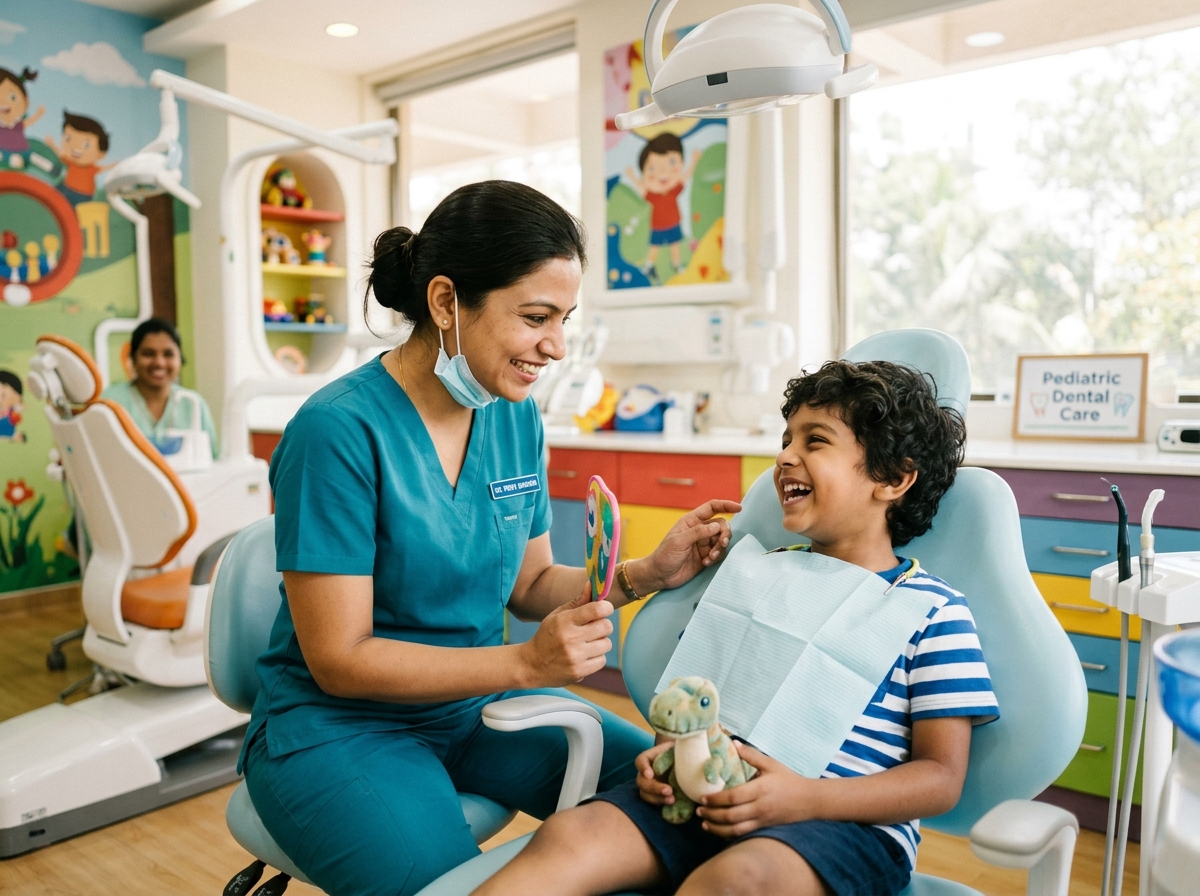
A child's dental needs change as they grow.Kids dentistry focuses on protecting developing teeth, identifying dental concerns early, supporting healthy oral habits, and helping children become comfortable with dental care. A dental consultation can help parents understand what is appropriate for their child's age, oral development and individual needs.
At Supreme Elite Clinic, children from Kelambakkam, Padur and nearby areas can consult the dental team for age-appropriate oral care. The clinic is located at Plot No. 4, Sri Renukambal Nagar, Kelambakkam, Chennai, Tamil Nadu – 603103, and is open from 10:00 AM AM to 9:00 PM.
Rather than waiting until a child develops tooth pain, parents can use dental visits as an opportunity to understand how the child's teeth and gums are developing and whether any concerns need attention.
Kids dentistry is dental care designed around the oral health needs of children as their teeth, jaws and oral habits develop. It includes preventive guidance, dental examinations, management of common childhood dental concerns and advice to parents about maintaining healthy teeth and gums.
Children are not simply smaller versions of adult dental patients. Their primary teeth eventually give way to permanent teeth, their oral structures continue developing, and their ability to understand and cooperate during a dental visit changes with age.
For this reason, a child's dental consultation should consider more than an individual tooth. A dentist may look at the child's overall oral condition, tooth development, hygiene habits and any symptoms or concerns reported by the parents.
The purpose is not to recommend treatment automatically. Instead, the consultation helps determine what the child needs now, what should be monitored, and what parents can do at home to support oral health.
Childhood is an important period for establishing oral-health habits that can continue into adolescence and adulthood. Primary teeth also have an important role while a child is growing and before the permanent dentition is fully established.
Childhood is an important period for establishing oral-health habits that can continue into adolescence and adulthood. Primary teeth also have an important role while a child is growing and before the permanent dentition is fully established.
One useful distinction for parents is that prevention and treatment are not the same thing. A child who currently has no obvious dental problem may still benefit from professional guidance, while a child with pain, visible decay or another concern may require a more specific assessment.
The appropriate approach depends on the individual child.
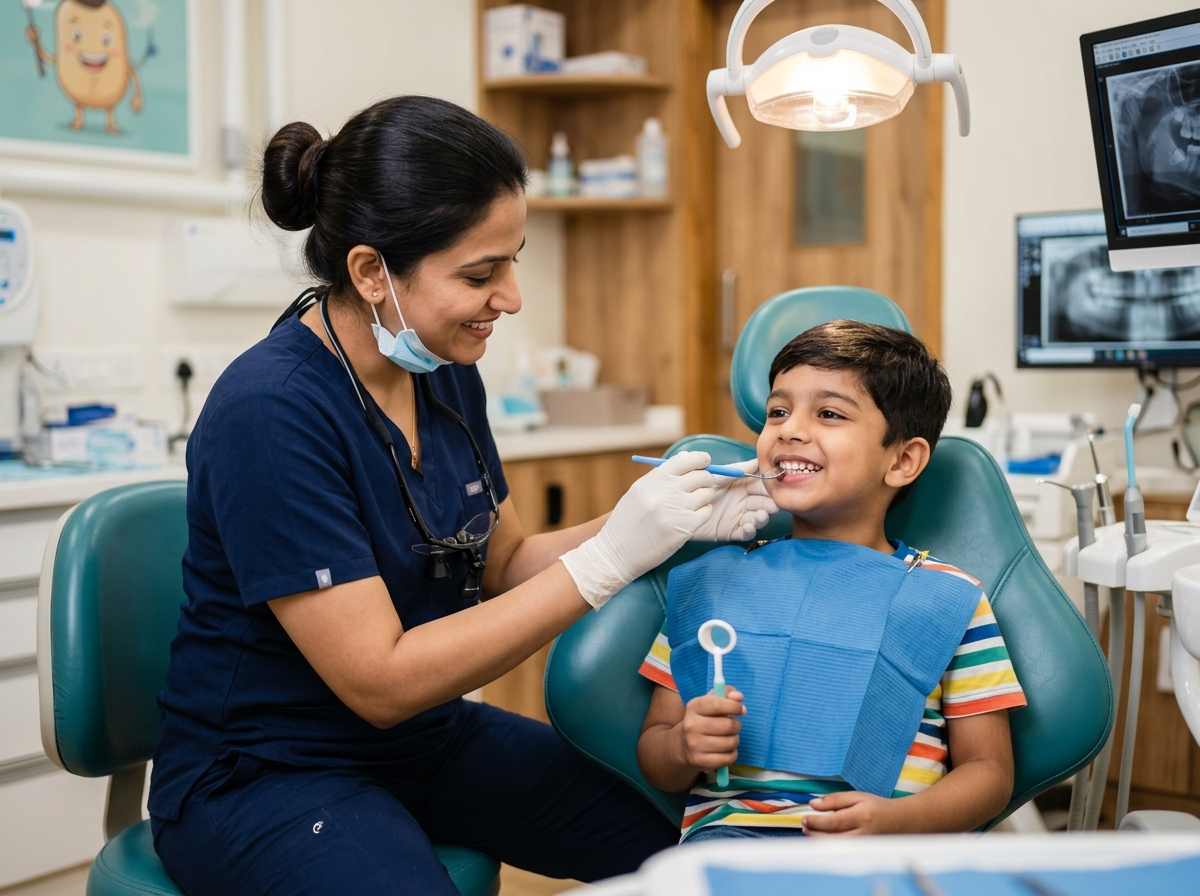
There is no single visit schedule that is appropriate for every child. A child's first dental assessment and subsequent visits should be guided by age, oral development, risk factors, existing dental concerns and the dentist's clinical assessment.
Parents do not necessarily need to wait for toothache before seeking advice. A consultation can be particularly relevant when parents notice changes in the child's teeth, gums, eating habits or comfort.
A dental visit can also be useful when parents simply want professional guidance about their child's developing teeth.
A children's dental consultation generally begins with understanding the child's dental history and current concerns, followed by an oral examination appropriate to the child's age and cooperation. Depending on what the dentist observes, the focus may be on preventive advice, monitoring, or further evaluation and treatment.
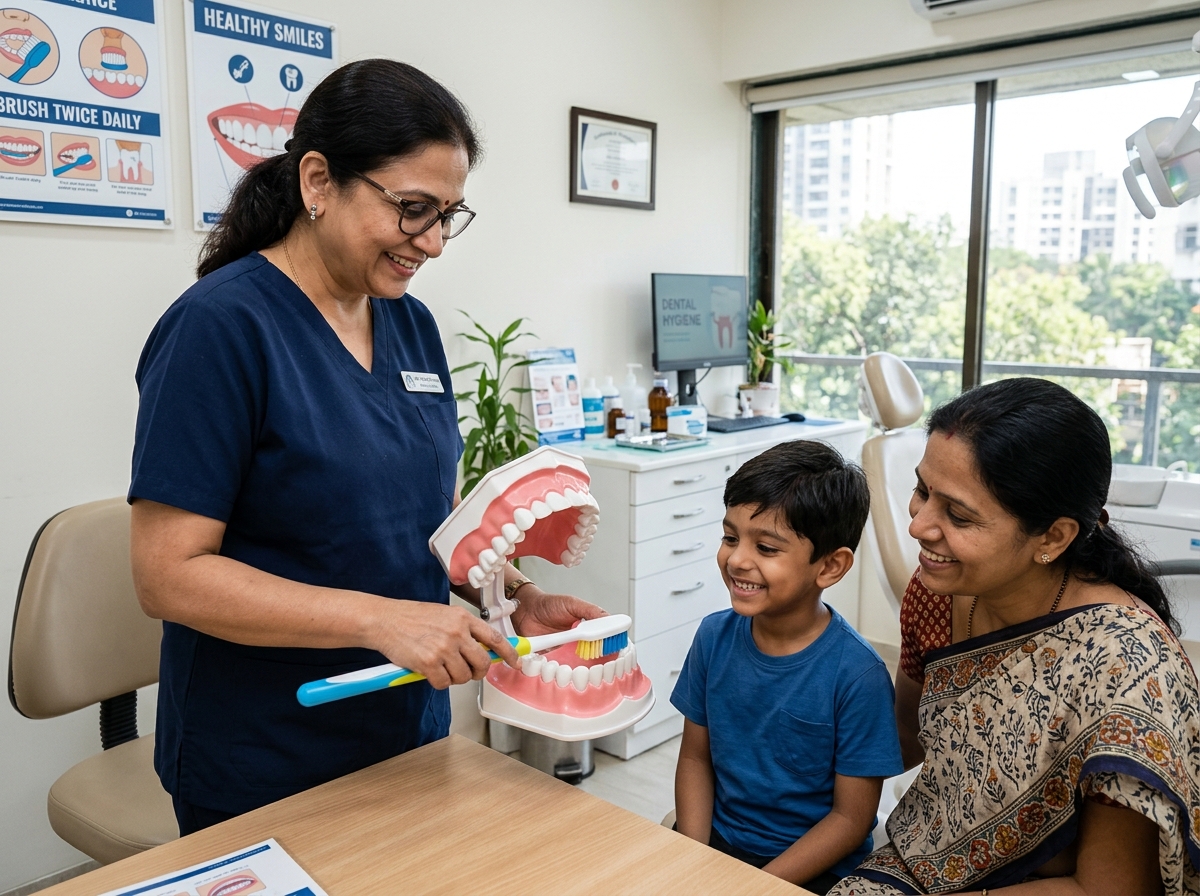
The dentist first discusses what brought the child to the clinic in a calm, welcoming conversation.
The child's teeth and surrounding oral tissues are examined gently for visible dental concerns, early enamel signs, and soft tissue health. The examination helps determine whether signs require attention or routine observation is appropriate.
Children's teeth do not all appear at the same time. Their oral development changes continuously throughout childhood. The dentist assesses the child's developmental stage to confirm if the observed tooth position and eruption pattern follow expected milestones.
Parents receive practical guidance on cleaning the child's teeth and maintaining daily oral hygiene. Guidance is tailored to the child's exact age, manual dexterity, and dietary habits rather than offering generic advice.
After assessment, the dentist explains the findings clearly with no confusing terminology and outlines the appropriate path forward:
Children can develop several types of dental concerns. Some are associated with tooth decay, while others may relate to oral hygiene, dental development, habits or accidental injury.
Tooth decay can affect both primary and permanent teeth. Early changes may not always cause obvious pain, which is one reason visual inspection and professional dental assessment can be useful.
Parents should not assume that a baby tooth does not matter because it will eventually be replaced. Primary teeth have a role during childhood, and problems affecting them may require professional attention.
Children can also experience gum-related concerns, particularly when oral hygiene is difficult to maintain effectively.
Bleeding, swelling or persistent gum discomfort should not simply be dismissed as something a child will "grow out of." A dental professional can assess the underlying reason.
Children are naturally active, and falls or accidents can sometimes damage teeth.
A chipped, fractured, displaced or injured tooth deserves appropriate dental assessment, particularly if there is pain, bleeding or visible damage.
Parents may become concerned when teeth appear earlier, later or differently from what they expected.
Dental development varies between children. Instead of comparing one child's teeth directly with another child's, professional assessment can help determine whether the observed development is within an expected pattern or requires monitoring.
Primary teeth are temporary, but temporary does not mean unimportant.
They contribute to a child's ability to chew and speak and remain part of the mouth during an important stage of growth. They also occupy space before permanent teeth emerge.
Do not ignore a problem simply because the affected tooth is a baby tooth.
If a primary tooth develops significant decay, pain or another dental problem, the appropriate response depends on the child's individual situation. A dentist can assess the tooth and explain whether monitoring, preventive management or treatment is appropriate.
Professional dental care works alongside daily home care. The habits established at home are an important part of maintaining a child's teeth and gums between dental visits.
The goal is not to make dental care frightening or overly complicated. Children benefit when oral hygiene becomes a normal part of their daily routine.
The difference is largely about development, communication and individual needs.
Oral structures and dental needs change as children grow.
A child may have a mixture of primary and permanent teeth during the transition between dentitions.
Younger children may communicate discomfort differently or find a dental examination unfamiliar.
Certain habits may be relevant to the developing mouth and teeth.
Parents play an important role in helping children establish and maintain oral hygiene routines.
Therefore, children's dental care should be approached according to the child's current stage rather than applying an adult-oriented model to every situation.
Parents should arrange dental assessment when a child develops persistent pain, swelling, visible tooth damage, significant sensitivity, difficulty chewing, or another noticeable change in the mouth.
A dental concern does not always become severe immediately, but delaying assessment can leave the underlying issue unaddressed.
If a child experiences a dental injury, particularly one involving significant pain, bleeding, a displaced tooth or visible damage, parents should seek professional dental advice promptly.
Preventive dental care aims to reduce avoidable dental problems and help parents identify concerns before they become more complicated. It combines professional dental assessment with consistent oral hygiene, appropriate dietary habits and age-appropriate guidance.
For children, prevention is not simply about avoiding cavities. It also involves understanding how the mouth is developing and helping the child establish habits that can continue as they grow.
The exact preventive approach can vary depending on the child's age, oral health, previous dental history and individual risk factors.
Tooth decay develops through an interaction between oral bacteria, dietary sugars, tooth surfaces and time. Children can therefore benefit from guidance that looks beyond brushing alone.
Repeated exposure to sugars can contribute to an environment in which tooth decay is more likely to develop.
Parents may find it more useful to look at the overall pattern of eating and drinking rather than focusing on one isolated food.
If plaque is not removed effectively, it can remain around the teeth and contribute to dental problems.
Younger children may need parental supervision or assistance because their brushing technique and ability to reach all tooth surfaces are still developing.
Busy school schedules, travel, changes in routine or resistance to brushing can make consistent oral care challenging.
The practical goal is to establish a routine that the child can follow regularly rather than relying on occasional intensive cleaning.
A child who has already experienced dental decay or another oral-health concern may require more individualized preventive guidance.
A dentist can assess the child's circumstances and determine whether additional monitoring or preventive measures are appropriate.
Children may not always describe dental symptoms clearly. Parents can therefore pay attention to changes in behaviour as well as visible signs.
These signs do not establish a diagnosis by themselves. A dental examination is needed to determine the underlying cause and whether treatment is required.
There is no single treatment approach that is appropriate for every child. Dental decisions depend on factors such as the child's age, the condition of the tooth, symptoms, stage of dental development and the findings of the clinical examination.
A treatment decision for a young child may differ from one for an older child because the child's teeth and oral structures are at different stages of development.
The type of tooth involved can influence the clinical considerations. A primary tooth and a permanent tooth have different roles and expected lifespans.
A small early concern may require a different approach from a more advanced or symptomatic problem.
Pain, swelling, sensitivity or difficulty eating can provide important information about the child's condition.
The child's comfort, communication and ability to participate in an examination can influence how care is planned.
The dentist may consider the child's broader dental condition rather than looking at one tooth in isolation.
This individualized approach is important because the presence of a dental problem does not automatically mean that the same treatment is suitable for every child.
Treatment depends entirely on the dental finding. Depending on the child's condition, a dentist may discuss options such as preventive management, restorative treatment or other appropriate dental care.
Where there is no significant disease requiring treatment, the focus may remain on maintaining oral health and reducing future risk.
When a tooth has been affected by decay or damage, restorative treatment may be considered depending on the severity and the child's individual circumstances.
The dentist should explain what has been identified and why a particular treatment may be appropriate.
A child's damaged tooth may require assessment after an accident or injury. The appropriate management depends on the type and extent of the injury.
Parents should avoid attempting to diagnose the extent of a dental injury at home.
Not every variation in tooth development requires immediate treatment.
In some situations, the appropriate approach may be observation and follow-up so that changes can be assessed over time.
Early assessment does not necessarily mean that a child will receive treatment.
Its value is that it can give parents information about what is happening in the child's mouth and what should be done next.
This distinction can help parents avoid both extremes: ignoring a genuine dental concern and assuming that every unusual-looking tooth requires immediate treatment.
A child's experience can be influenced by how the appointment is introduced at home.
Parents can help by keeping the conversation simple and positive.
Tell the child that the dentist will look at their teeth and help keep their mouth healthy.
Avoid describing procedures in frightening terms when the child has not asked about them.
Children can pick up on adult anxiety. If a parent has had a difficult dental experience, it may be better not to transfer that fear to the child.
Children may want to know what the dentist will do. Simple explanations can make the environment feel more familiar.
The goal is not to promise that a dental visit will always feel completely comfortable. Rather, it is to help the child approach the appointment with realistic expectations.
A useful consultation is also an opportunity for parents to understand the reasoning behind the recommended care.
These questions can make the consultation more informative and help parents participate in decisions about their child's dental care.
Primary teeth still have important functions during childhood. A problem affecting a primary tooth should therefore be assessed rather than ignored simply because the tooth is temporary.
Pain is not the only reason for a dental consultation. Preventive assessment can help identify concerns that may not yet be causing noticeable symptoms.
Children differ in age, dental development, oral hygiene, risk factors and existing conditions. Treatment decisions should therefore be individualized.
Some dental problems may not be obvious to parents. A professional examination can provide information that cannot always be obtained through visual inspection at home.
A child's experience can vary. Familiarity, age-appropriate communication and a supportive approach can help children become more comfortable with dental care.
After treatment or a dental assessment, parents should understand what to expect next.
Parents should follow the specific instructions provided by the dental team rather than relying on general advice from the internet.
If a child develops unexpected or worsening symptoms after treatment, contacting the dental clinic for appropriate guidance is preferable to trying to determine the cause independently.
Families living in Kelambakkam, Padur and nearby residential communities may look for dental care that can fit around school, work and family routines.
Supreme Elite Clinic is located in Sri Renukambal Nagar, Kelambakkam, with consultation timings from 10:00 AM to 9:00 PM.
For parents, the practical question is not simply whether a clinic offers children's dentistry. It is whether the consultation can help them understand their child's current oral health, identify concerns that require attention and establish an appropriate next step.
A follow-up may be appropriate when a child has received treatment, when a dental concern needs monitoring, or when the dentist recommends reassessment as the child's teeth develop.
The timing should depend on the individual clinical situation rather than an arbitrary schedule.
A follow-up appointment can give the dentist an opportunity to reassess the situation and determine whether further care is needed.
Good children's dentistry is not only about treating a tooth after a problem develops. It is also about helping parents understand what their child needs at the current stage of development and what can reasonably be done to support future oral health.
For some children, that may mean strengthening everyday hygiene habits. For others, it may mean investigating pain, decay, an injury or a developmental concern. In some cases, observation may be appropriate.
The right approach depends on the child.
A professional dental assessment can provide the information needed to make that decision responsibly.
Children's dental care is not a one-size-fits-all service. A child with healthy teeth may primarily need preventive guidance, while another child may need assessment for decay, discomfort, dental injury or a developing concern.
For parents, the most useful dental consultation is one that explains what has been observed, why it matters, what options may be appropriate and what should happen next.
At Supreme Elite Clinic, parents from Kelambakkam, Padur and surrounding areas can seek dental consultation for their children's oral-health concerns. The clinic is located at Plot No. 4, Sri Renukambal Nagar, Kelambakkam, Chennai, Tamil Nadu – 603103, with timings from 10:00 AM to 9:00 PM.
For parents, the practical question is not simply whether a clinic offers children's dentistry. It is whether the consultation can help them understand their child's current oral health, identify concerns that require attention and establish an appropriate next step.
Dr. Jessica Yolanda Jeevitha, MDS, is an Oral & Maxillofacial Surgeon with more than 9 years of experience.
For parents, choosing a dental professional is not only about finding a clinic nearby. It is also useful to understand the clinician's qualifications and area of professional training and then discuss the child's individual dental needs during consultation.
Treatment suitability should always be determined after appropriate clinical assessment rather than from website information alone.
A consultation is an opportunity to move from uncertainty to a clearer understanding of the child's dental situation.
The dentist can then assess the child and explain the appropriate next step based on the clinical findings.
Depending on the situation, the next step may involve preventive guidance, monitoring, treatment or further evaluation.
For families in Kelambakkam and Padur, accessibility can be a practical consideration when arranging dental appointments for children.
Children may occasionally need more than one dental visit depending on the concern being assessed or treated. A conveniently located clinic can make it easier for parents to maintain recommended follow-up rather than postponing appointments because of travel difficulties.
Supreme Elite Clinic's location in Sri Renukambal Nagar, Kelambakkam, places it within the local dental-care context for families in Kelambakkam and nearby Padur.
However, location should be considered alongside the child's clinical needs, the dentist's assessment and the type of dental care required.
Early dental visits ensure healthy habits and prevent discomfort. Book an unhurried consultation with our caring dental team in Kelambakkam.
Book Child Consultation“Is there anything concerning about my child's teeth or gums?”
“Is my child's dental development being monitored appropriately?”
“What should we focus on at home?”
“Does my child need treatment now, or can the situation be monitored?”
“What are the reasons for the recommended treatment?”
“What should we watch for after the appointment?”
These questions encourage an informed conversation between the parent and dental professional.
Parents searching for a kids dentist in Kelambakkam or near Padur are often looking for more than a clinic name. They want to understand whether their child's concern needs attention, what happens during the consultation and what they can do at home to support healthy teeth and gums.
That is why useful children's dental content should focus on education and informed decision-making, rather than simply promoting treatments.
At Supreme Elite Clinic, parents can discuss their child's dental concerns with Dr. Jessica Yolanda Jeevitha, MDS, Oral & Maxillofacial Surgeon, with 9+ years of experience, and receive guidance based on the child's individual dental situation.
Consider arranging a dental consultation when your child has a persistent dental concern, visible changes in the teeth or gums, dental discomfort, an injury, difficulty chewing or when you want professional guidance about developing oral health.
Plot No. 4, Sri Renukambal Nagar, Kelambakkam, Chennai, Tamil Nadu 603103
Clinic Timings: 10:00 AM – 9:00 PM
Parents from Kelambakkam, Padur and nearby areas can contact the clinic to discuss their child's dental-care needs and determine whether an appointment is appropriate.
Our gentle dental team will assess your child's teeth, examine growth milestones, and guide you on home oral care in a stress-free environment.