Losing a tooth can affect more than the appearance of your smile. Depending on where the tooth is missing, it can make chewing less comfortable and may affect how the surrounding teeth function. Dental implants are one option for replacing missing teeth, but they are not automatically the right choice for everyone.
Before deciding on an implant, it helps to understand how the treatment works, who may be suitable, how long the process can take, what factors can affect healing, and how implants compare with other tooth-replacement options.
Quick Answer
Dental implants can provide a stable, long-term option for replacing missing teeth in many suitable patients. They use an implant placed in the jawbone to support a crown, bridge or denture. Suitability depends on factors such as bone availability, gum health, general health, medications and the condition of the treatment site.
Are Dental Implants a Good Option for a Missing Tooth?
Dental implants can be an effective way to replace a missing tooth when the surrounding oral structures and general health are suitable for treatment. The implant is placed into the jawbone and can support a replacement tooth designed to restore chewing function and appearance.
However, an implant is not automatically appropriate simply because a tooth is missing. Your gum health, available bone, remaining teeth, oral hygiene, medical history and the condition of the treatment area all need to be considered before treatment is planned.
A proper dental examination and appropriate imaging can help determine whether an implant is suitable and whether any additional treatment is needed beforehand.
What Is a Dental Implant and How Does It Replace a Missing Tooth?
A dental implant is a medical device that is surgically placed into the jawbone to support a replacement tooth or another dental restoration.
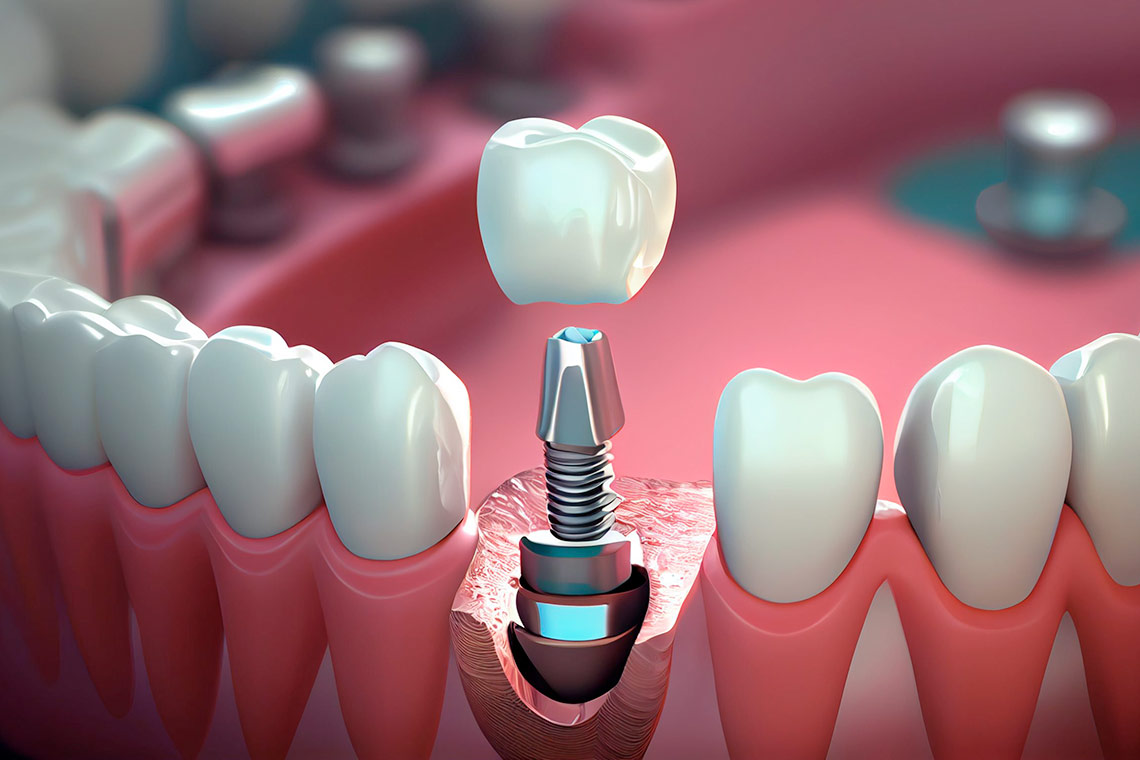
A typical implant restoration has three main components:
- Implant body: The portion placed within the jawbone that provides support.
- Abutment: A connector that links the implant to the replacement tooth.
- Crown or restoration: The visible part that replaces the missing tooth.
The implant acts as an artificial tooth root, while the crown replaces the visible portion of the tooth. Depending on how many teeth are missing, implants can also support a bridge or denture.
Unlike a conventional removable denture, an implant-supported restoration is anchored to an implant within the jaw. The appropriate restoration depends on the number and position of missing teeth, available bone, surrounding tissues and overall treatment plan.
How Does the Dental Implant Procedure Work?
Dental implant treatment usually takes place over several stages rather than in a single appointment. The exact sequence can vary depending on the condition of the tooth, bone and surrounding tissues.
Initial consultation
The process begins with an assessment of your missing tooth or teeth, dental history, general health and treatment expectations.
Examination and imaging
Your dentist examines your teeth, gums, bite and supporting tissues. Imaging helps assess the proposed implant site, available bone and nearby anatomical structures. A CBCT scan may be recommended when three-dimensional information is needed for treatment planning.
Treatment planning
The examination and imaging findings are used to determine whether an implant is appropriate and how it should be placed. The plan may also include other procedures if the implant site requires preparation.
Tooth extraction, if required
If the tooth is still present but cannot be restored, it may need to be removed. In selected cases, an implant may be placed immediately after extraction, while other situations require a healing period first.
Implant placement
The implant is surgically positioned within the jawbone. Local anaesthesia is generally used during the procedure, with the exact approach depending on the treatment plan.
Healing and bone integration
After placement, the implant needs time to heal and integrate with the surrounding bone. This process, known as osseointegration, is an important part of achieving a stable foundation for the restoration.
Abutment and restoration
Once the implant has healed sufficiently, the next stage can be planned. An abutment may be connected to the implant, followed by the fitting of the final crown, bridge or denture.
Who Can Be a Candidate for Dental Implants?
Having a missing tooth does not automatically mean that you are ready for an implant. Your dentist will consider your oral and general health before recommending treatment.
Factors that may be assessed include:
- Gum and periodontal health
- Amount and quality of available jawbone
- Number and position of missing teeth
- Condition of the remaining natural teeth
- Oral hygiene
- Smoking or tobacco use
- Medical conditions and medications
- Ability to follow treatment and maintenance instructions
- Overall treatment expectations
Age is also relevant. Dental implants are generally considered after jaw growth has been completed, which is why they are not routinely placed in adolescents whose jaw development is still ongoing.
Some health conditions and medications do not necessarily rule out implants, but they can change the risk assessment or treatment plan.
When Might Dental Implants Need Extra Caution?
Certain medical conditions, medications and previous treatments can affect implant planning, healing or the risk of complications.
Antiresorptive medications
Medications such as bisphosphonates and denosumab can affect bone metabolism. In particular situations, they are associated with a risk of medication-related osteonecrosis of the jaw. Your dentist needs to know about these medications before implant treatment is considered.
Previous head-and-neck radiation
A history of radiation therapy involving the jaw or surrounding head-and-neck region can affect the tissues and their ability to heal. This needs to be considered carefully during treatment planning.
Uncontrolled diabetes
Poorly controlled diabetes can affect healing and may increase the risk of complications. Blood glucose control is therefore an important part of assessing implant suitability.
Bleeding disorders and anticoagulants
Bleeding disorders and medicines that affect blood clotting, including anticoagulants, need to be reviewed before oral surgery. Medication should not be stopped or changed without appropriate medical advice.
Active oral disease
Untreated gum disease, infection or poor oral hygiene may need to be addressed before implant placement.
These factors do not mean that an implant is automatically impossible. They mean that the potential benefits and risks need to be assessed carefully before treatment is planned.
What Happens If You Delay Replacing a Missing Tooth?
Not every missing tooth requires immediate replacement, but leaving a gap can lead to changes over time.
Depending on the location of the missing tooth and your individual circumstances, possible changes may include:
- Changes in chewing patterns
- Movement or tilting of neighbouring teeth
- Changes in how the upper and lower teeth meet
- Changes in the supporting bone following tooth loss
- Difficulty maintaining a balanced bite in some cases
The effects are not identical for everyone. An assessment can help determine whether replacement is recommended and which option is appropriate.
What If You Do Not Have Enough Bone for a Dental Implant?
Adequate bone is important because a dental implant needs sufficient support within the jaw. After a tooth is lost, the surrounding bone can gradually change, which may affect the available space for implant placement.
If there is not enough bone at the intended implant site, additional treatment may sometimes be considered. Depending on the location and the amount of bone available, this may involve bone grafting or another site-development procedure.
A CBCT scan can provide detailed information about the available bone and nearby anatomical structures. Limited bone does not automatically mean that dental implants are impossible, but it can make treatment more complex and may increase the overall treatment time.
How Long Does the Whole Dental Implant Process Take?
Dental implant treatment usually takes several months from the initial assessment to the final restoration, although the exact timeline varies between patients.
A typical treatment pathway is: Assessment → Treatment planning → Implant placement → Healing and bone integration → Final restoration.
The healing and bone-integration stage commonly takes several months. The overall process may take longer if you need a tooth extraction, bone grafting, sinus augmentation or other preparatory treatment.
The timing also depends on the condition of the implant site and how your tissues heal. Your dentist can provide a more useful estimate after examining your teeth and reviewing the required imaging.
What Is the Difference Between Immediate Implant Placement and Immediate Loading?
These two terms are often confused, but they describe different stages of implant treatment.
Immediate implant placement means placing the implant into the extraction site soon after a tooth is removed. This may be possible in selected cases when the site has suitable bone and soft-tissue conditions and adequate implant stability can be achieved.
Immediate loading refers to attaching a provisional or functional restoration to the implant soon after placement rather than waiting for the conventional healing period.
An implant can therefore be placed immediately after extraction without necessarily being immediately loaded. Whether either approach is appropriate depends on factors such as the condition of the extraction site, available bone, infection, implant stability and the overall treatment plan.
What Is a Sinus Lift and When Is It Needed?
A sinus lift is a procedure that may be considered when there is not enough bone in the upper back jaw to support an implant safely.
The roots of the upper back teeth can be close to the maxillary sinus. After tooth loss, changes in the surrounding bone can sometimes leave insufficient vertical bone height for implant placement.
A sinus lift can increase the available bone in the intended implant area by carefully repositioning the sinus membrane and creating space for additional bone graft material. This can provide a more suitable foundation for implant placement when the upper jaw does not have enough bone height.
Does Getting a Dental Implant Hurt?
Dental implant placement is a surgical procedure, but local anaesthesia is generally used during the procedure to keep the treatment area numb.
After the procedure, it is common to experience some temporary soreness, swelling, tenderness or bruising. These symptoms generally improve as healing progresses, although the level of discomfort can vary depending on the extent of treatment and the individual.
Following the post-operative instructions provided by your dental team can help support recovery. Severe, worsening or persistent symptoms should be assessed by your dental provider rather than assumed to be part of normal healing.
What Are the Possible Risks and Complications of Dental Implants?
Dental implants can be a reliable tooth-replacement option, but they are still a surgical treatment and can involve risks.
The possible complications of dental implants include:
- Infection or inflammation around the implant
- Delayed or unsuccessful integration with the bone
- Implant loosening or failure
- Bone loss around the implant
- Nerve-related symptoms, particularly with certain lower-jaw procedures
- Sinus-related complications with implants placed in the upper jaw
- Difficulty cleaning around the implant
- Mechanical or restoration-related problems
- Changes in how the replacement tooth feels or functions
The risk of complications can be influenced by factors such as gum disease, smoking, diabetes, oral hygiene, bone condition and certain medical conditions or medications.
This is why implant treatment requires appropriate planning and continued maintenance after the final crown or restoration is fitted.
How Long Do Dental Implants Last?
Dental implants are designed to provide a long-term solution for replacing missing teeth, but there is no guaranteed lifespan that applies to every patient.
The long-term success of dental implants can be influenced by:
- Oral and gum health
- Daily oral hygiene
- Smoking or tobacco use
- Diabetes control
- Bite and functional forces
- The condition of the surrounding bone
- Regular professional maintenance
- Care of the implant-supported restoration
The implant itself and the crown, bridge or denture attached to it should both be monitored over time. A loose implant, persistent pain, swelling or difficulty cleaning around the area should be assessed promptly.
Long-term studies generally report high survival rates for dental implants, but the exact outcome varies according to the implant, patient, treatment site and length of follow-up.
What Can Affect the Long-Term Success of a Dental Implant?
Getting the implant placed is only one part of the treatment. Maintaining the health of the surrounding tissues is important for its long-term function.
Good daily oral hygiene, regular dental reviews and professional maintenance can help monitor the implant and the tissues around it.
Factors such as smoking, untreated gum disease, poor oral hygiene, uncontrolled diabetes and excessive functional forces can increase the risk of complications. Following the recommended maintenance schedule can help identify problems before they become more serious.
Single Tooth, Multiple Teeth or Full-Mouth Implant Treatment: What Is the Difference?
The number of missing teeth influences how implant treatment may be planned.
| Situation | Possible Implant-Based Approach |
|---|---|
| One missing tooth | A single implant-supported crown may be considered. |
| Several missing teeth | Multiple implants or an implant-supported bridge may be considered. |
| Many or all teeth missing | A more extensive implant-supported rehabilitation may be considered. |
The appropriate approach depends on factors such as available bone, gum health, remaining teeth, bite, general health and the patient's treatment goals.
Dental Implants vs Bridges vs Dentures: Which Option Is Right?
Dental implants are not the only way to replace missing teeth. Bridges and dentures may also be appropriate depending on the condition of your mouth and your treatment needs.
| Factor | Dental Implants | Bridges | Dentures |
|---|---|---|---|
| Support | Anchored to implants within the jaw | Supported by neighbouring teeth | Usually rests on the gums or may be implant-supported |
| Removability | Usually fixed | Usually fixed | Often removable |
| Treatment process | Requires surgical implant placement | Usually does not require implant surgery | Does not necessarily require implant surgery |
| Effect on neighbouring teeth | Does not normally require grinding healthy neighbouring teeth | Conventional bridges generally require preparation of supporting teeth | Does not rely on neighbouring teeth for support |
| Bone considerations | Available bone is important | Does not replace the tooth root | Bone loss can continue beneath conventional dentures |
| Maintenance | Requires cleaning around the implant and restoration | Requires careful cleaning around the bridge | Requires denture-specific cleaning and maintenance |
There is no single tooth-replacement option that is best for everyone. The decision should consider your oral health, bone condition, treatment goals, general health, preferences and the maintenance involved with each option.
What Should You Know About Caring for Dental Implants?
Implants require ongoing care after treatment. They should be cleaned regularly, just like natural teeth, while paying particular attention to the areas around the implant and restoration.
Your dentist may recommend specific brushing and interdental-cleaning techniques based on your restoration and gum health. Regular professional reviews are also important for checking the implant, surrounding tissues and restoration.
If you notice persistent bleeding, swelling, pain, looseness or difficulty cleaning around the implant, arrange an assessment rather than waiting for the symptoms to resolve on their own.
What Happens During Your First Dental Implant Consultation?
The first consultation is an opportunity to understand your dental condition and determine whether an implant is an appropriate option.
Your appointment may include:
- Discussing your missing tooth or teeth and your treatment concerns
- Reviewing your dental and medical history
- Examining your teeth, gums and bite
- Assessing the available bone and surrounding structures
- Reviewing dental X-rays or a CBCT scan, when indicated
- Discussing whether additional procedures such as bone grafting or a sinus lift may be required
- Comparing implants with bridges, dentures or other suitable options
- Discussing the expected treatment stages, healing period, risks and maintenance
This assessment helps create a treatment plan based on your individual oral condition rather than using the same approach for every patient.
Questions to Ask Before Getting a Dental Implant
Before starting treatment, it can be useful to understand exactly what is involved. Consider asking:
- Am I suitable for a dental implant?
- Do I have enough bone for implant placement?
- Will I need a bone graft or sinus lift?
- Can the implant be placed immediately after extraction?
- Would immediate loading be appropriate in my case?
- What alternatives are available?
- How long is the expected treatment and healing period?
- What type of restoration will I receive?
- What are the main risks in my particular case?
- What maintenance will the implant require?
Having these questions answered can help you understand your options and make a more informed decision.
Why Consider Supreme Elite Clinic for Dental Implant Treatment?
Choosing dental implant treatment involves more than replacing the visible part of a missing tooth. The condition of the gums, available bone, surrounding teeth, bite and overall oral health can all influence the treatment plan.
At Supreme Elite Clinic, patients considering dental implants in Padur or Kelambakkam can discuss their concerns and explore suitable treatment options based on their individual dental condition.
The treatment process can involve assessment, appropriate imaging, personalised planning, discussion of alternatives and follow-up care. Understanding each stage can help patients make a more informed decision about replacing a missing tooth.
Conclusion
Dental implants can offer a stable, long-term way to replace missing teeth, but successful treatment involves more than simply placing an implant. Bone condition, gum health, medical history, medications, healing and long-term maintenance all need to be considered.
Understanding the treatment stages, possible risks and available alternatives can help you approach the decision with realistic expectations. A detailed dental assessment can then determine whether an implant or another tooth-replacement option is appropriate for you.