The right lens is not just a matter of power — it's corneal topography, tear film quality, ocular surface health, and your lifestyle. A proper fitting consultation ensures comfort, safety, and clear vision from day one.
From simple daily disposables to specialist scleral lenses for keratoconus — we fit the full range and recommend only what your cornea and lifestyle genuinely need.

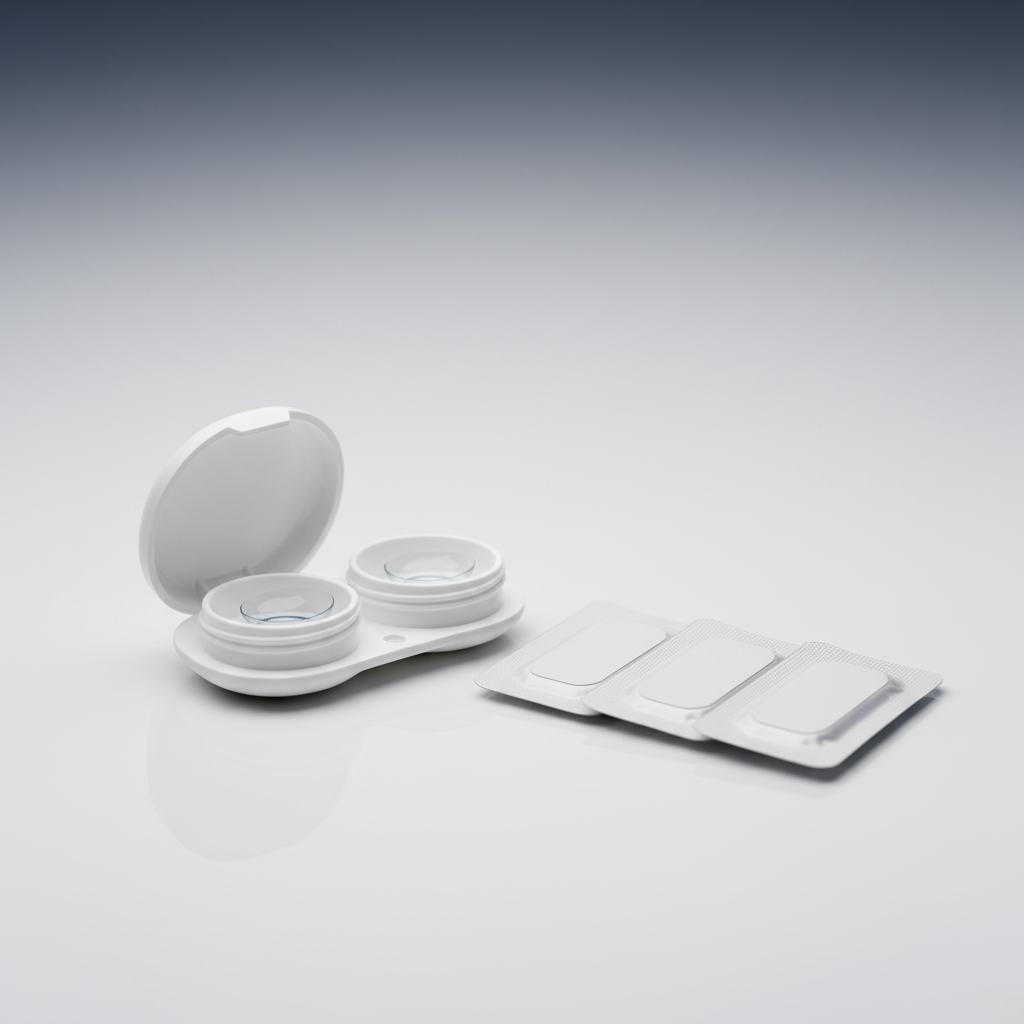
1-Day lenses are the healthiest option for occasional-to-regular wear — fresh sterile lens every day, no cleaning, minimal deposit build-up. Ideal for beginners, sport, and anyone who doesn't want a maintenance routine. Available in powers from -20.00 to +8.00.

High-oxygen silicone hydrogel monthly lenses for full-time wearers who prefer the economy of monthly replacement. Require nightly cleaning and case hygiene. Premium silicone hydrogel materials (Air Optix, Biofinity) transmit significantly more oxygen than older HEMA lenses.

Designed for astigmatism up to -3.50DC — weighted or stabilised to resist rotation on the eye. Fitting toric lenses requires assessing lens orientation on your cornea and adjusting the axis marking. Available as daily or monthly. Not all prescriptions suit toric soft lenses; some require RGP fitting.

For patients over 40 who need correction for both distance and near — multifocal soft lenses use concentric zone or aspheric designs. Monovision (one eye for distance, one for near) is an alternative for those who prefer simplicity. Requires a trial period to assess neural adaptation.

Large-diameter rigid gas-permeable lenses that vault the irregular cornea and land on the sclera — providing a smooth refractive surface. The definitive non-surgical correction for keratoconus, pellucid degeneration, and post-surgical irregular astigmatism. Fitted using corneal topography mapping.

Night-wear rigid lenses that gently reshape the corneal epithelium while sleeping — providing spectacle-free vision during the day. Also slows myopia progression in children and teenagers by up to 50% through peripheral retinal defocus. Fitted using corneal topography; custom-designed for each eye.
A proper fitting takes 45–60 minutes. Never accept a lens dispensed purely from your spectacle prescription — the fitting parameters (base curve, diameter, material) must be assessed on your eye.
Maps the curvature and shape of your cornea — essential for selecting base curve, detecting early keratoconus before it causes visual symptoms, and for scleral/OK lens design. Takes 2 minutes and requires no eye drops.
Dry eye is the most common reason contact lenses become uncomfortable after months of wear. We assess TBUT and meibomian gland function before fitting — and recommend the appropriate lens material and replacement schedule for your tear film.
Trial lenses are placed on the eye and assessed on the slit lamp for centration, movement, and coverage. For toric lenses, axis orientation is verified. For scleral lenses, vault clearance is measured with OCT.
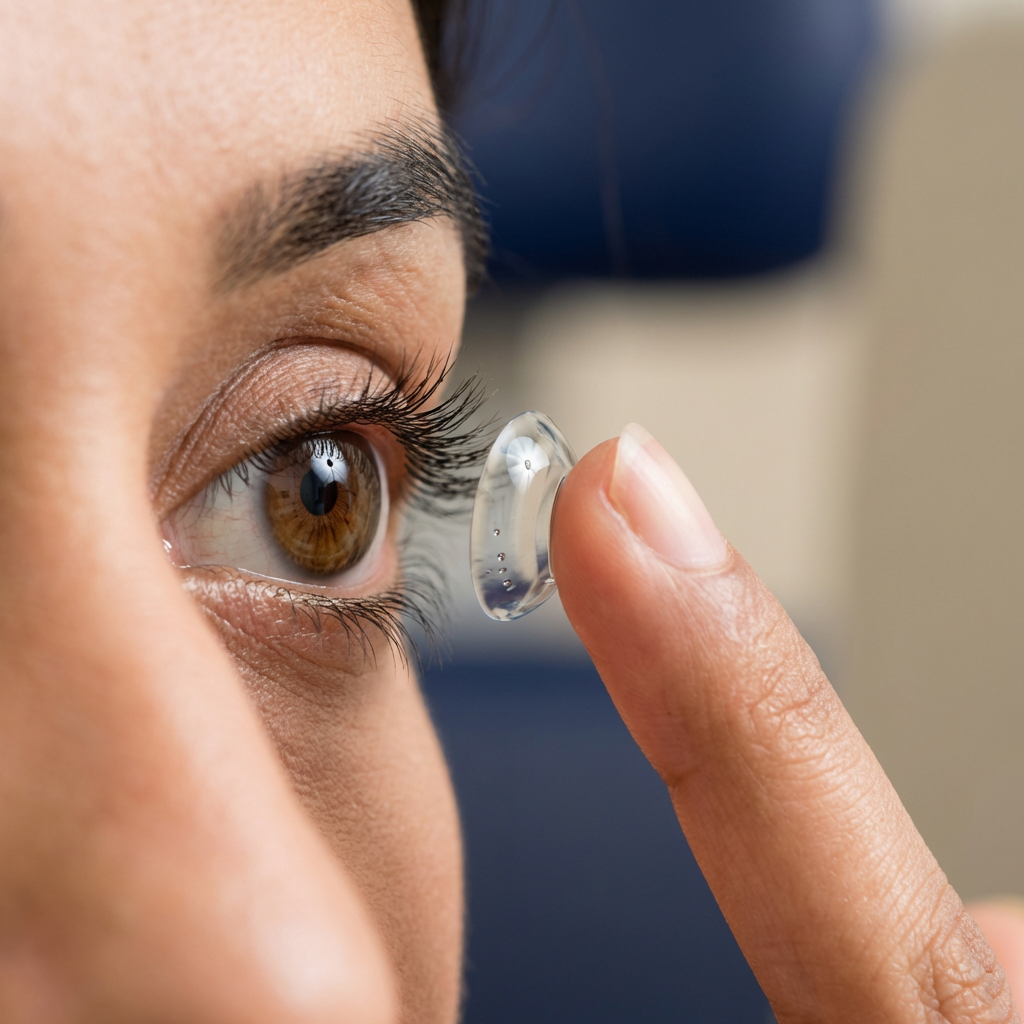
All new wearers receive hands-on insertion and removal training — as many attempts as needed until confident. Hygiene protocols, maximum wear time, and when to remove the lens are covered before leaving the clinic.
Slit lamp review after 1 week of wear checks for corneal staining, neovascularisation, and confirms the fit is still appropriate under habitual wearing conditions. Prescription is finalised only after the follow-up.

Ill-fitting lenses worn too long cause microbial keratitis — a potentially sight-threatening infection. Our fitting is guided by topography, not guesswork, with clear instruction and follow-up to protect your eyes.
Every fitting begins with corneal topography — revealing subtle irregularities, early keratoconus, and the precise curvature data needed for scleral and OK lens design. Not every clinic does this for routine soft lens fittings. We do.
Scleral lens fitting for keratoconus requires OCT vault measurement, multiple trial lenses, and iterative refinement. We carry a full range of diagnostic trial scleral sets and can usually achieve a finalised fit within 2–3 visits.
We never fit contact lenses without assessing tear film first. Fitting lenses on an undiagnosed dry eye accelerates gland atrophy. We treat the dry eye first — then fit lenses with a material appropriate for your tear chemistry.
The best lens depends on your prescription, corneal shape, tear film, and lifestyle — not just preference. Use this as a starting guide; your fitting will confirm the right choice.
| Lens Type | Soft Daily | Soft Monthly (SiHy) | Toric / Multifocal | Scleral / OK Lens |
|---|---|---|---|---|
| Best For | Occasional wear, beginners | Full-time wearers | Astigmatism / presbyopia | Keratoconus / myopia control |
| Max Daily Wear | 14–16 hours | 14–16 hours | 14–16 hours | 12–16 hours (scleral) |
| Oxygen Transmission | Moderate (HEMA daily) | Very high (silicone hydrogel) | High (SiHy toric) | High (RGP material) |
| Maintenance | None — dispose daily | Daily clean + case hygiene | Daily clean | Nightly clean + saline fill |
| Dry Eye Tolerance | Moderate | Good (SiHy) | Variable | Excellent (scleral) |
| Fitting Cost | ₹500 | ₹500 | ₹800 | ₹2,500 + topography |
Redness or pain • Blurred vision that doesn't clear • Discharge or watering • Sensitivity to light • Foreign body sensation that persists. Do not reinsert and call us: +91 96774 73344
Bring your current spectacle prescription if you have one.