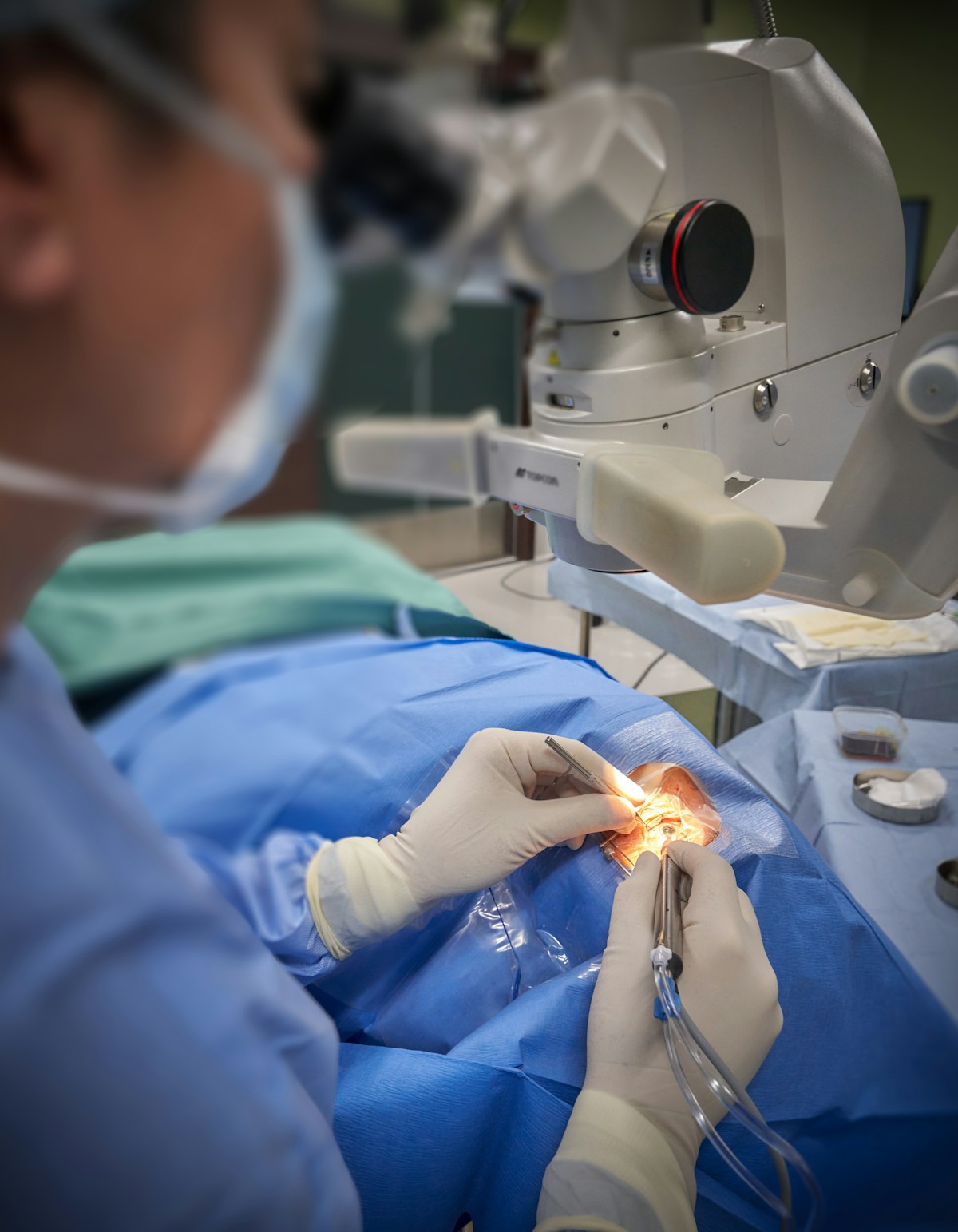
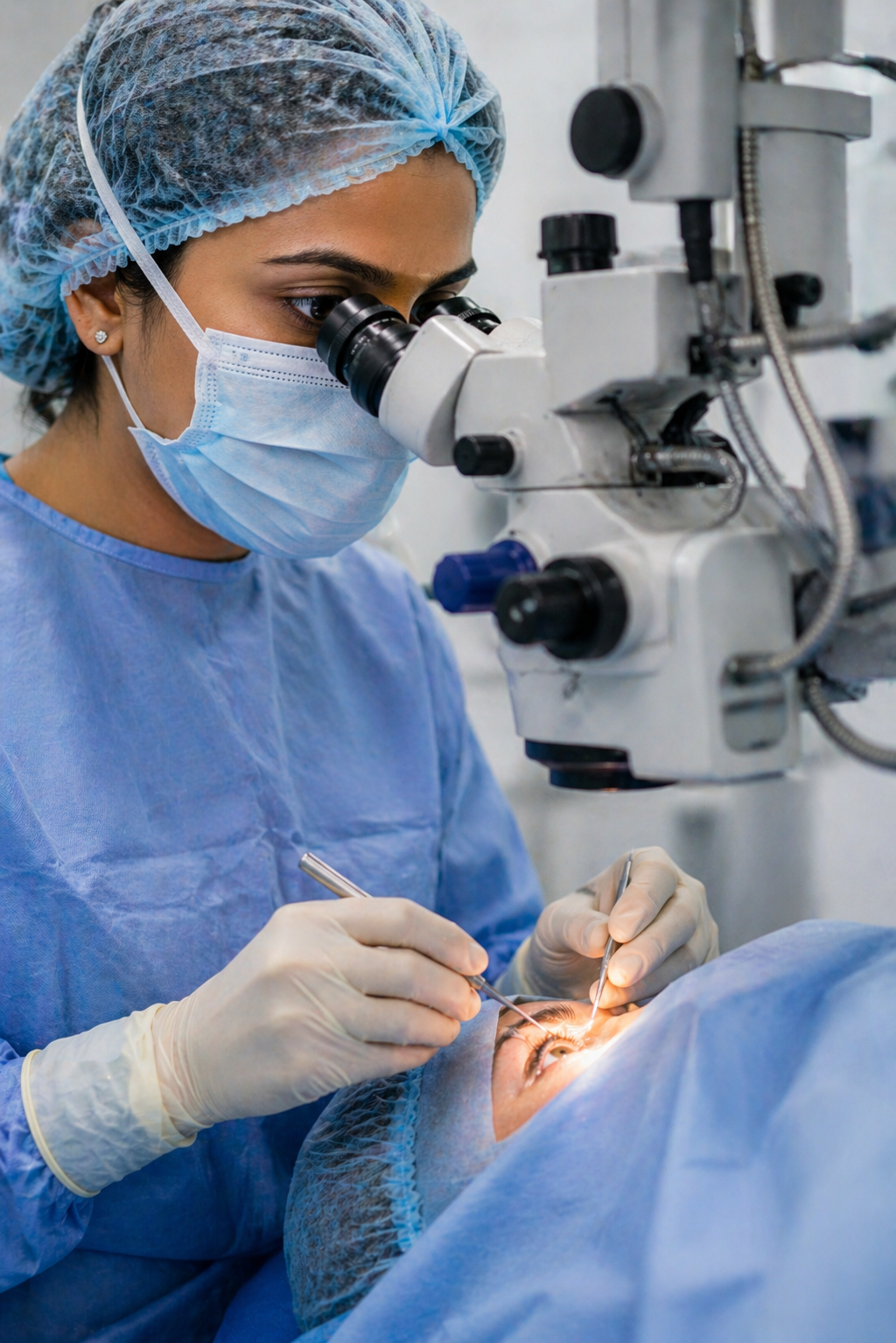
Micro-incision phacoemulsification — the world gold standard in cataract removal. Your clouded natural lens replaced with a premium IOL in under 15 minutes, restoring vision you may not have had in years.
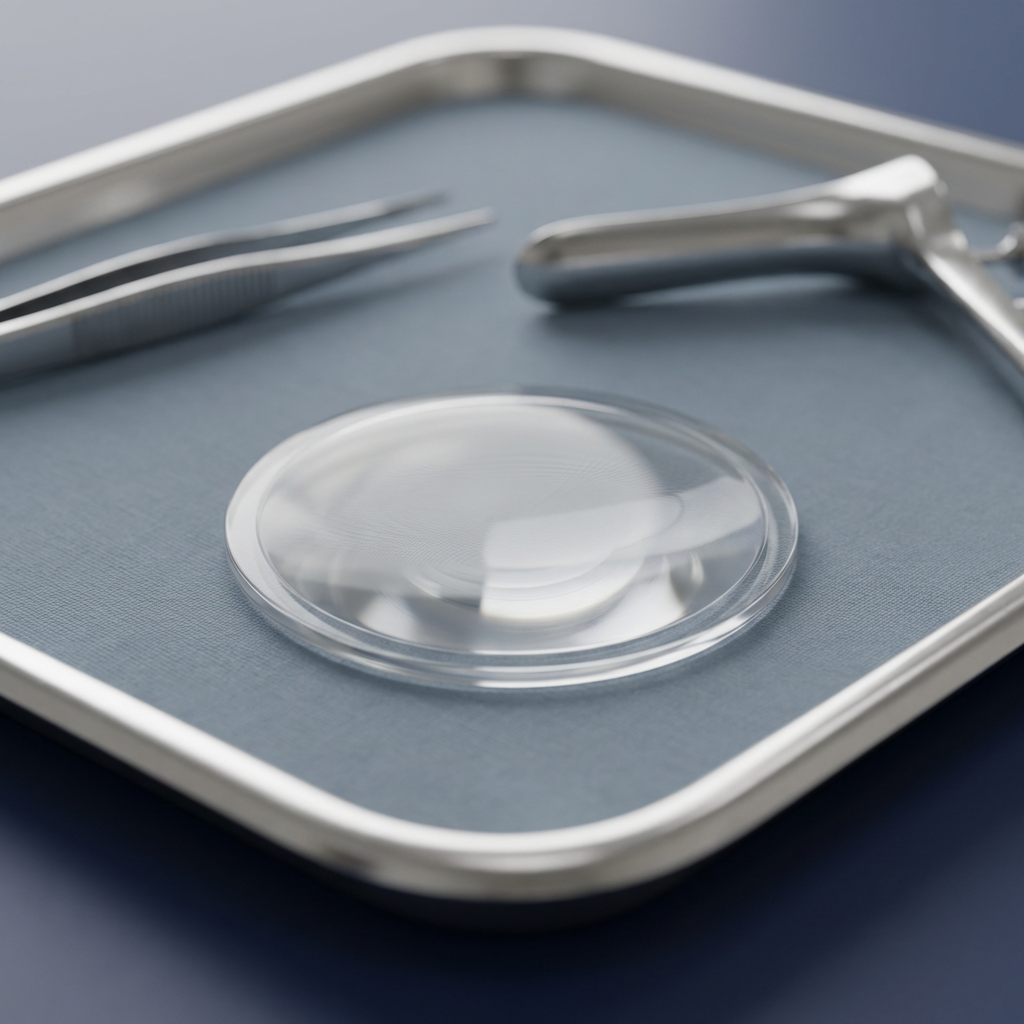
The intraocular lens you choose determines your visual quality after surgery. We counsel every patient thoroughly on the trade-offs before deciding.
Fixed focus at one distance — usually distance vision. You'll see clearly for driving and TV but will need reading glasses for near work. The most commonly used IOL worldwide and covered under most insurance schemes.
Like a monofocal IOL but with an additional cylinder correction built in — eliminating pre-existing corneal astigmatism at the time of surgery for sharper, spectacle-free distance vision.
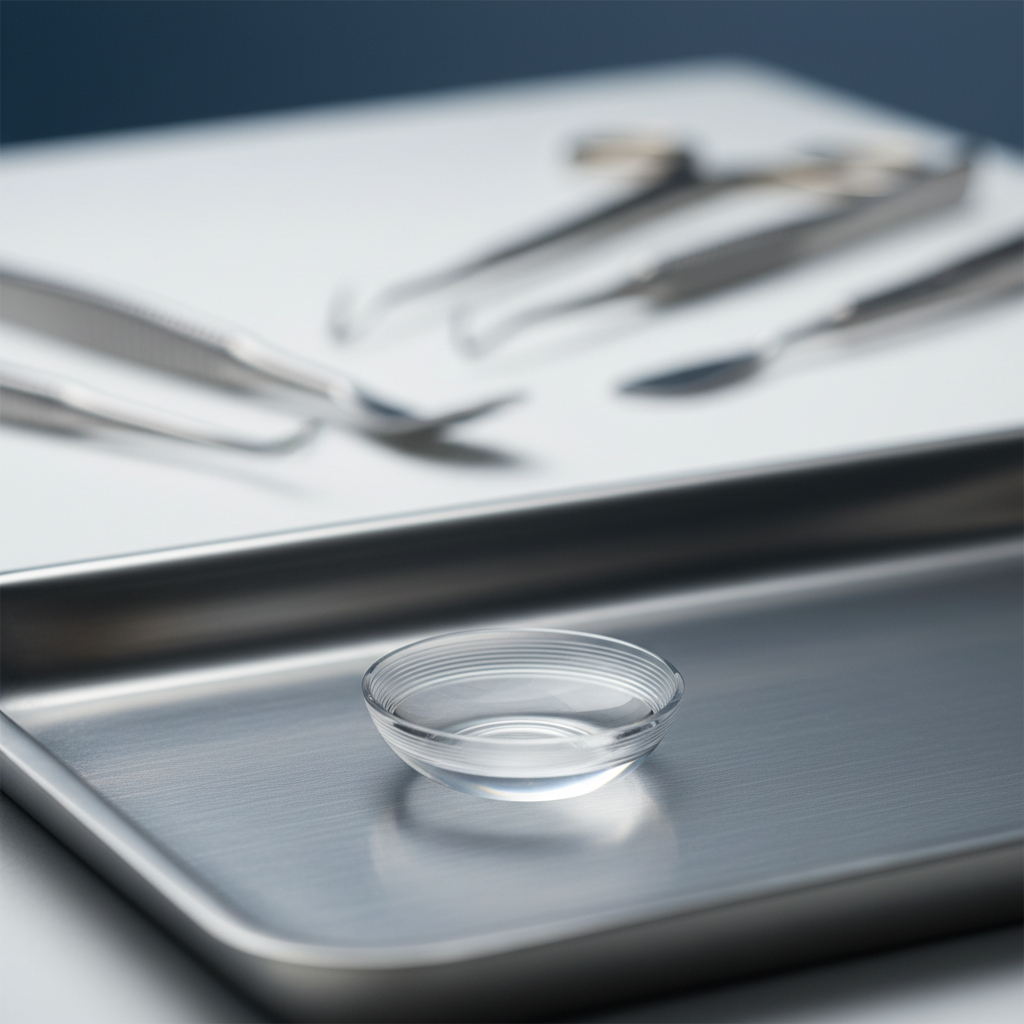
Diffractive rings on the lens distribute light to near, intermediate, and distance focal points simultaneously — allowing most patients to read their phone, use a computer, and drive without any glasses post-surgery.
Creates a single elongated focal point instead of multiple discrete ones — providing excellent distance and intermediate vision with fewer halos than traditional multifocals. Ideal for active patients who drive at night.
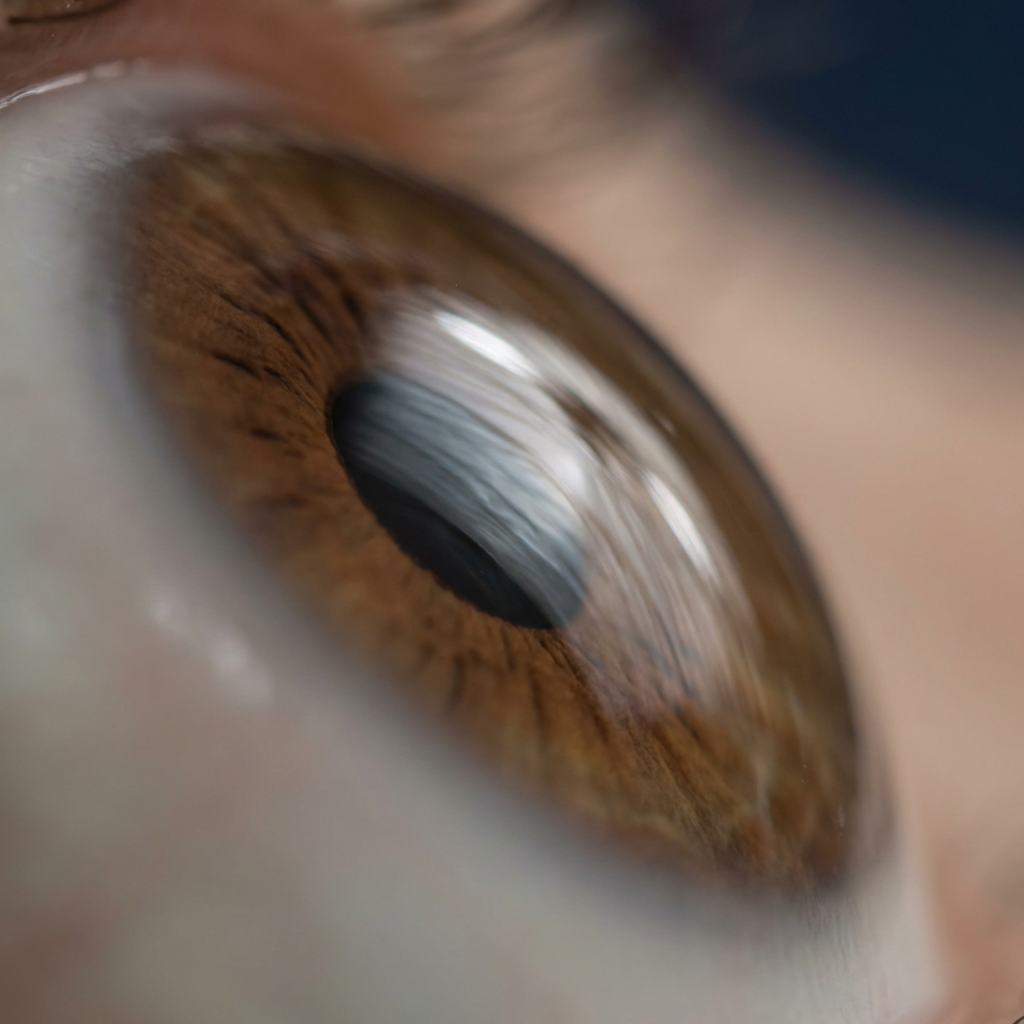
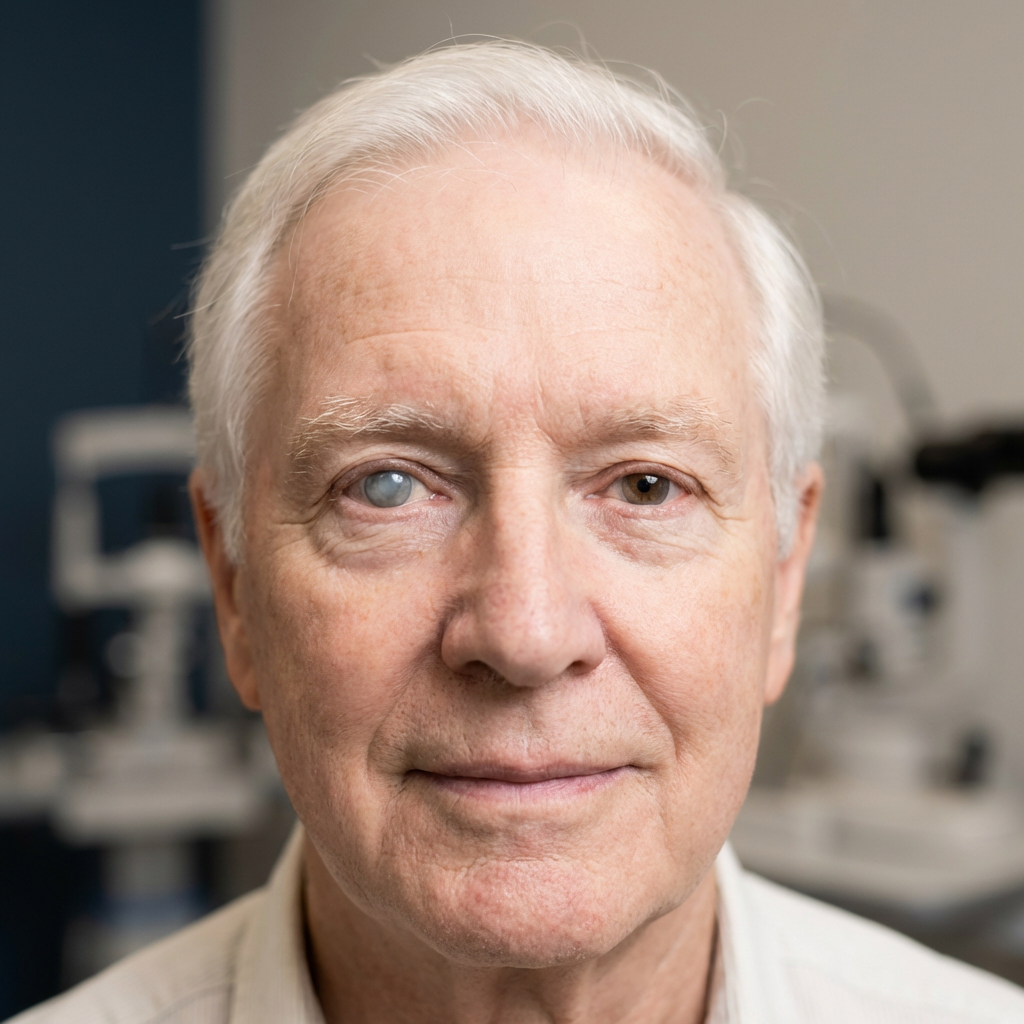
The most common type — progressive yellowing and hardening of the central lens nucleus from the 5th decade onward. Surgery is indicated when vision interferes with daily activities, not just when a cataract is "ripe."
PSC cataracts caused by long-term steroid use, diabetes or eye trauma develop at the back of the lens and affect vision more severely at earlier stages — particularly in bright light and while reading.
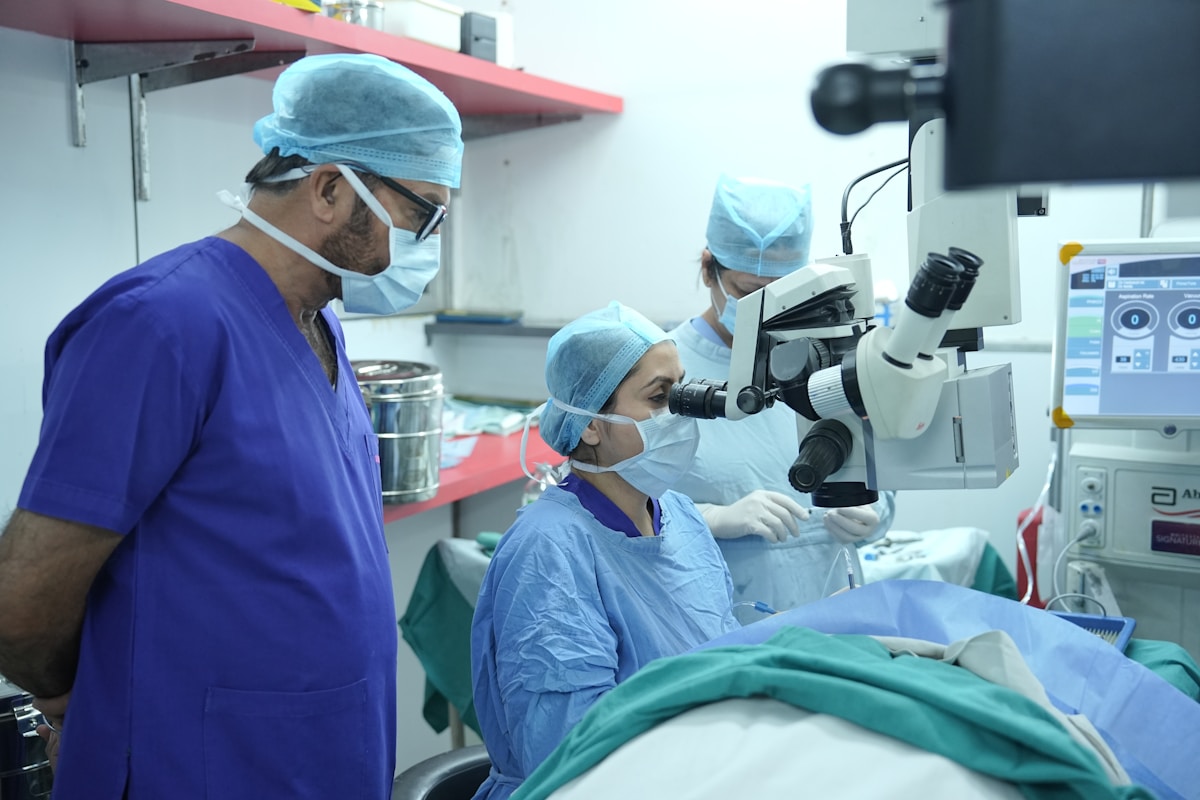
Cataract surgery is a day-care procedure — you arrive, have surgery, and go home within 3–4 hours. No general anaesthesia, no hospital admission required.
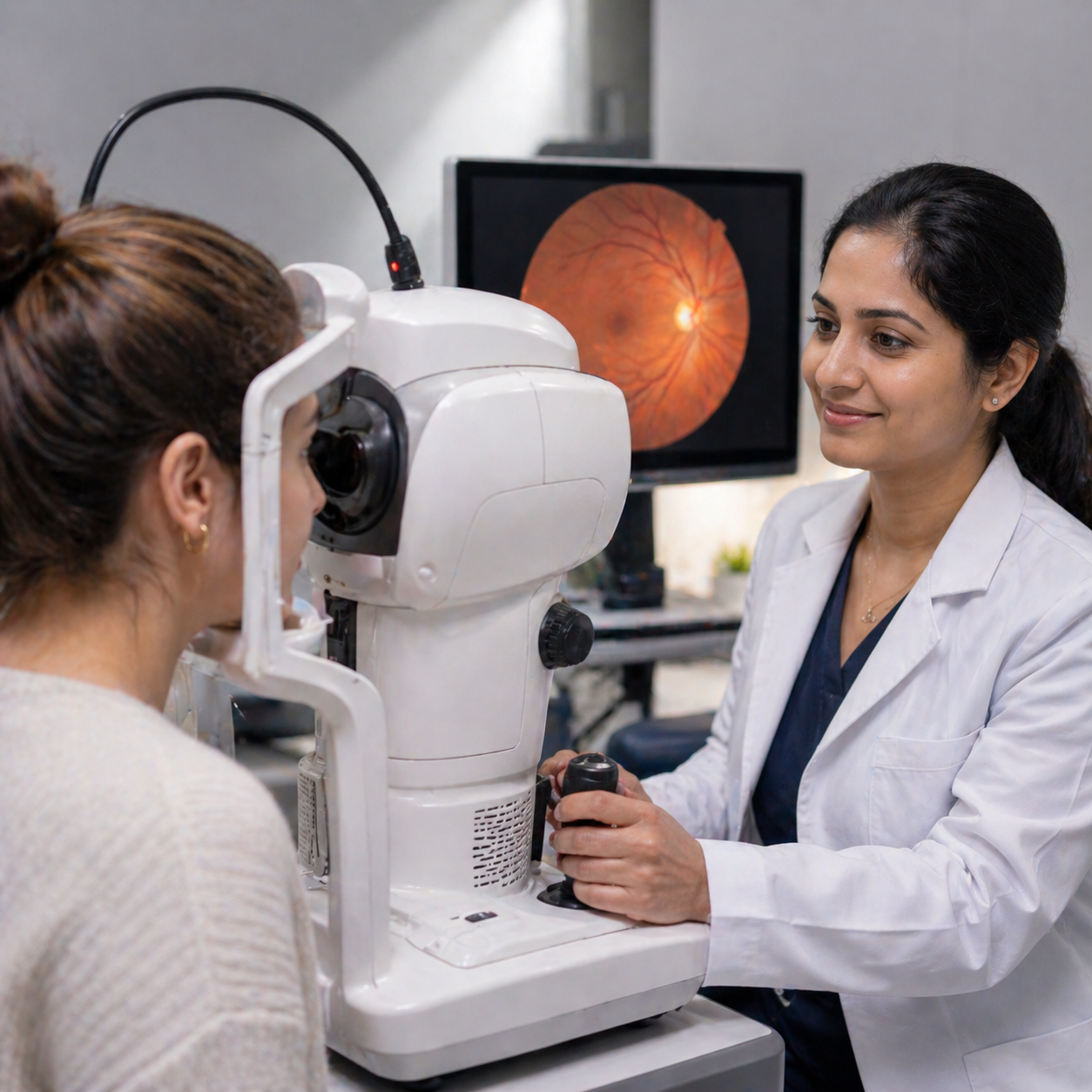
Optical biometry (IOLMaster) precisely measures axial length, corneal curvature and anterior chamber depth. These measurements feed into the Barrett Universal II formula to calculate the correct IOL power for your target refraction.
Anaesthetic eye drops numb the eye completely — no injection, no patch over the eye. Pupil-dilating drops are instilled to provide adequate surgical access. The procedure is performed awake; you see light but nothing uncomfortable.
A 2.2 mm micro-incision is made at the corneal edge. An ultrasonic phaco probe breaks the cataract into tiny fragments which are aspirated out — leaving the posterior capsule intact to hold the new IOL.
The foldable IOL is inserted through the same 2.2 mm incision using an injector, then unfolds and centres itself within the capsular bag. The incision is self-sealing — no sutures required in most cases.
You rest for 30 minutes, receive antibiotic and anti-inflammatory eye drops, and are discharged with a protective shield. Vision begins improving within 24 hours. Full stabilisation takes 4–6 weeks.
We use 2.2 mm micro-incision technique with the latest phacoemulsification platform — faster healing, lower astigmatism induction, and better outcomes than older large-incision methods.
Optical biometry with the Barrett Universal II formula — the same IOL calculation standard used in top academic centres — ensuring your IOL power is correct to within 0.25 D in 98% of cases.
We stock monofocal, toric, multifocal, EDOF and light-adjustable IOLs from Alcon, Johnson & Johnson and Zeiss — ensuring every patient gets the lens best suited to their visual demands and lifestyle.
We schedule second-eye surgery within 1–2 weeks of the first. Both eyes are biometried and planned simultaneously so IOL powers complement each other for optimal binocular vision and balance.
Each IOL type has specific advantages. Your surgeon will recommend based on your lifestyle, corneal health, and visual demands.
| Feature | Monofocal | Toric | Multifocal | EDOF |
|---|---|---|---|---|
| Distance vision | Excellent | Excellent | Excellent | Excellent |
| Intermediate (computer) | Poor | Poor | Good | Excellent |
| Near (reading) | Needs glasses | Needs glasses | Good–Excellent | Fair |
| Astigmatism correction | No | Yes | Toric version available | Toric version available |
| Night driving / halos | Minimal | Minimal | Some halos possible | Minimal |
| Starting cost per eye | ₹25,000 | ₹45,000 | ₹65,000 | ₹75,000 |
Cataract surgery with monofocal IOL is covered under most health insurance plans including CGHS, ESI, and private insurers. Premium IOL upgrades are a patient-pay add-on. Our billing team assists with pre-authorisation and claim documentation.
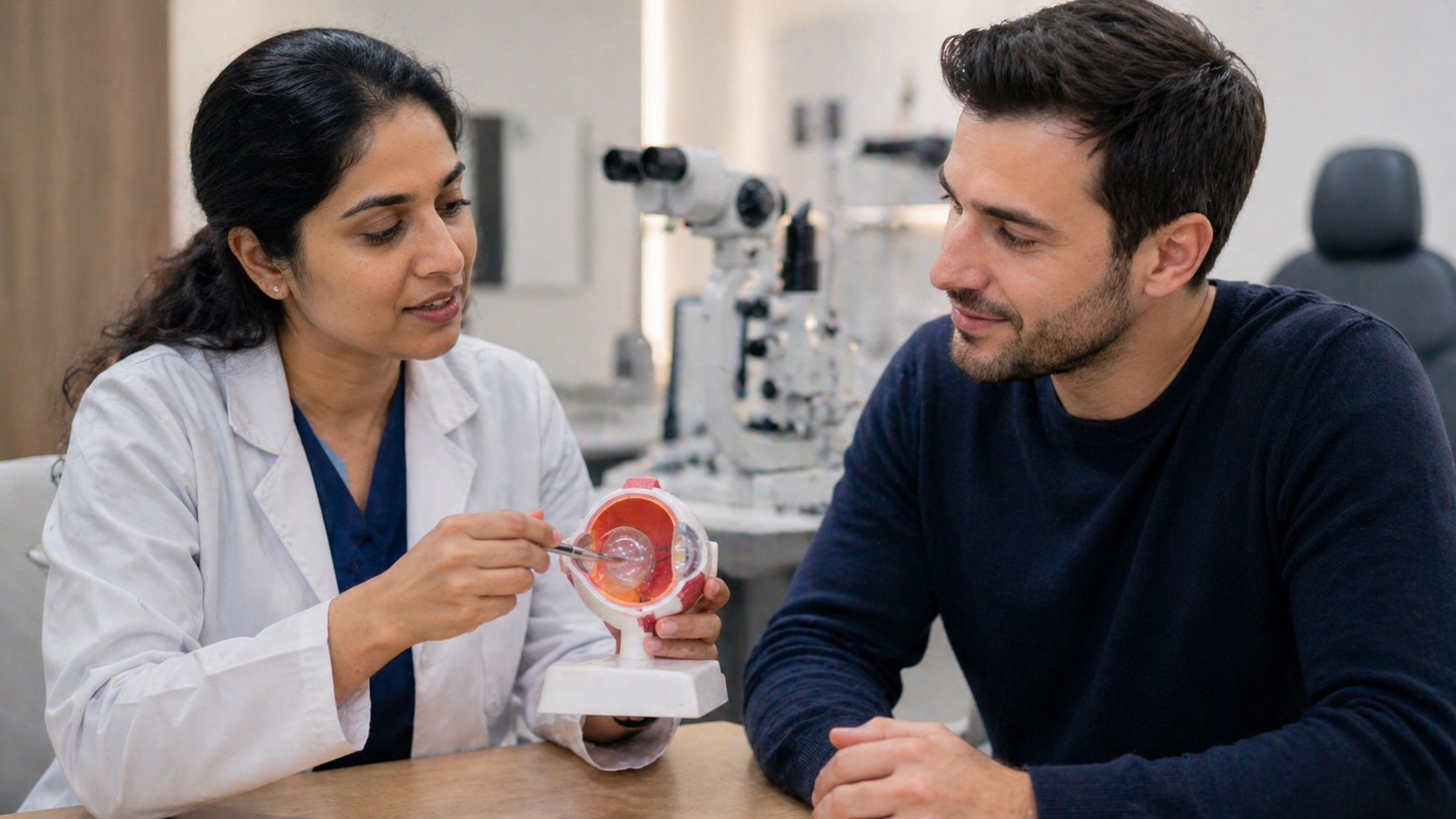
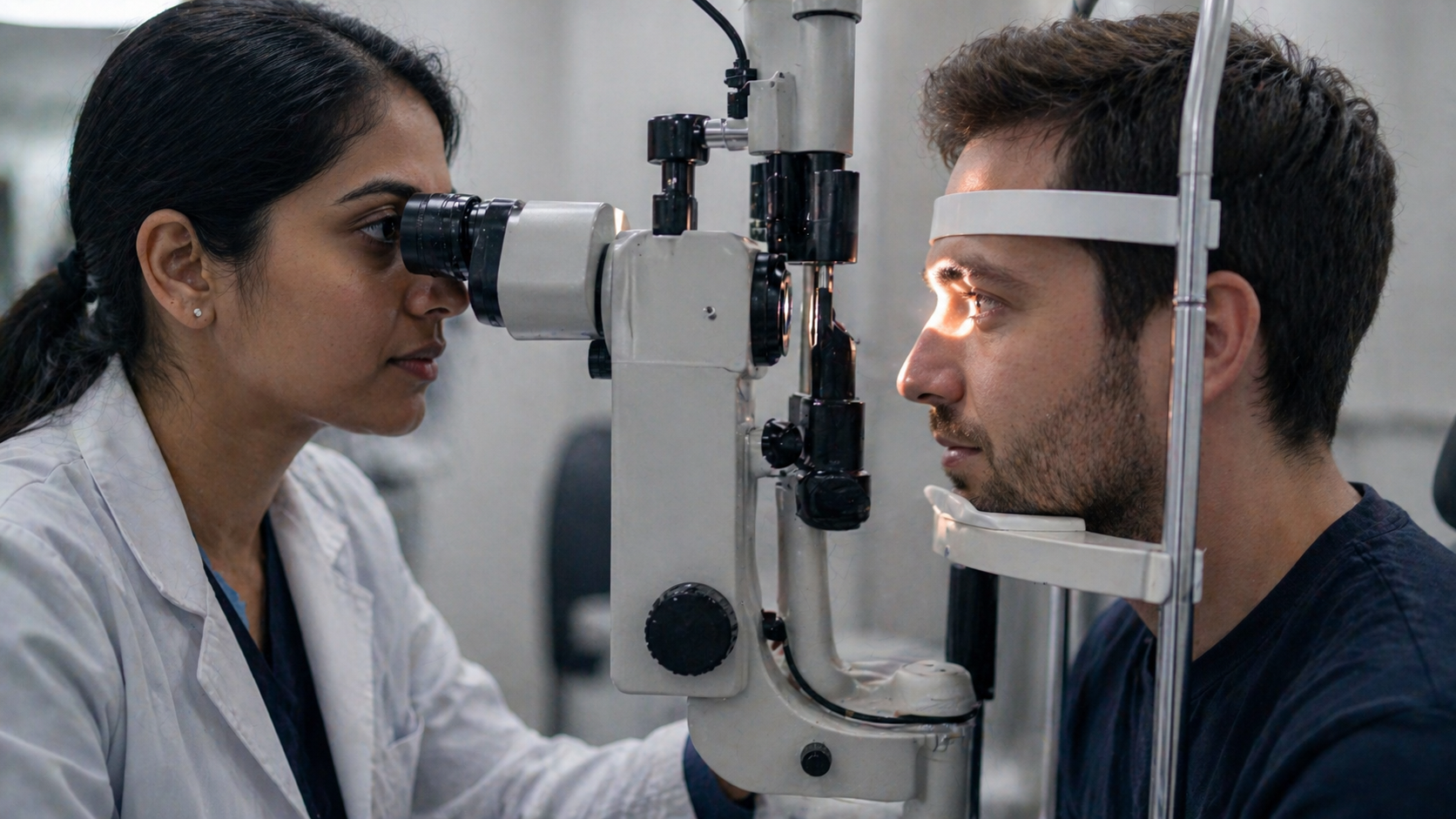
Pre-surgical consultation includes slit lamp examination, biometry and IOL counselling.