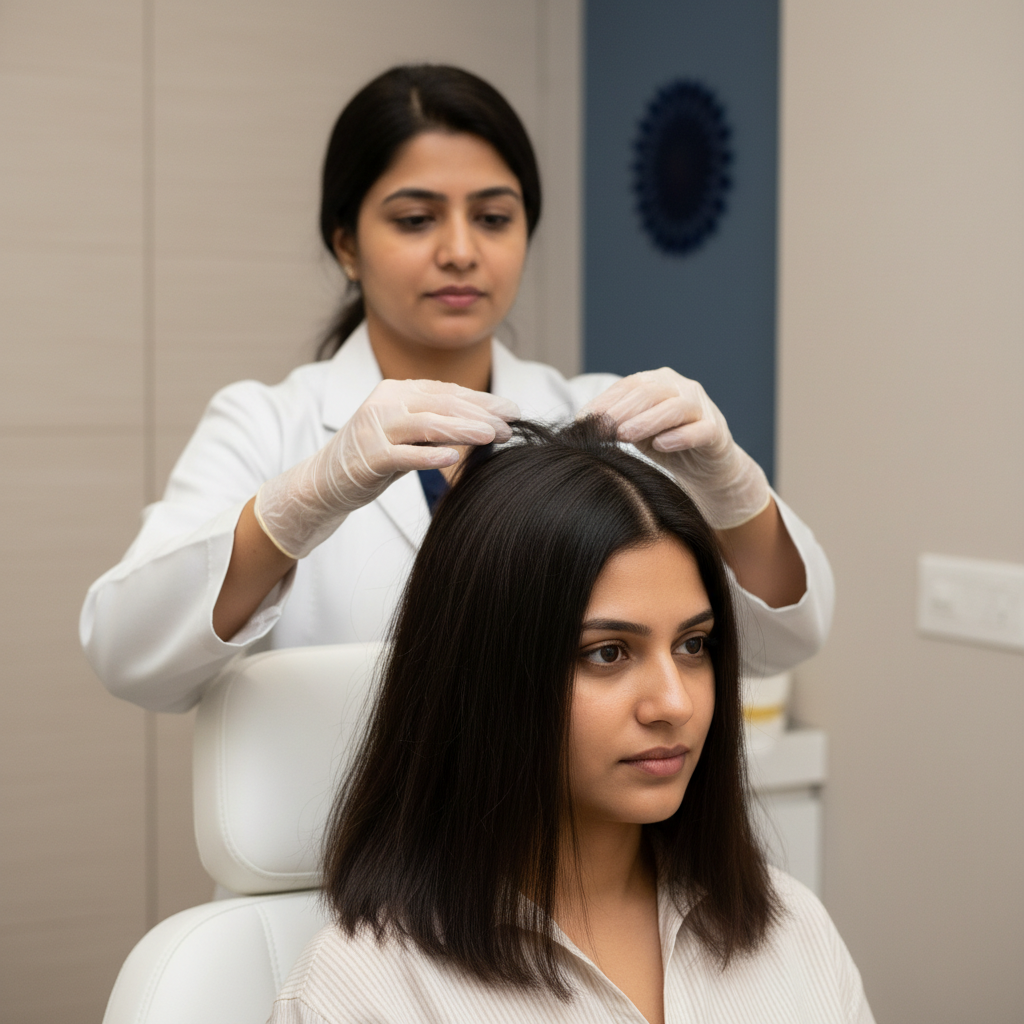
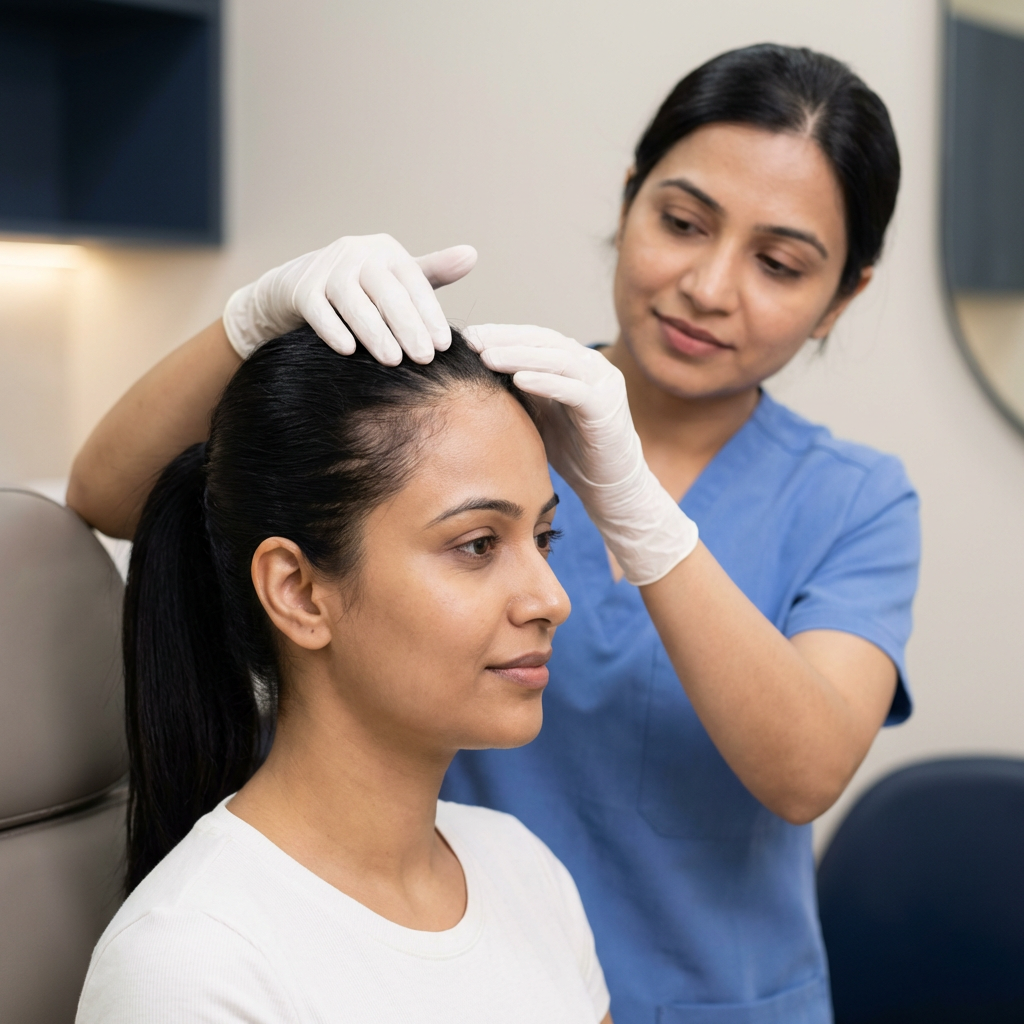
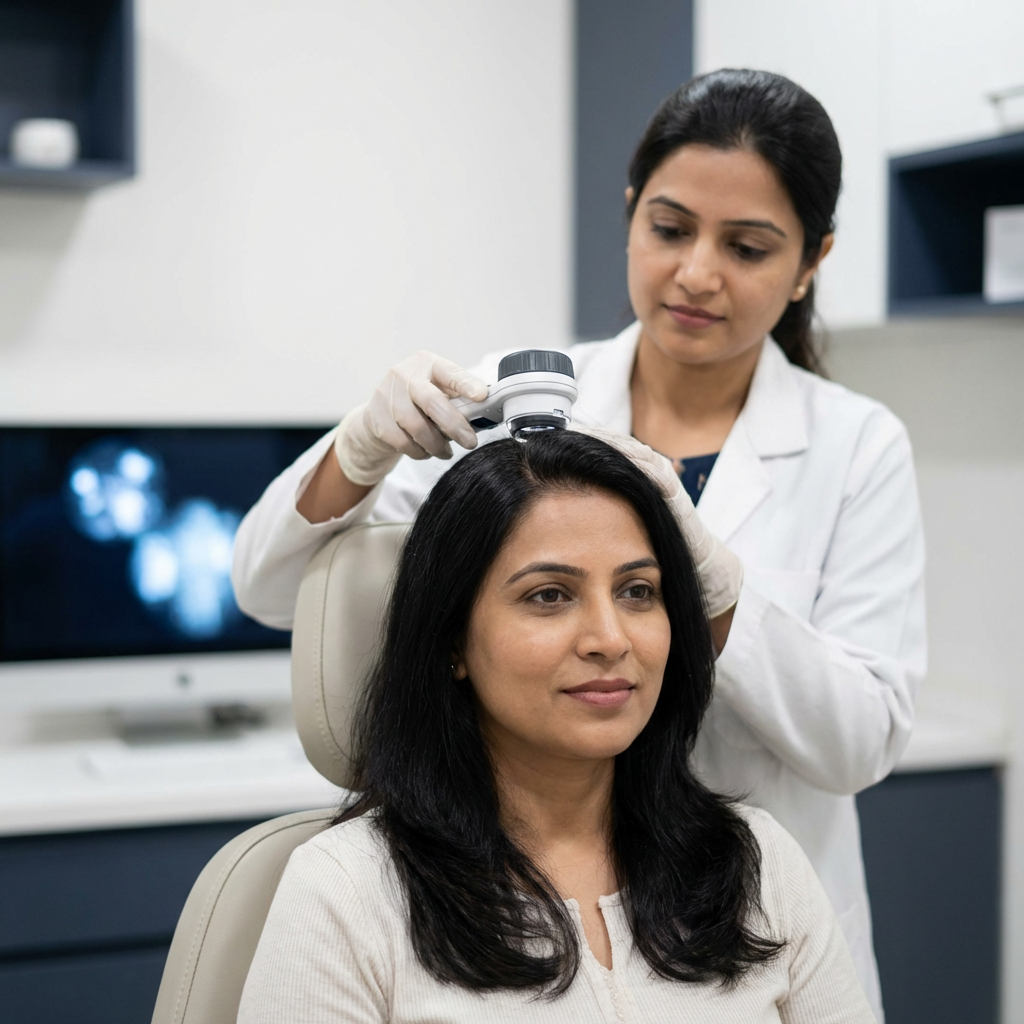
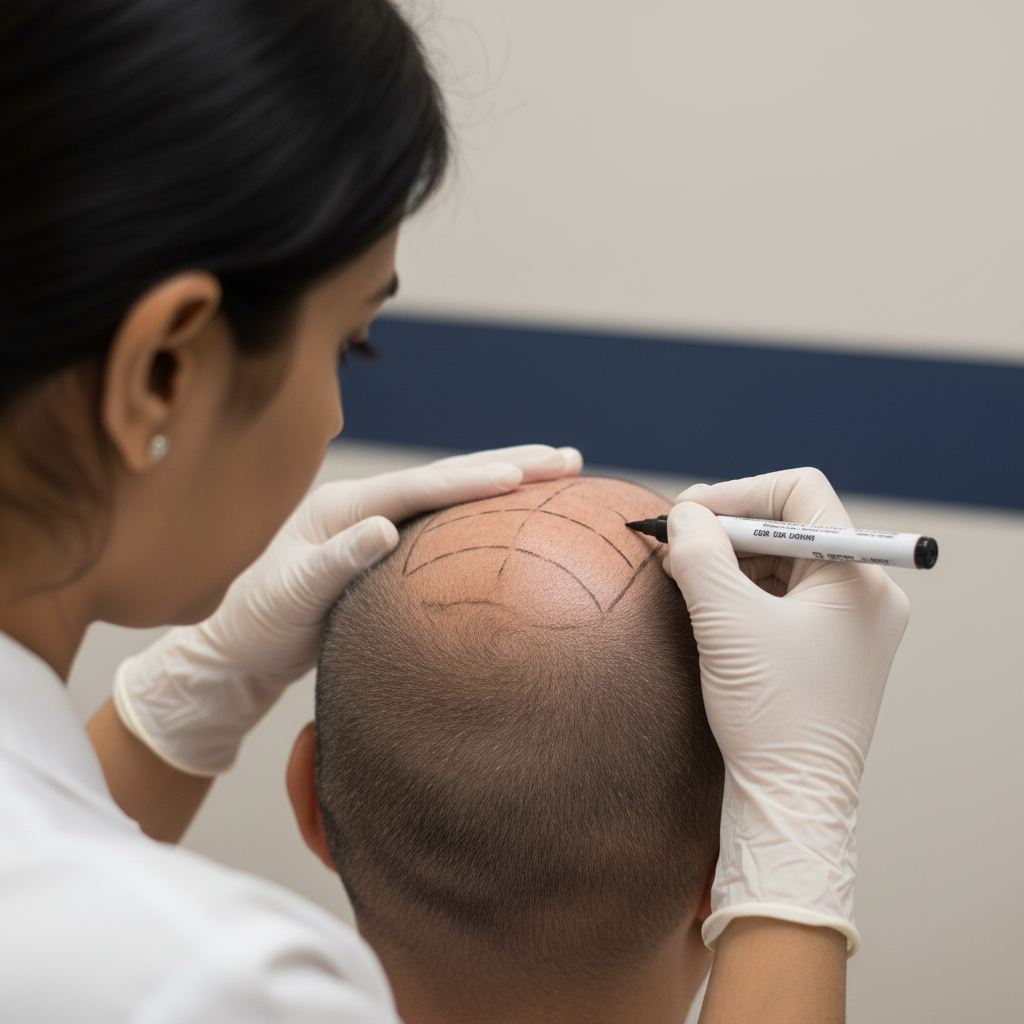
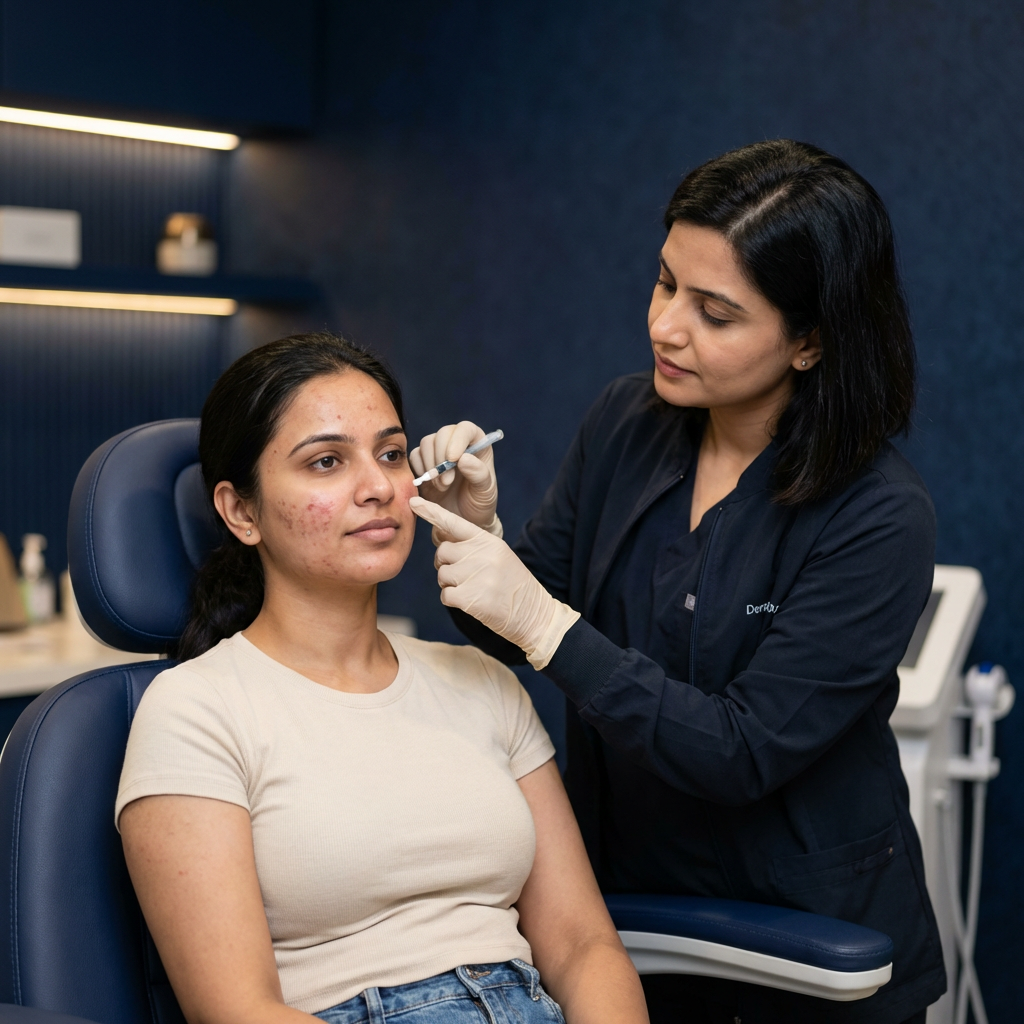
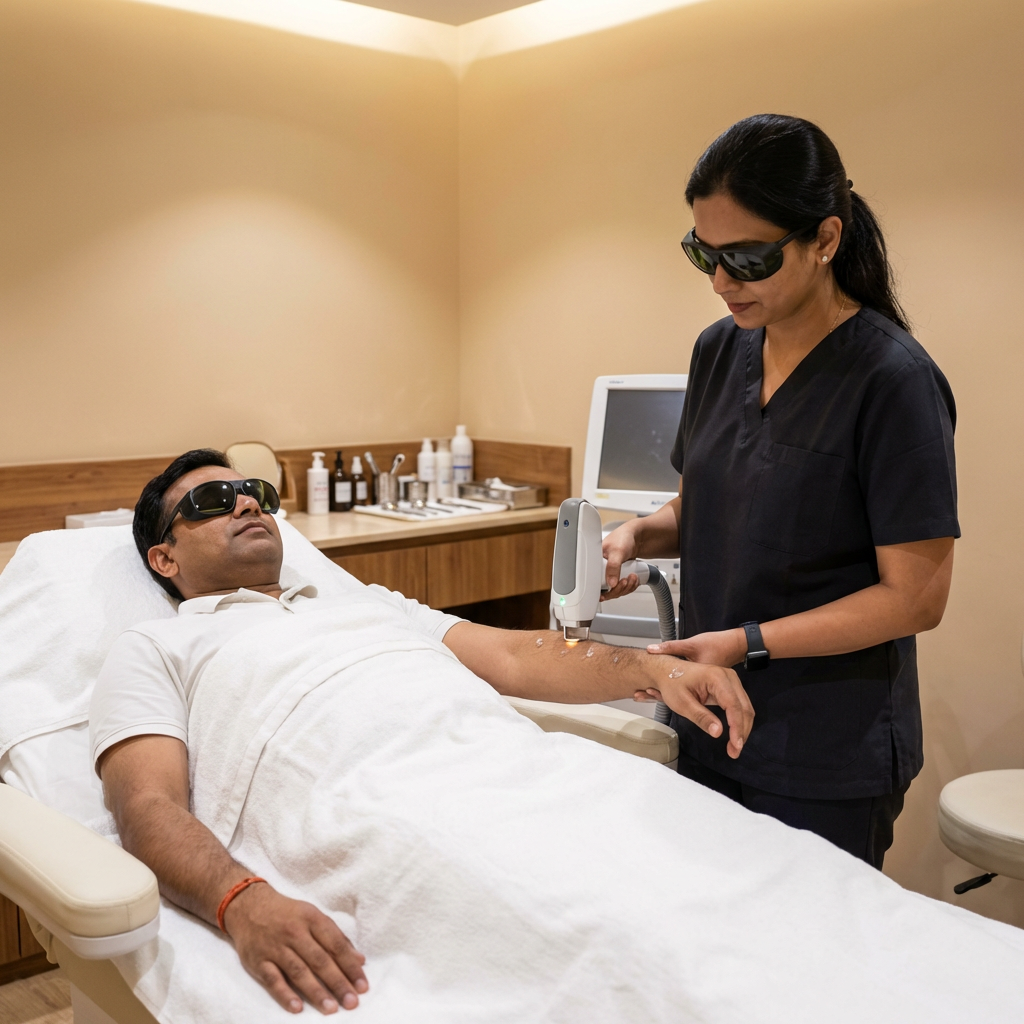
Chronic hair fall is rarely one problem — it's a symptom. Our dermatologist identifies the root cause through blood work, trichoscopy and scalp analysis before prescribing any treatment.
Hair falls out for many reasons — and the treatment differs completely by cause. Getting the diagnosis right is the most important step.
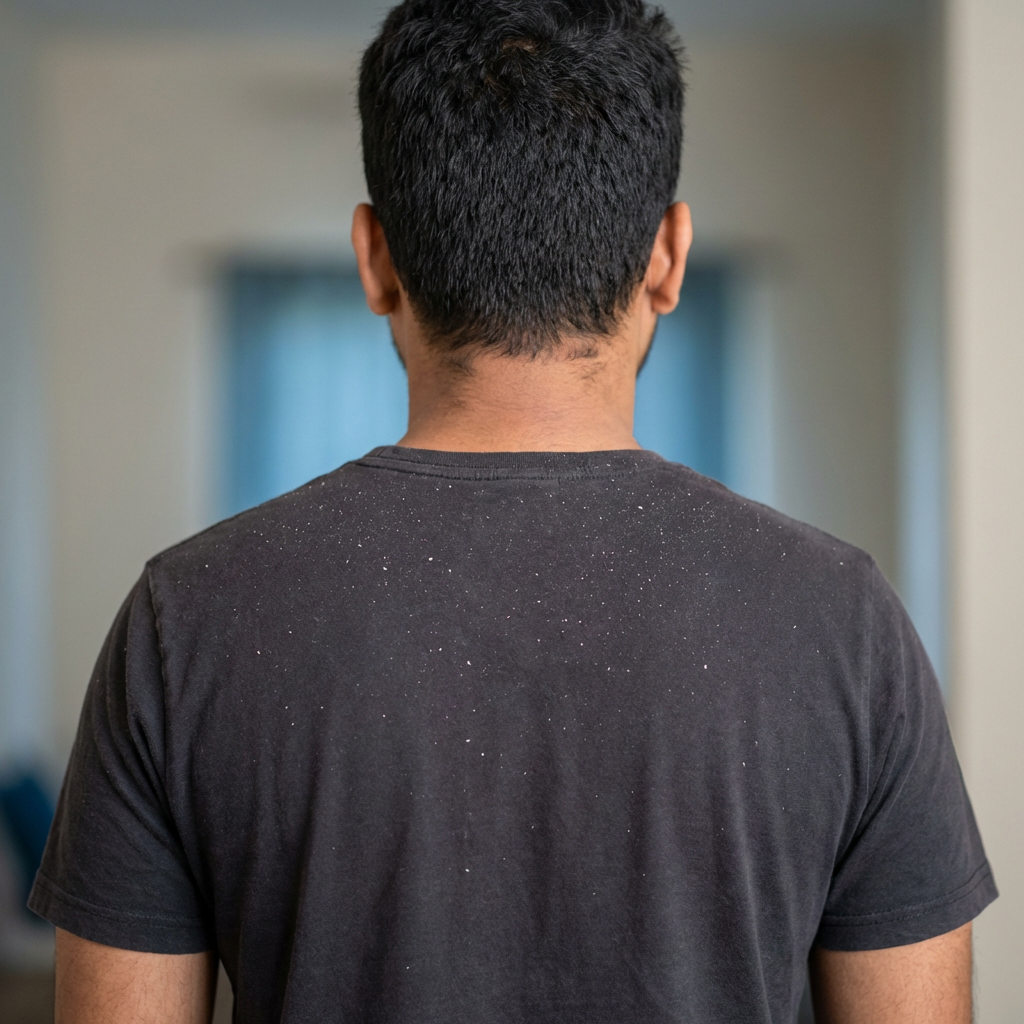
Malassezia yeast overgrowth causing scalp flaking, itching and inflammation. Chronic inflammation weakens follicle attachment, increasing shedding. Treatment: antifungal shampoos, topical ketoconazole, cortisone sprays.
Sudden, diffuse shedding triggered by fever, surgery, crash dieting, postpartum hormonal shifts or iron deficiency. Typically begins 2–4 months after the trigger. Resolves with trigger removal plus targeted supplementation.
Thick silvery plaques on the scalp from rapid skin cell turnover. Chronic scratching causes secondary hair loss. Treated with coal tar preparations, topical steroids, calcipotriol, and phototherapy for resistant cases.
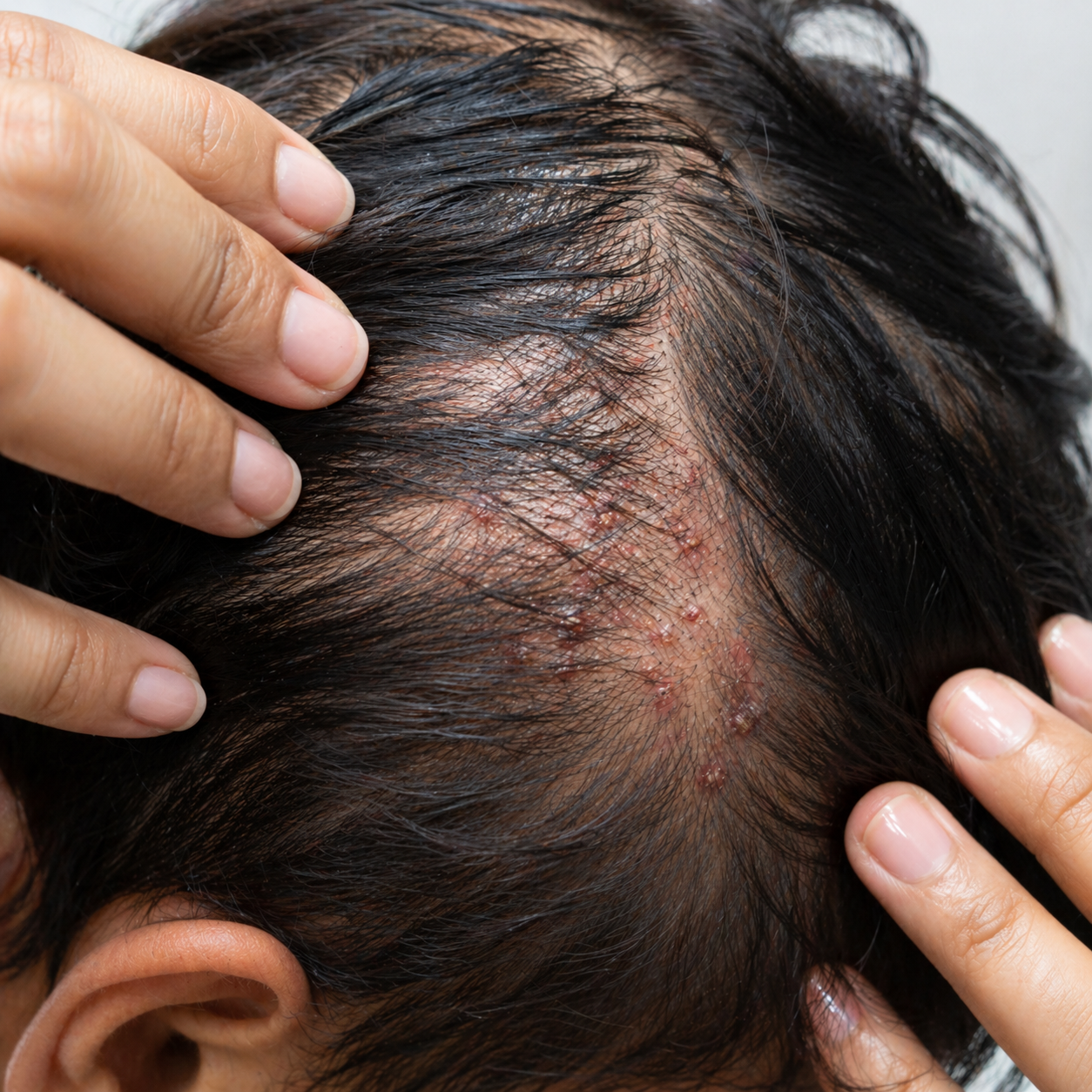
Bacterial or fungal infection of hair follicles causing pustules, pain, and scarring alopecia if left untreated. Requires culture-guided antibiotic or antifungal therapy. Early treatment prevents permanent follicle damage.
Hair loss is a classic symptom of ferritin deficiency, hypothyroidism, vitamin D deficiency and zinc deficiency — all common in Indian women. A targeted blood panel identifies deficiencies missed by basic tests.
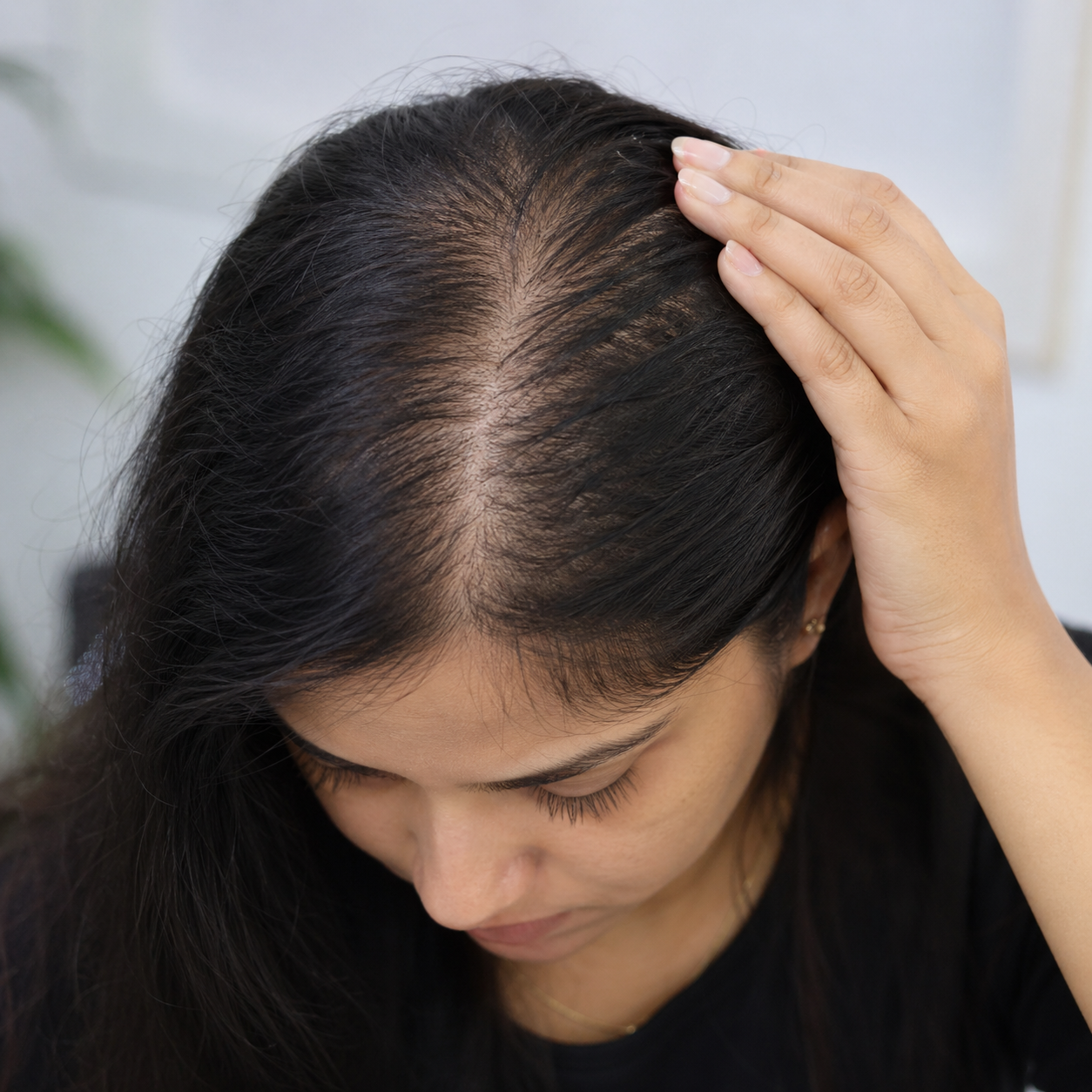
Receding hairline from tight ponytails, braids, or chemical relaxers. Early-stage traction alopecia reverses fully with hair style changes and topical growth promoters. Late-stage may require PRP or FUE.
Most hair fall clinics prescribe minoxidil at the first visit without understanding the cause. We reverse that approach — investigation before prescription.
Detailed trichological history covering onset, pattern, associated symptoms (itch, scale, pain), diet, medications, hormonal changes, stress events, and family history of hair loss.
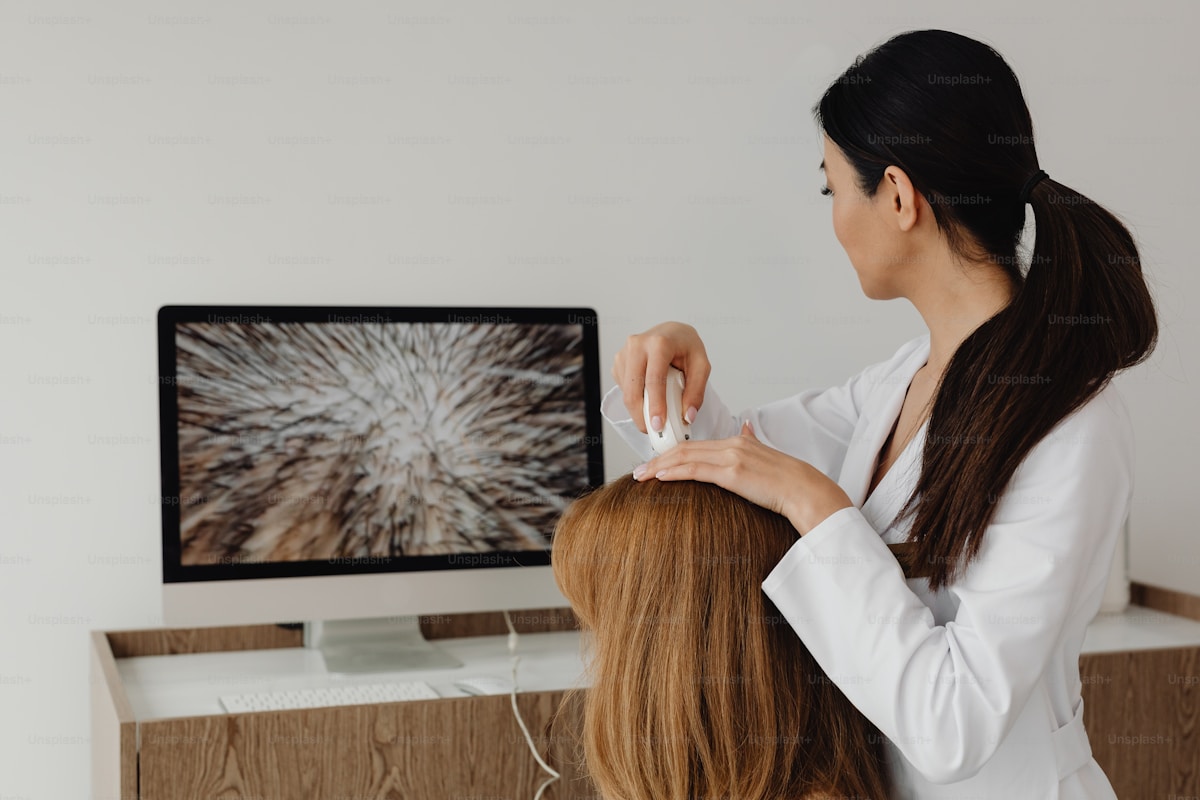
High-magnification scalp and hair shaft analysis to identify follicle miniaturisation pattern, scalp condition, shaft defects and density. Takes 10 minutes and provides objective data — not guesswork.
Our trichology blood panel checks ferritin (not just haemoglobin), TSH + T3/T4, Vitamin D, zinc, DHEA-S, prolactin and testosterone — the markers most commonly missed in routine tests.
Based on findings, a written protocol is prescribed — which may include topical treatments, oral medications, supplement corrections, scalp therapy, or referral to PRP/FUE if medical management is insufficient.
At 8 weeks, trichoscopy is repeated to objectively measure treatment response. Protocol is adjusted if needed. Patients who respond partially to medical management are assessed for PRP candidacy.
We treat the cause of hair fall, not just the symptom. A complete trichological workup at your first appointment means no wasted months on incorrect treatments.
Our hair-specific blood panel checks ferritin levels (the most common overlooked cause of female hair fall) — not just a basic CBC that misses early deficiency states.
We don't rely on patient perception alone. Objective before-and-after scalp images quantify treatment response in hair density and shaft calibre — you can see the improvement.
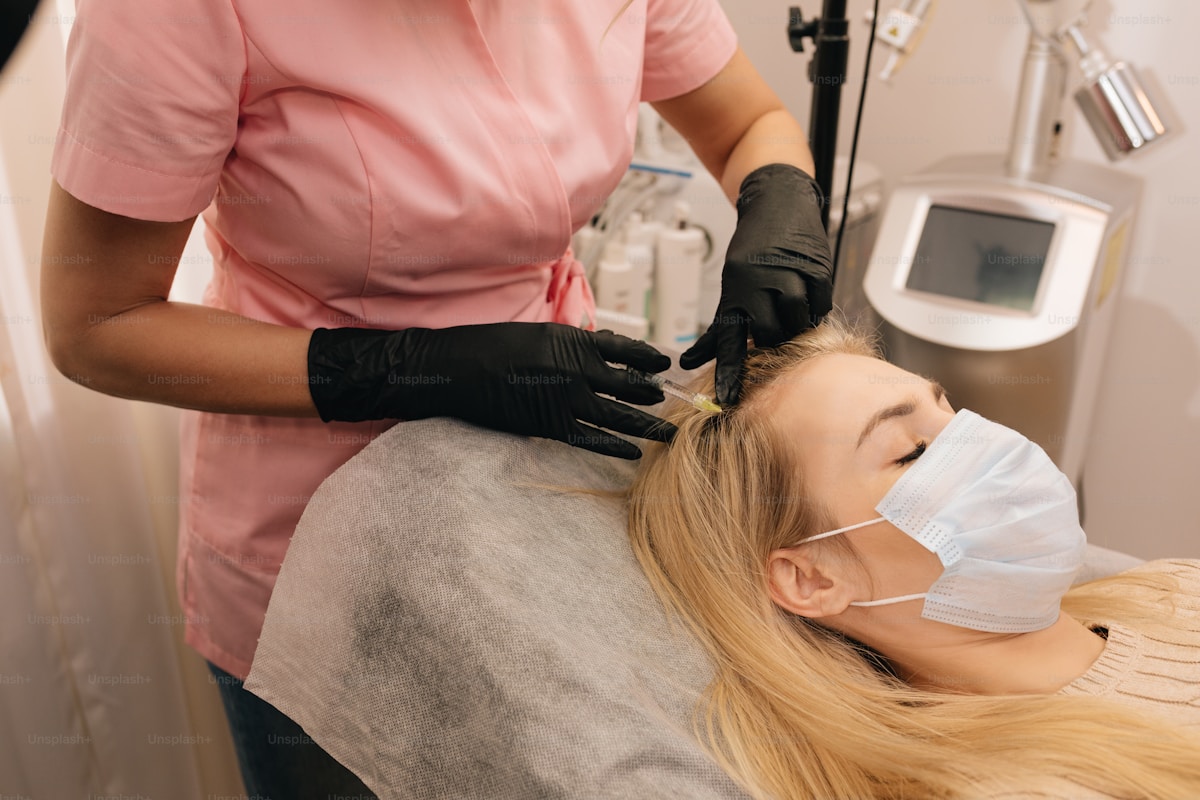
Beyond prescription medications, we offer in-clinic scalp detox treatments, mesotherapy for scalp circulation, and dermaroller sessions to enhance topical medication absorption.
If medical management reaches its limit, we transition seamlessly to PRP or FUE within the same clinic — no referral delays, and the dermatologist who managed your case guides the next step.
Many patients spend months on over-the-counter products before getting a proper diagnosis. Here's why that matters.
| Aspect | Dermatologist-Led (Our Approach) | OTC Shampoos & Oils | Online Self-Diagnosis | General GP Visit |
|---|---|---|---|---|
| Root cause identification | Trichoscopy + blood panel | None | None | Basic blood test only |
| Scalp condition diagnosis | Digital trichoscopy | None | None | Visual exam only |
| Treatment matched to cause | Always | Generic formulations | Guesswork | Sometimes |
| Ferritin / thyroid checked | Yes — trichology panel | No | No | Rarely |
| Progress measured objectively | Trichoscopy at follow-up | No | No | No |
| Escalation to PRP/FUE if needed | Seamless — same clinic | No | No | Referral required |
Medical management works best when the root cause is addressable (nutritional deficiency, scalp condition, reversible hormonal issue). For androgenetic alopecia driven primarily by genetics, medications slow and partially reverse loss — but rarely achieve the density of PRP or FUE. We will tell you clearly which result is realistic for your situation.
First consultation includes trichoscopy examination and personalised treatment discussion. Blood tests arranged if indicated.