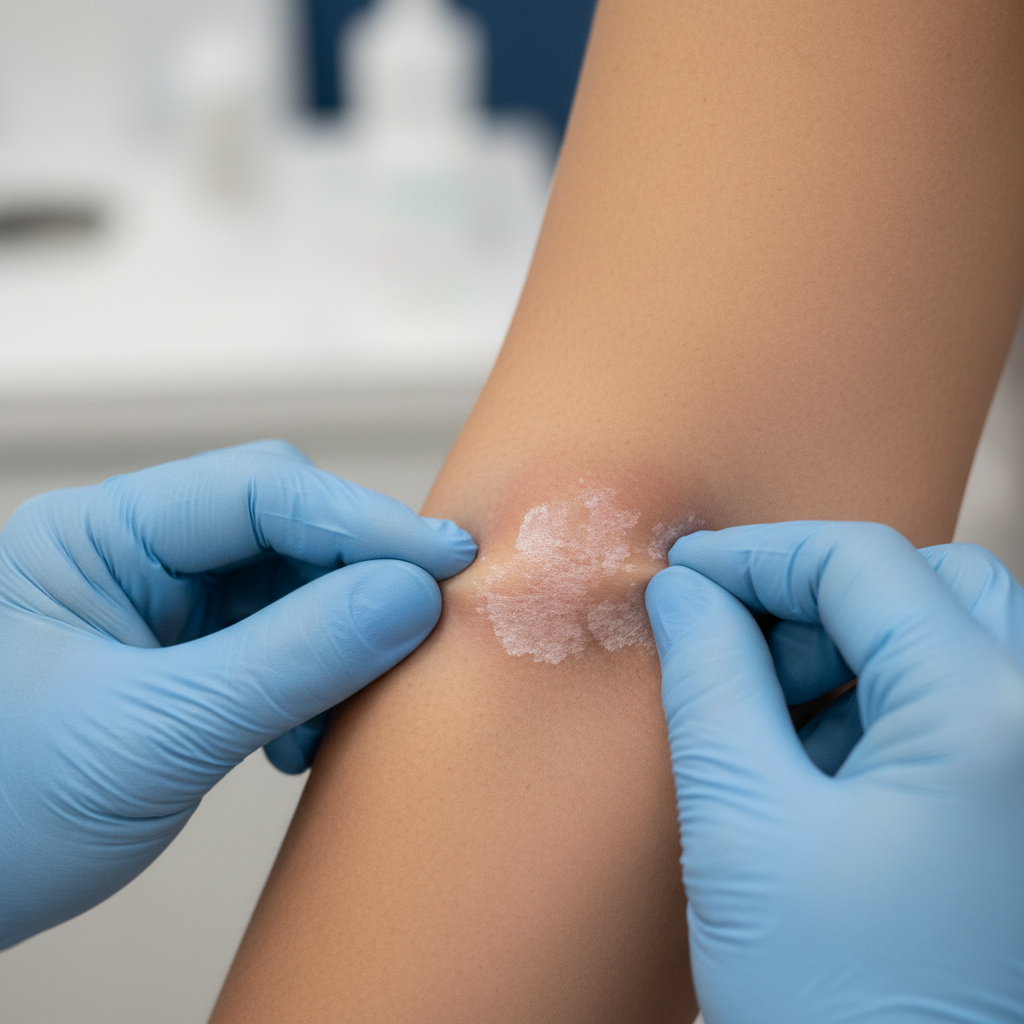
Loss of pigmentation doesn't have to be permanent. We combine NBUVB phototherapy, targeted topical therapies, and surgical melanocyte transplantation to restore natural skin colour in stable vitiligo.
From segmental patches to widespread generalised vitiligo, and from first-line NBUVB phototherapy to surgical melanocyte transplantation — we have a protocol matched to your disease type and activity.
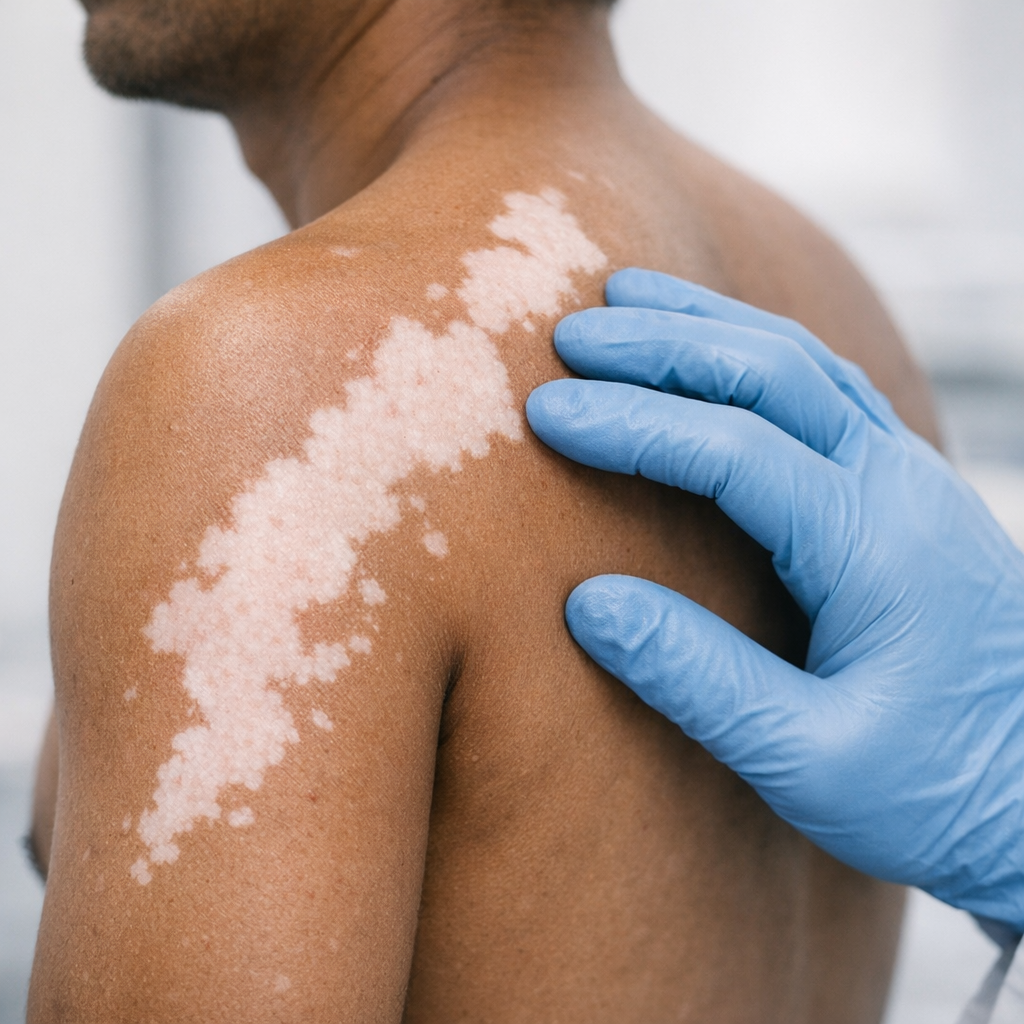
Unilateral, dermatome-following patches — typically stable and responding well to targeted NBUVB. We use a localised NBUVB handpiece for segmental disease to maximise repigmentation with minimal total dose.
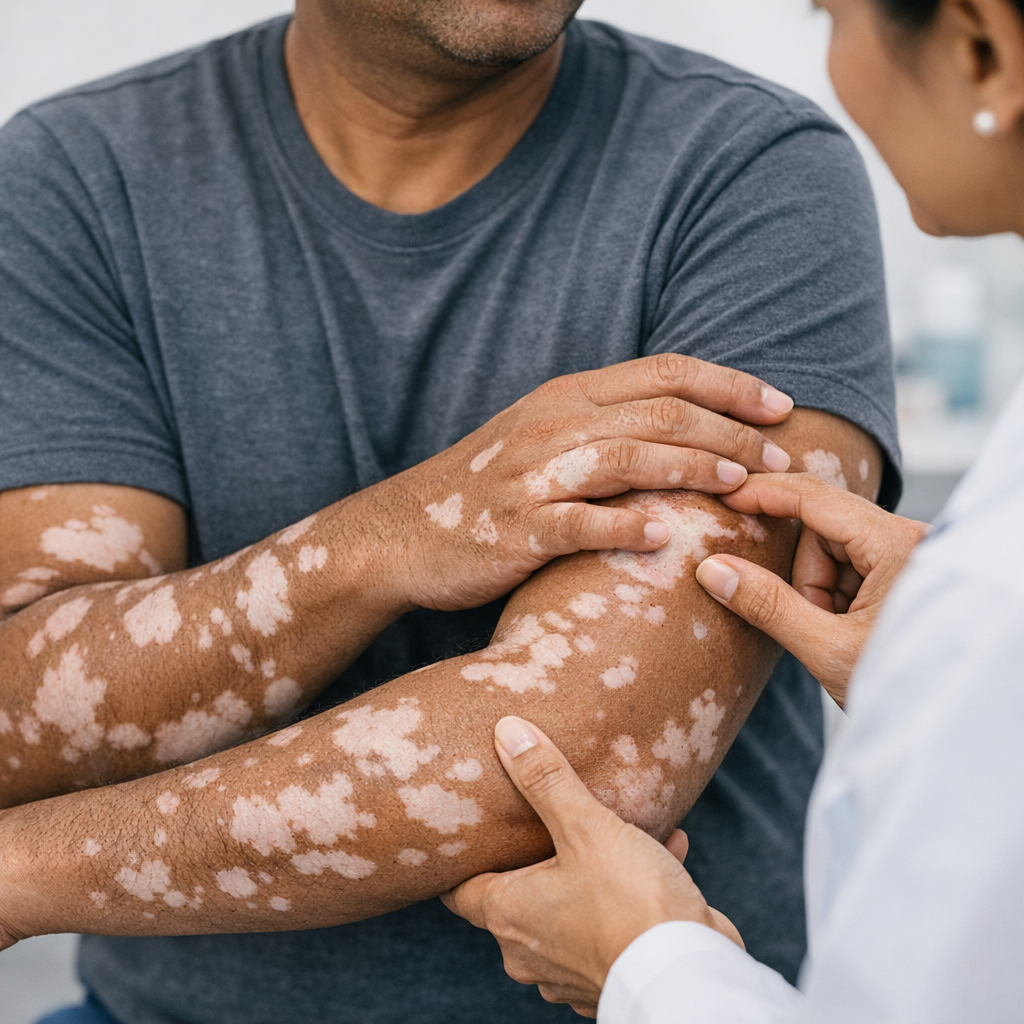
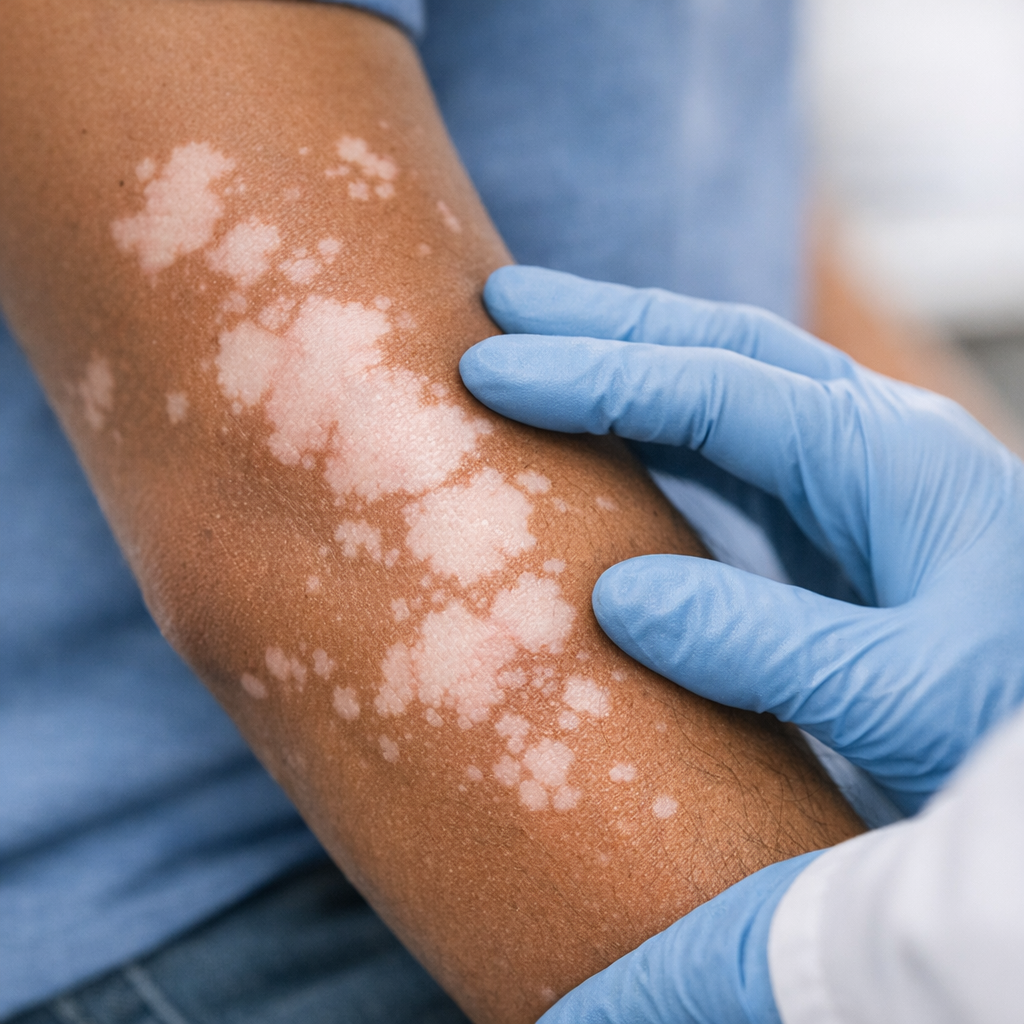
Symmetrical patches on the face, hands, elbows, and trunk. NBUVB phototherapy 3×/week combined with topical corticosteroids and calcineurin inhibitors delivers best repigmentation in non-segmental active disease.
When vitiligo has been stable for 12+ months and medical therapy has plateaued, melanocyte-keratinocyte transplantation (MKTP) or suction blister grafting repopulates depigmented patches with your own melanocytes.
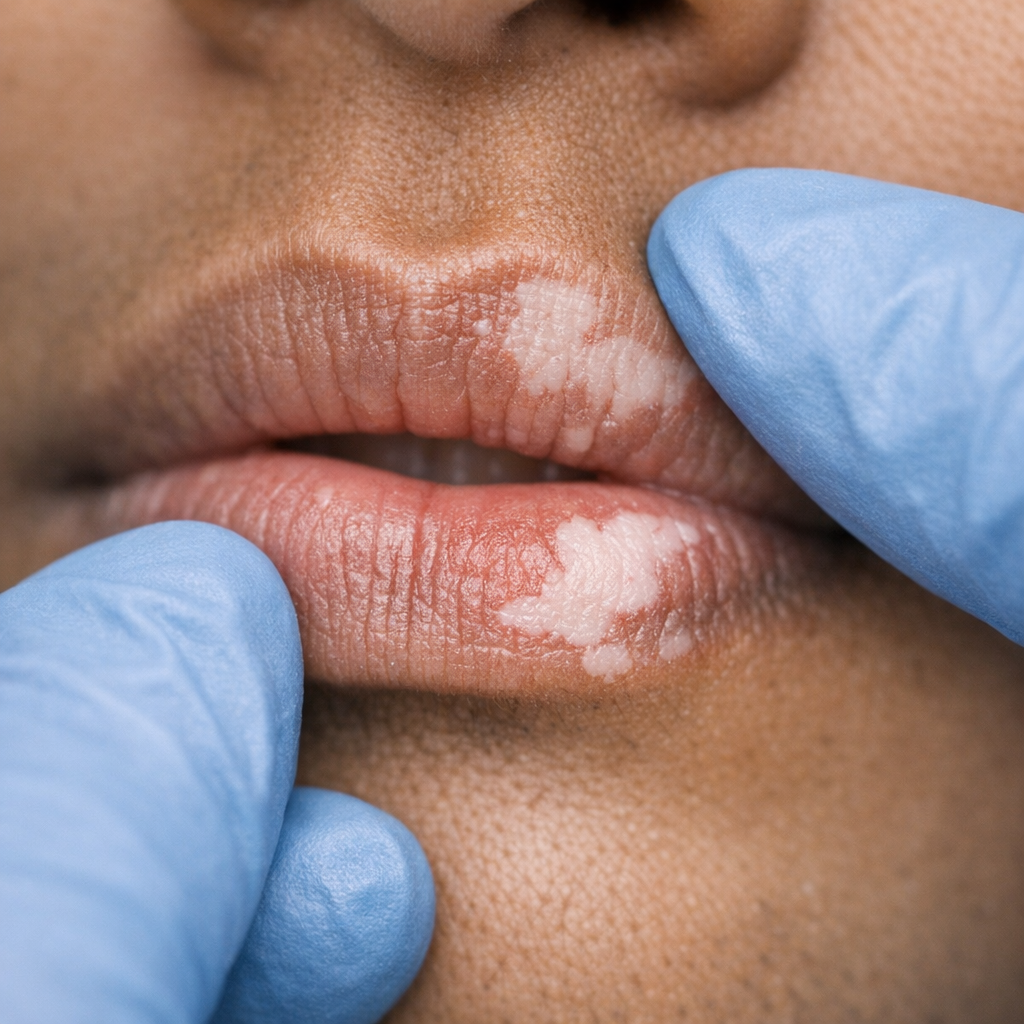
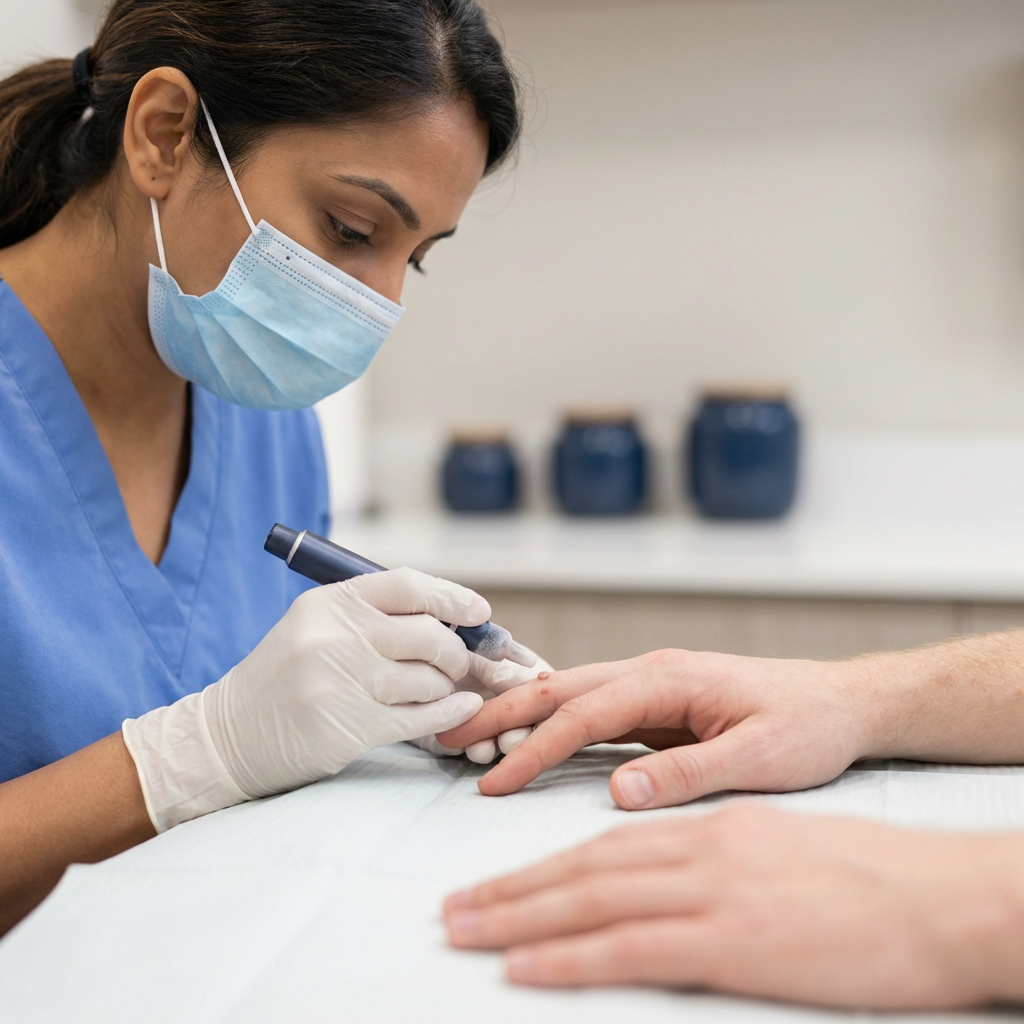
Small, stable patches on the lips, wrists, or focal areas are ideal for mini-punch grafting — a precise, office-based surgical procedure transplanting small skin punches from a donor site to the depigmented area.
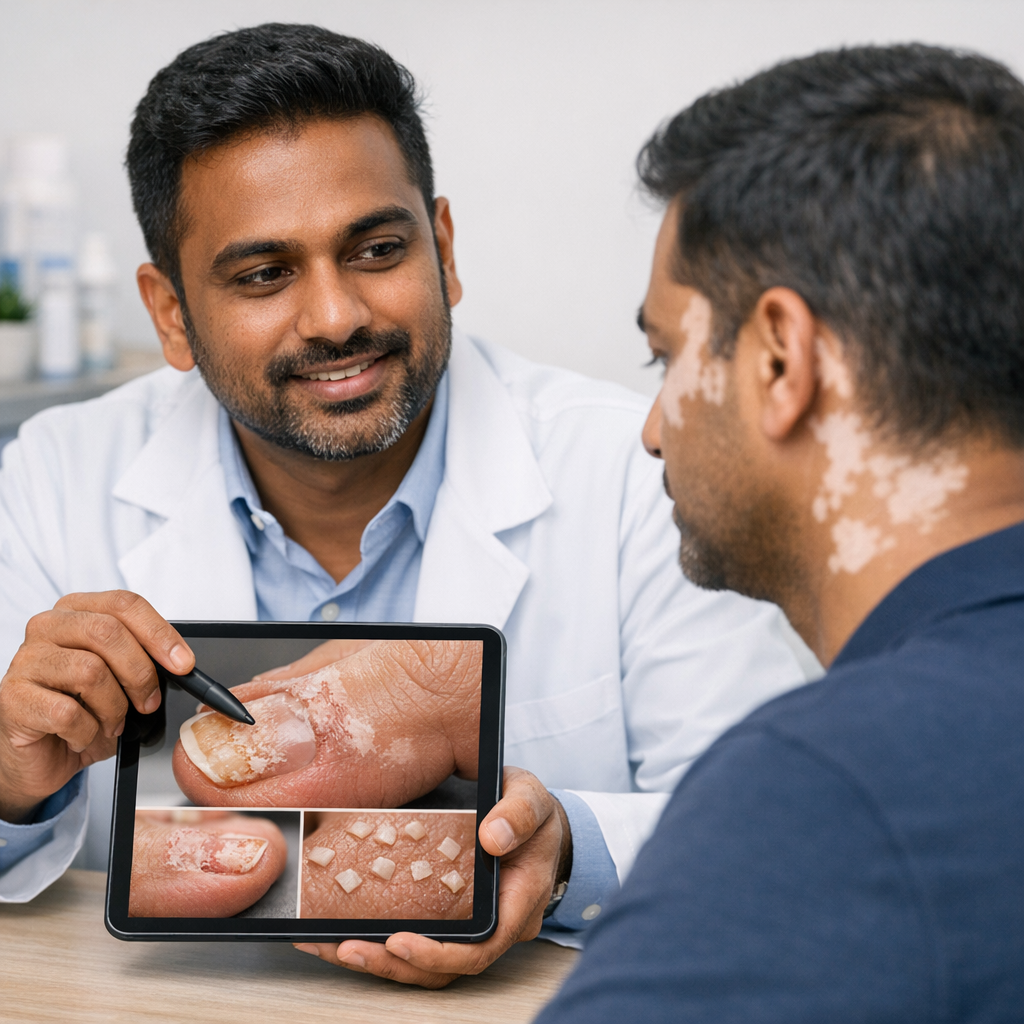
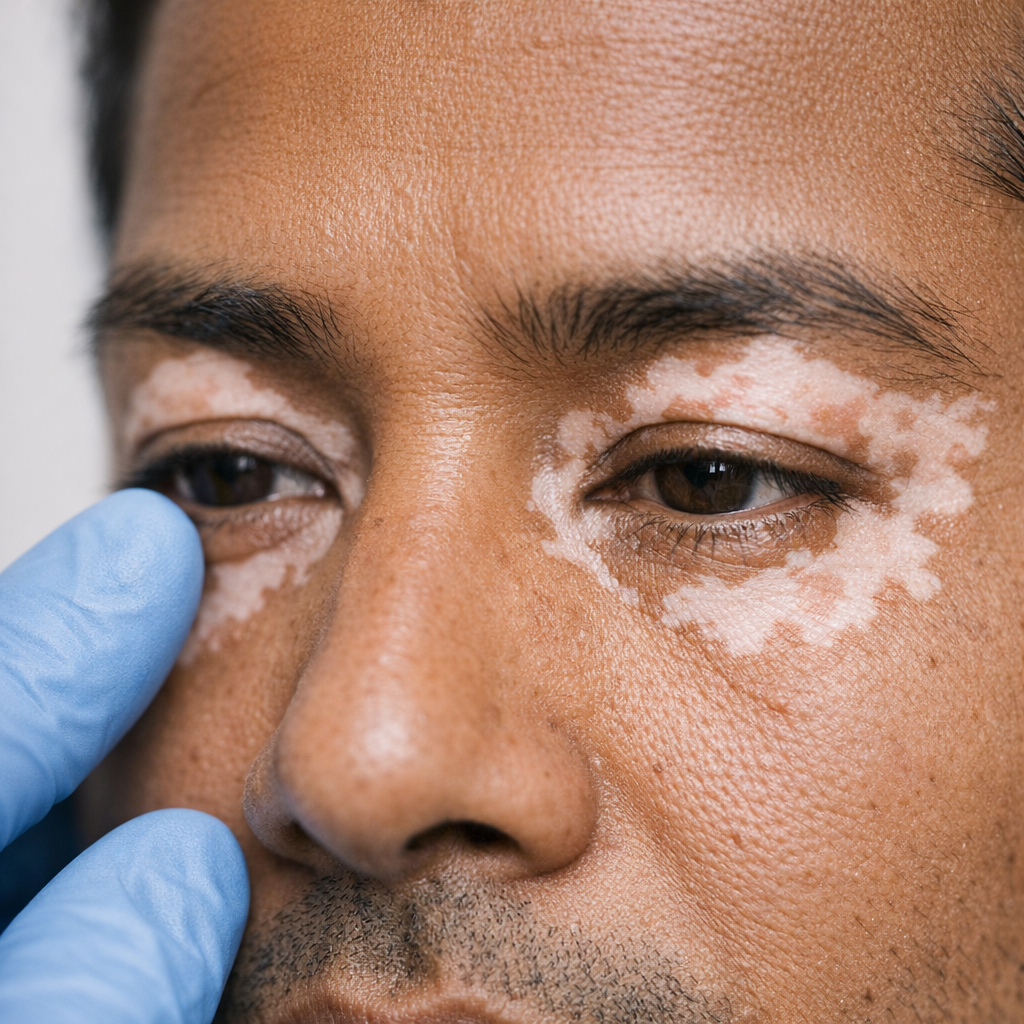
The face responds best to repigmentation therapy. Topical tacrolimus combined with targeted NBUVB or excimer-equivalent light delivers excellent cosmetically significant repigmentation on the face and around the eyes.
Active vitiligo requires immunosuppression to halt progression before repigmentation therapy begins. We prescribe systemic mini-pulse steroids or topical therapy to stabilise disease before initiating NBUVB.
Active and stable vitiligo require different treatment pathways. Your protocol is designed after thorough disease activity assessment — the most critical step before choosing any repigmentation therapy.
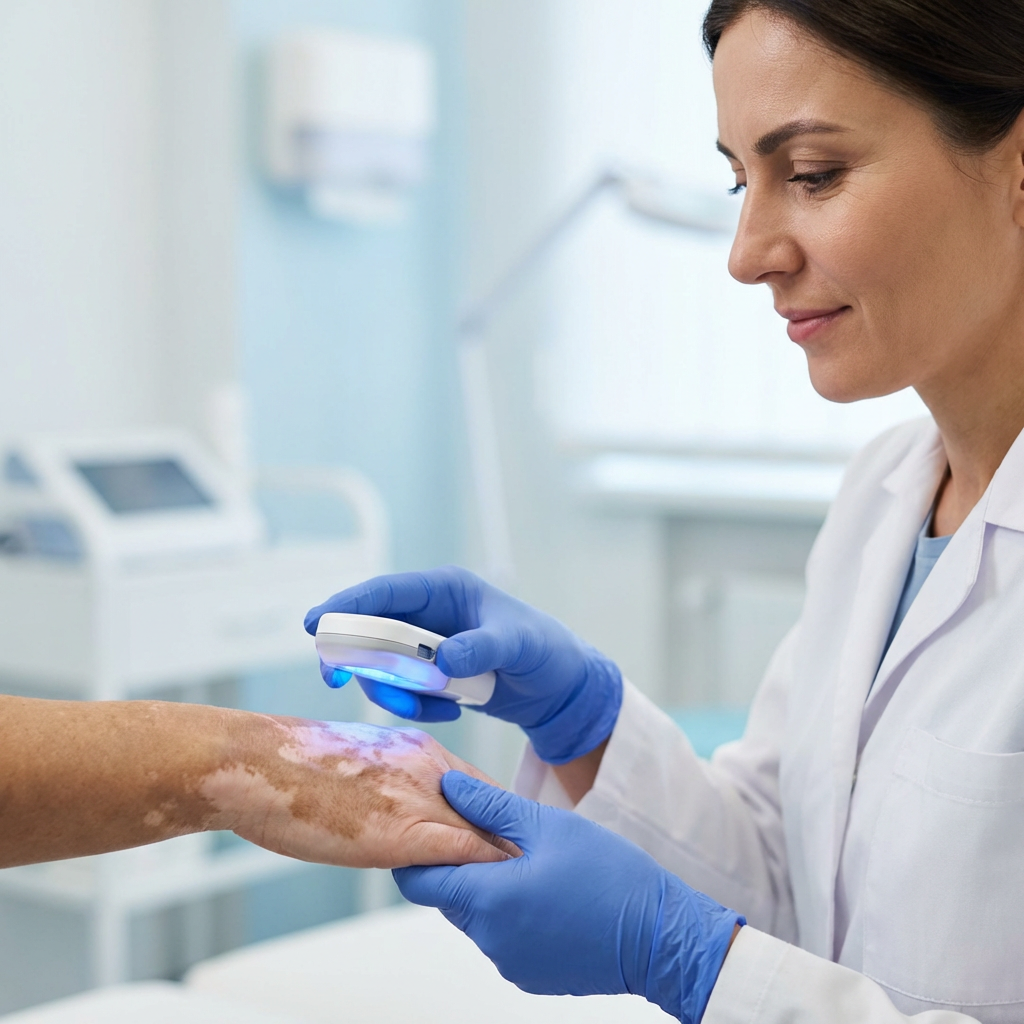
VASI/VETF scoring, Wood's lamp examination, disease activity review (stable vs active), prior therapy history.
If lesions are actively spreading, systemic mini-pulse oral steroids (dexamethasone pulse) or topical agents arrest progression before repigmentation therapy.
3×/week narrowband UVB phototherapy. Facial vitiligo responds fastest (typically 10–15 sessions), body vitiligo takes 20–40 sessions for meaningful repigmentation.
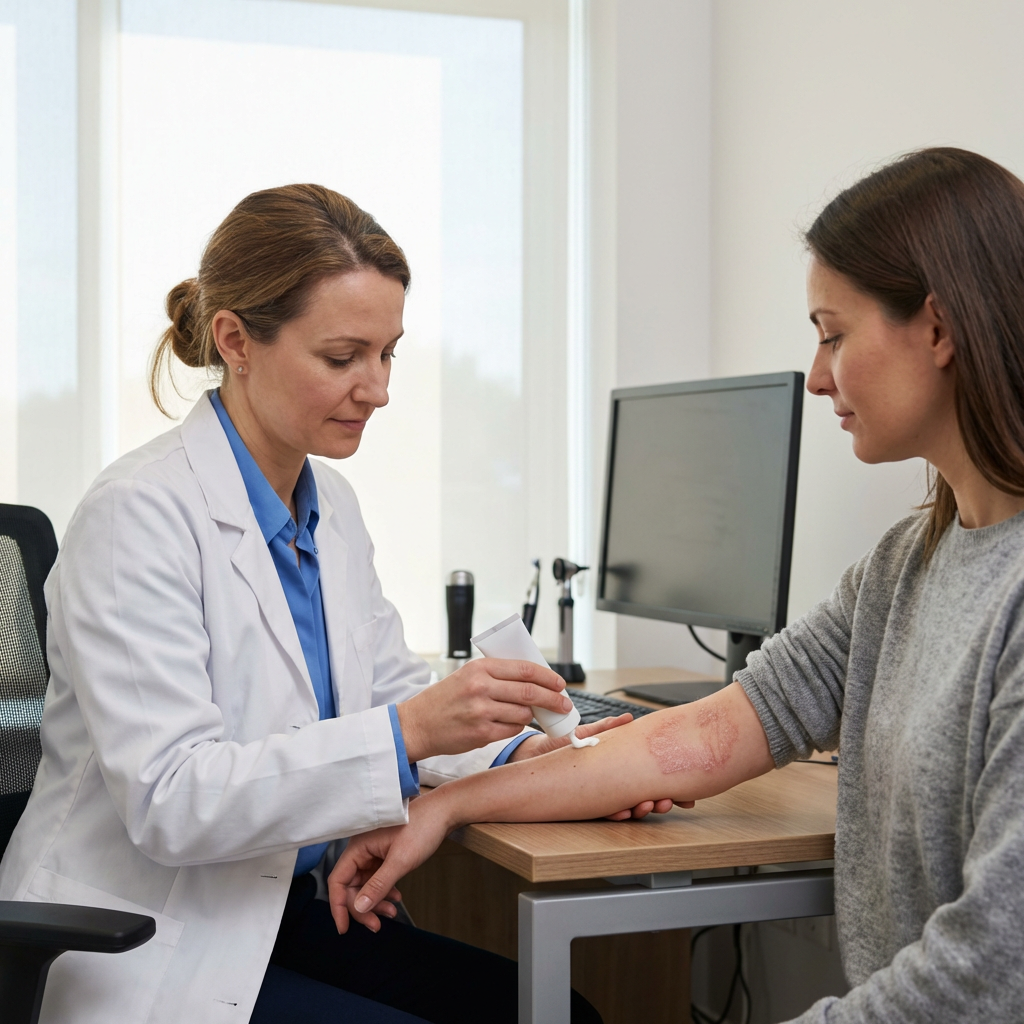
Topical tacrolimus or clobetasol applied to patches in between phototherapy sessions enhances repigmentation — particularly effective on the face and neck.
For stable vitiligo with minimal response to phototherapy, MKTP or mini-punch grafting transplants melanocytes from pigmented donor skin to depigmented recipient skin.
Written sun protection protocol (SPF 50+ daily) to protect repigmented and unaffected skin. Maintenance therapy to prevent relapse.
We offer the complete spectrum of vitiligo treatment — from first-line NBUVB phototherapy to surgical melanocyte transplantation for stable disease — all under one dermatologist-led team.
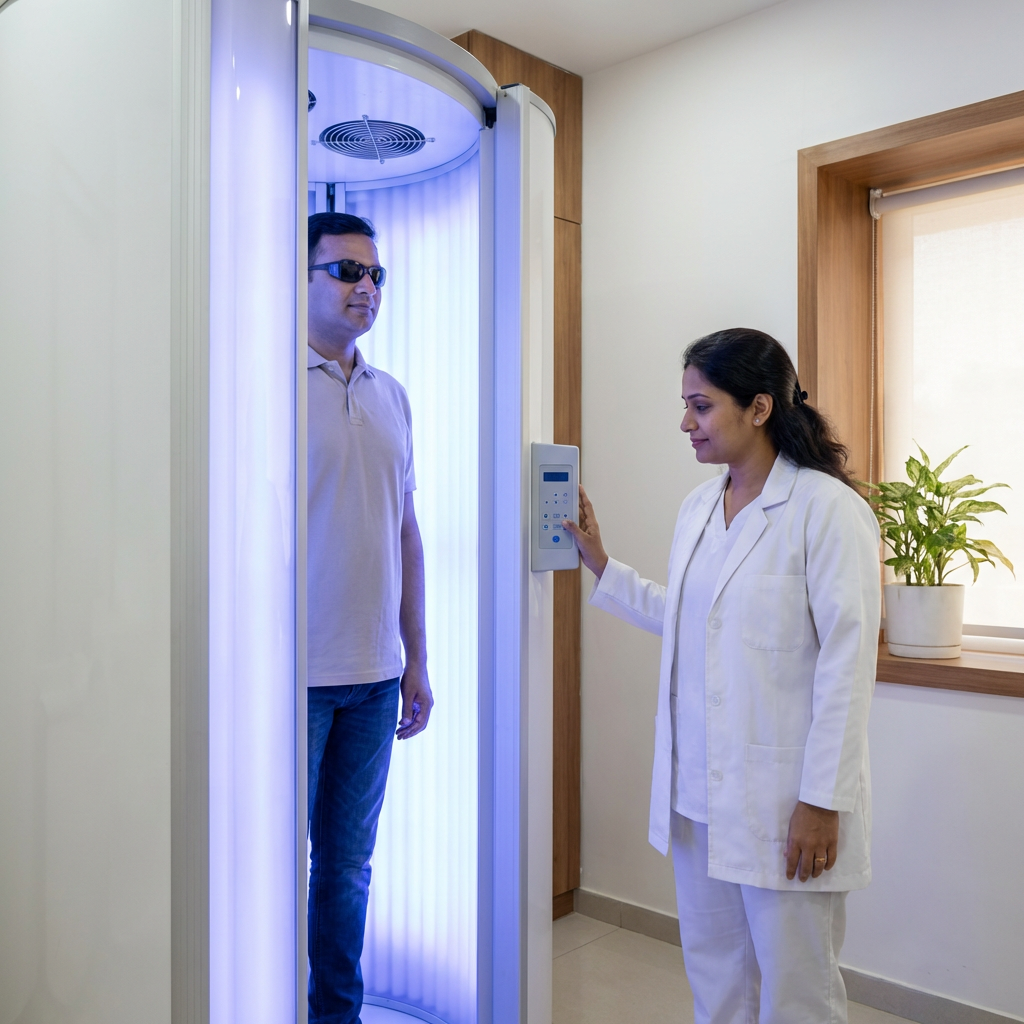
Dedicated narrowband UVB cabin with precise dosimetry — the gold standard first-line for vitiligo repigmentation.
MKTP and mini-punch grafting for stable vitiligo that has plateaued on medical therapy — restoring pigmentation permanently.
UV fluorescence examination to accurately map vitiligo extent and identify sub-clinical depigmentation invisible under normal light.
We distinguish active from stable vitiligo before treatment — critical because surgical grafting fails if disease is still active.
| Feature | NBUVB Phototherapy | Topicals Alone | Surgical Grafting | Excimer Laser |
|---|---|---|---|---|
| Best for | Non-seg & segmental | Localised stable | Stable focal/segmental | Focal refractory |
| Repigmentation rate | ~60–80% | 30–40% | >90% focal | 50–70% |
| Disease must be stable | Active OK | Active OK | Must be stable 12m | Stable preferred |
| Scarring | None | None | Minimal donor site | None |
| Available at clinic | Yes | Yes | Yes | Referral facilitated |
| Starting cost | ₹800/session | ₹500 consult+Rx | ₹5,000–8,000 | ₹3,000+/session |
Each modality is selected based on vitiligo type, disease activity, affected site, and duration — not applied uniformly to every patient.
311nm narrowband UVB — the most evidence-based repigmentation therapy for vitiligo.
Non-Segmental · SegmentalOur surgical option for stable vitiligo — harvesting and transplanting melanocytes from pigmented skin to depigmented patches.
Stable Vitiligo · SurgicalUV fluorescence examination maps sub-clinical depigmentation. VASI score objectively tracks repigmentation at each review.
Diagnosis · MonitoringTacrolimus and clobetasol as NBUVB adjuncts — significantly boosting repigmentation rates especially on face and neck.
Adjunct TherapyPer-session rates at Supreme Elite Clinic, Kelambakkam OMR 603103
Book a consultation with our dermatologist. We will assess disease activity, map extent with Wood's lamp, and provide a written treatment plan on day one.
Book ConsultationCall us at +91 96774 73344 or fill the form and we will call you back within 2 hours.