80% of learning is visual. Amblyopia, squints, and uncorrected refractive errors are silent barriers to a child's development. Early detection before age 7 — during the critical visual development window — can fully restore normal vision.
Children cannot always articulate visual problems — they adapt. Squinting at screens, sitting close to the TV, covering one eye, or poor school performance can all be the first sign of a treatable eye condition.
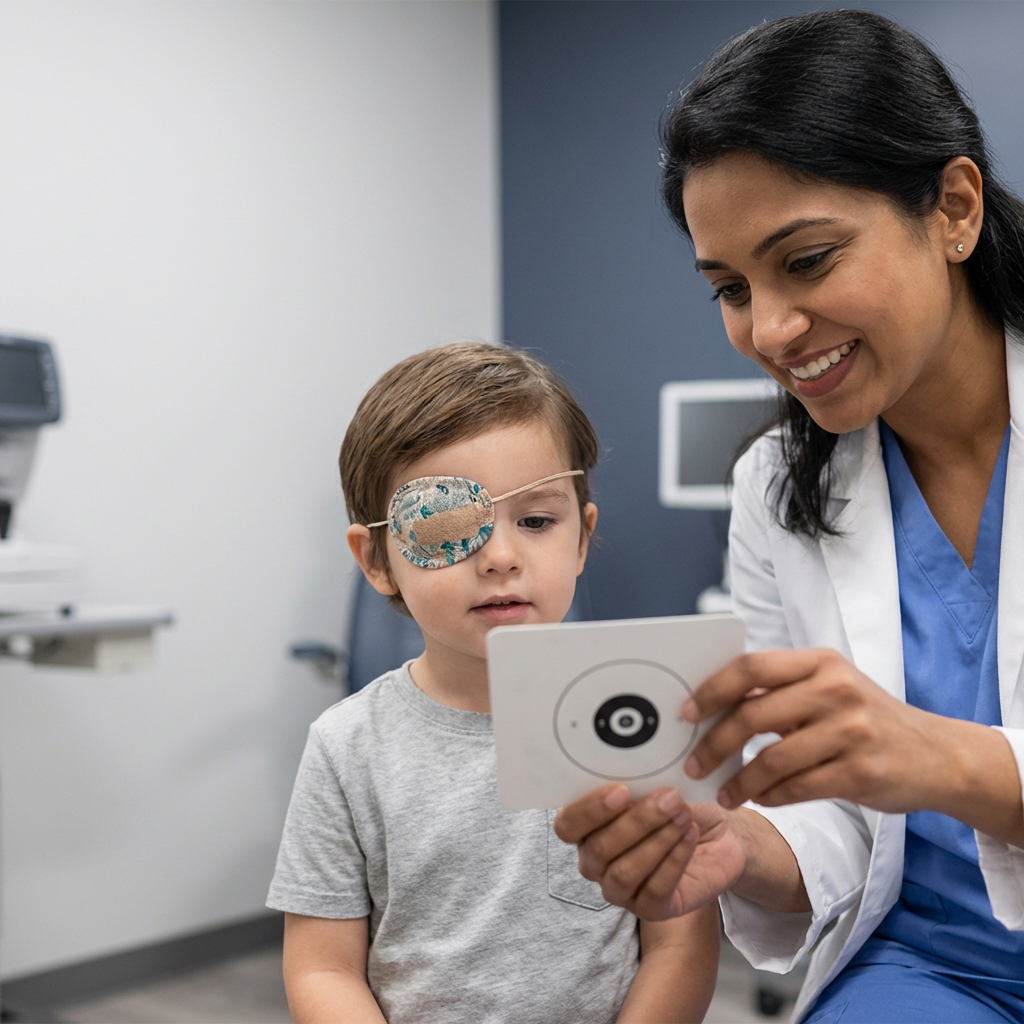
One eye develops subnormal vision despite being structurally normal, because the brain suppresses its input. Caused by uncorrected refractive error, strabismus, or visual deprivation. Patching the stronger eye forces the brain to use the weaker one — highly effective before age 7.
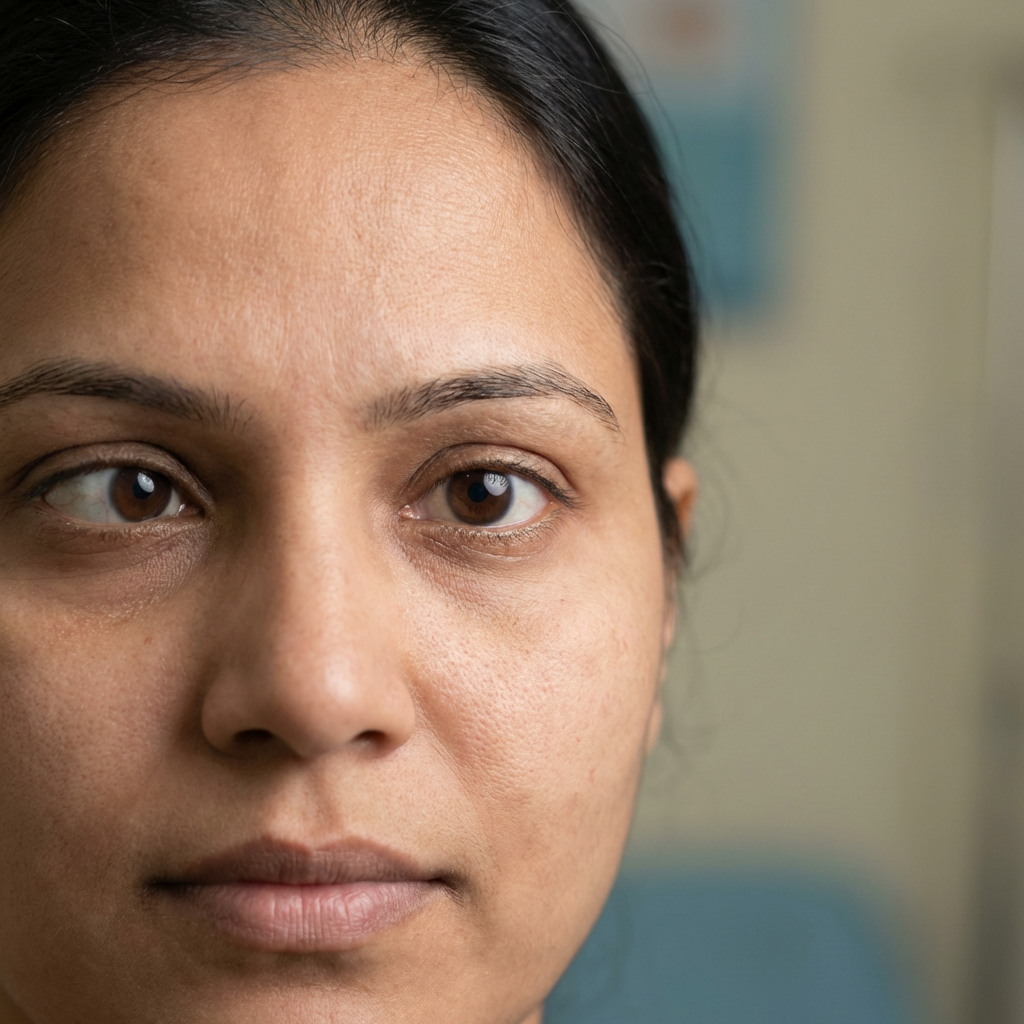
Misalignment of the eyes — one eye turns in (esotropia), out (exotropia), up, or down. Causes amblyopia if untreated and affects depth perception. Treatment: spectacles (for accommodative squint), botulinum toxin, or squint surgery to align the extraocular muscles.
Myopia prevalence in Indian urban schoolchildren has doubled in 20 years. Beyond corrective lenses, myopia control strategies — orthokeratology (OK lenses), low-dose atropine drops, and MiSight contact lenses — actively slow axial elongation to reduce lifetime risk of high myopia.
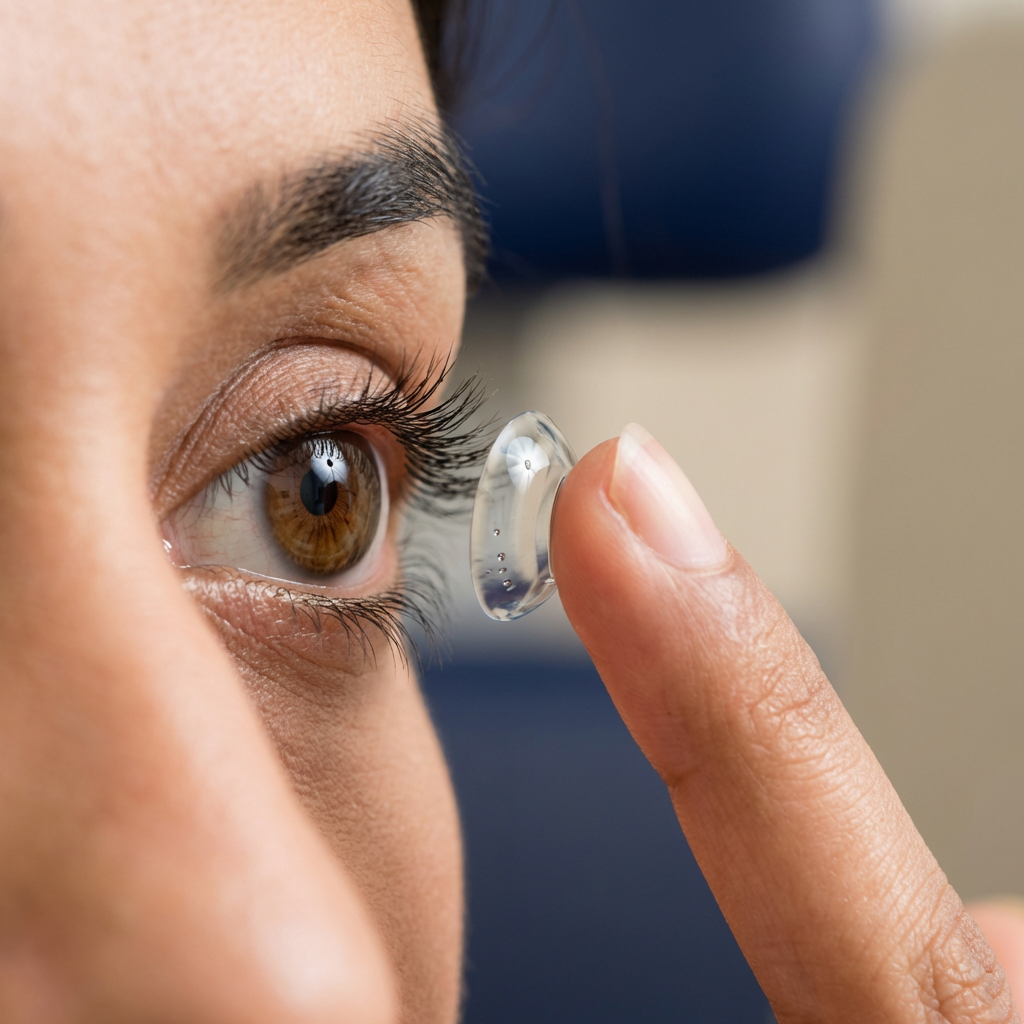
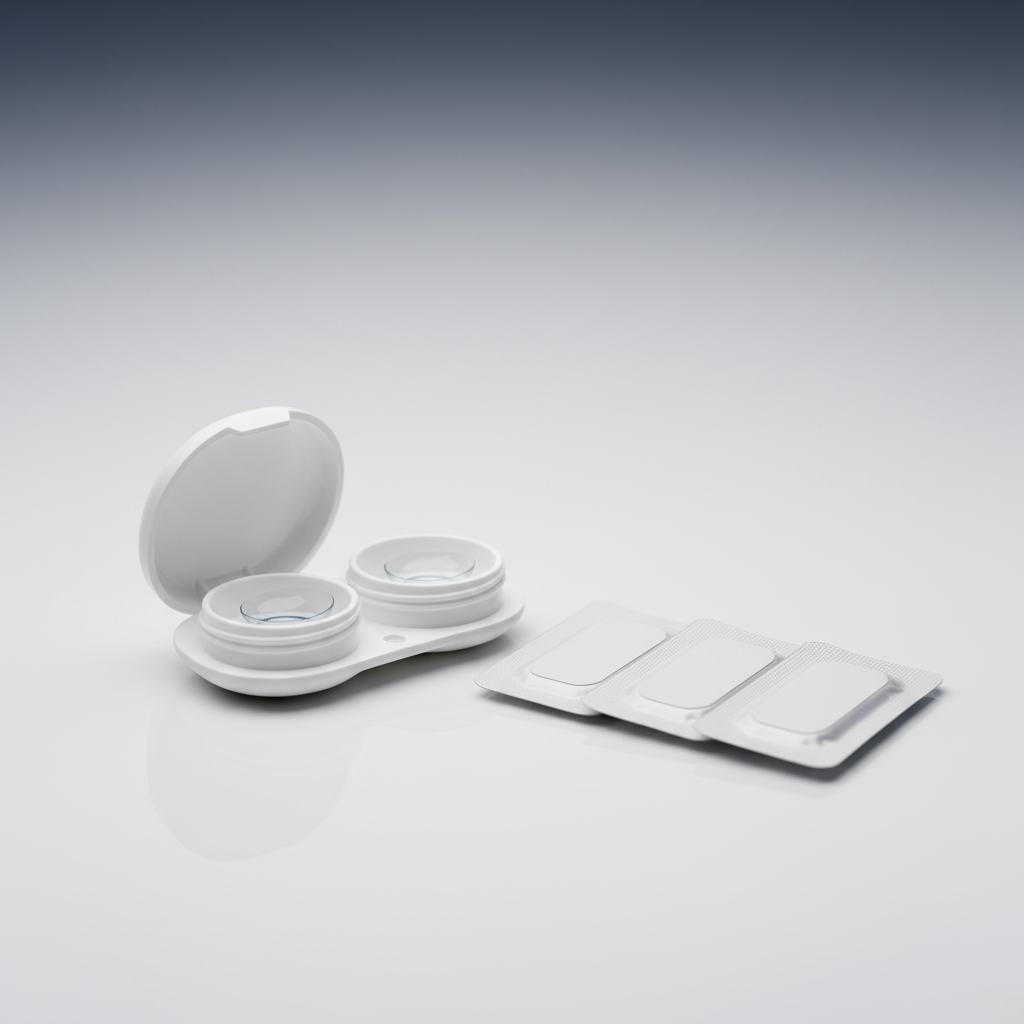
Specially designed rigid gas-permeable lenses worn only at night. They gently reshape the corneal surface while the child sleeps — providing clear, spectacle-free vision during the day AND slowing myopia progression by up to 50%. Suitable from age 8.
Congenital cataracts (white pupil reflex — leukocoria) and childhood glaucoma are uncommon but vision-threatening. A white, grey, or unusual pupil reflex in any photograph warrants same-day evaluation. Rapid surgical intervention prevents irreversible amblyopia.
Convergence insufficiency, accommodative dysfunction, and binocular vision disorders cause headaches, blurring when reading, and difficulty concentrating — often misattributed to attention issues. Vision therapy with orthoptic exercises resolves many cases without lenses.
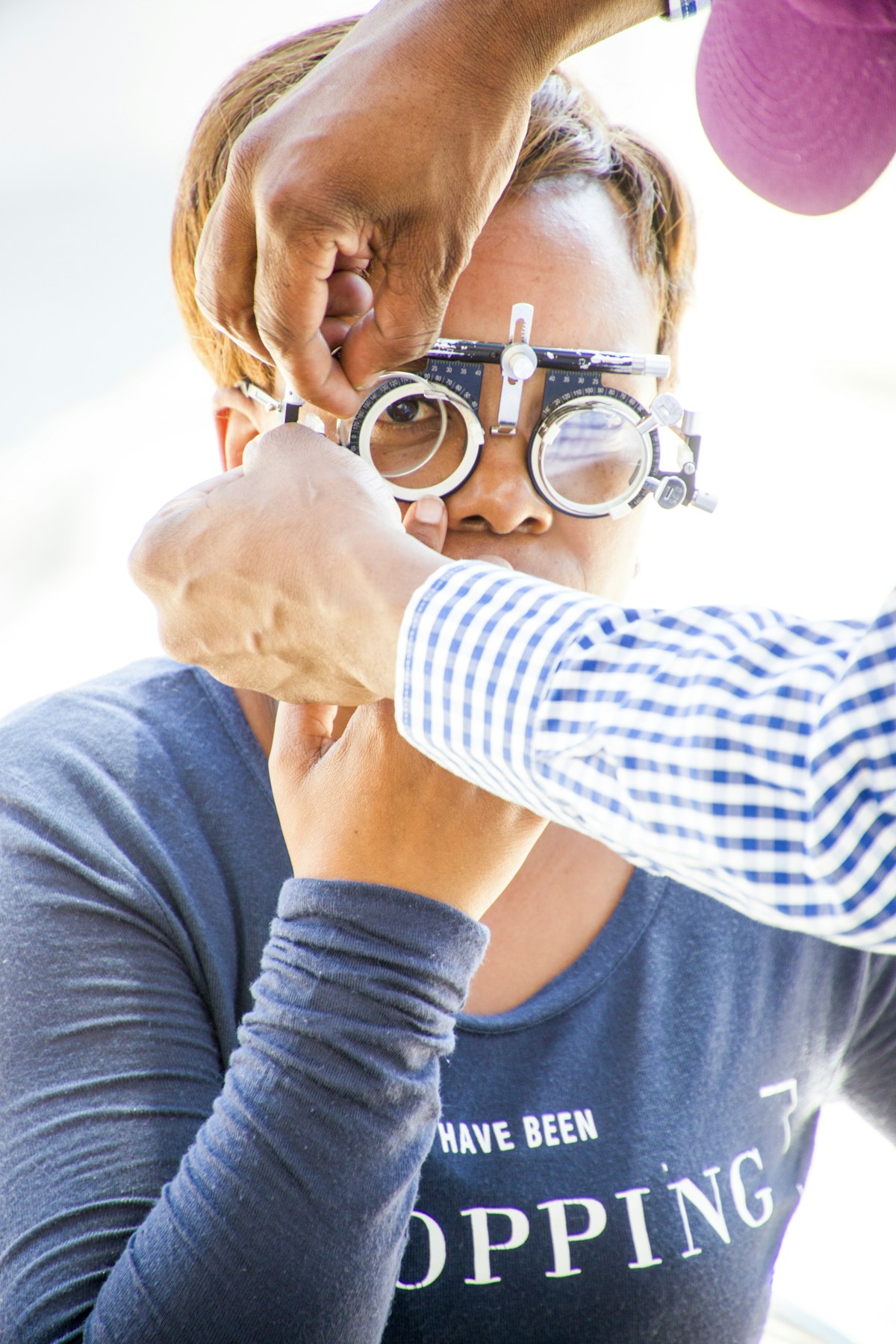
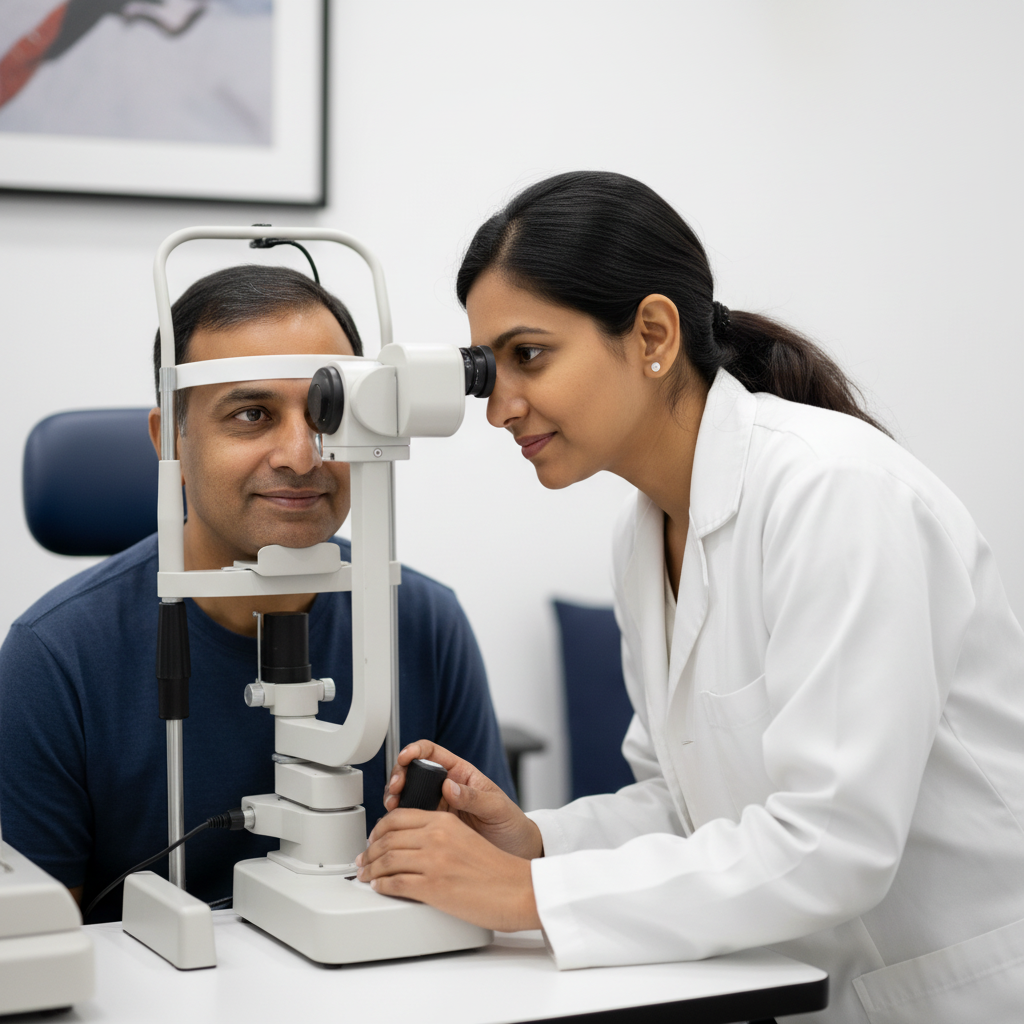
We use picture-based tests, preferential looking techniques, and age-appropriate methods so that even pre-verbal children receive a complete and accurate assessment. No child is too young for an eye examination.
Detailed birth history (prematurity, birth weight), family history of squints or amblyopia, and milestones review. Parents complete a visual behaviour questionnaire before the appointment.
Cardiff cards and preferential looking (infants) → LEA symbols and HOTV letters (toddlers) → LogMAR Snellen at 3m and 6m (school age). Each eye tested separately — essential for detecting amblyopia.
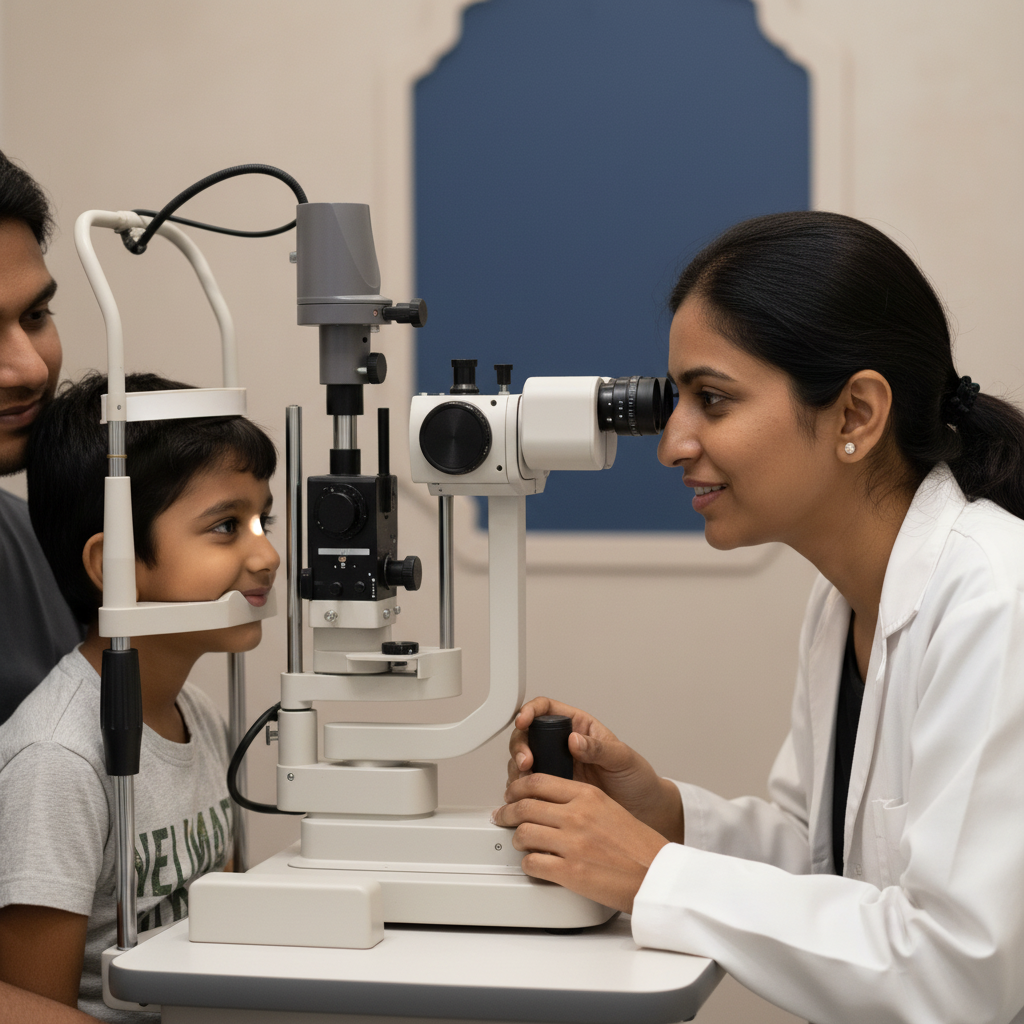
Cyclopentolate drops (or atropine for high accommodative tone) dilate the pupil and temporarily paralyse accommodation — revealing the true refractive error, especially in hyperopic children who compensate by focusing strongly.
Prism cover test quantifies squint angle and identifies direction. Stereo tests (Titmus fly, TNO) assess depth perception. Hirschberg reflex and Brückner test quickly screen for symmetry.
Spectacle prescription, patching schedule, myopia control options, or surgical referral with expected outcomes. We take time to explain to both child and parent — compliance depends on understanding.
Amblyopia treatment works because the visual cortex remains plastic until age 7–8. After that, the window closes and vision deficits become permanent. Every month of delay matters — act while treatment is most effective.
We can assess visual acuity from 3 months of age using Cardiff Acuity Cards and preferential looking techniques — no verbal responses required. Early detection means early treatment.
We are one of few clinics in OMR offering OK lens fitting for myopia control. Topography-guided lens design, overnight adaptation protocol, and rigorous follow-up to ensure safe, effective myopia control.
We provide structured school vision screening reports and work with schools along the OMR corridor to identify children who need formal assessment. Referral letters compatible with school requirements provided.
Standard glasses correct vision but do nothing to slow the underlying eye elongation driving myopia. These strategies actively slow progression.
| Approach | Standard Spectacles | Low-Dose Atropine Drops | Orthokeratology (OK Lens) | MiSight 1-Day Lenses |
|---|---|---|---|---|
| Corrects Vision | Yes | No (needs glasses too) | Yes — during the day | Yes |
| Slows Progression | No | Yes (~50%) | Yes (~50%) | Yes (~59%) |
| Spectacle-Free Days | No | No | Yes — full days | Lenses only, no glasses |
| Age Suitable | Any | 6+ | 8+ | 8+ |
| Compliance | Easy | Daily drops required | Nightly lens wear | Daily lens handling |
| Annual Cost | From ₹2,000 | From ₹3,600/yr | From ₹18,000 (pair) | From ₹24,000/yr |
White or unusual pupil in photos • Sudden drooping of one eyelid • One eye turning in or out suddenly (new onset) • A child bumping into things on one side. These require same-day evaluation. Call: +91 96774 73344
Early detection, during the critical window, gives the best outcomes.