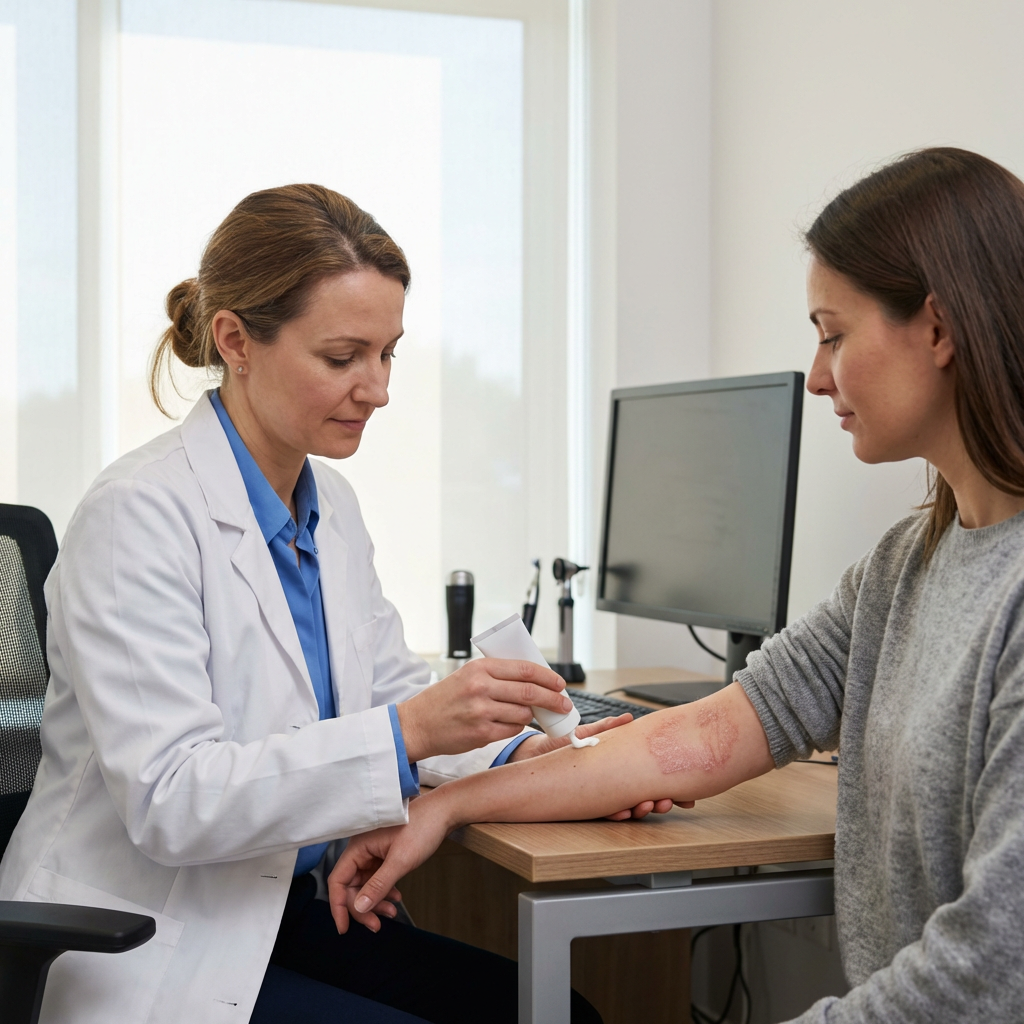
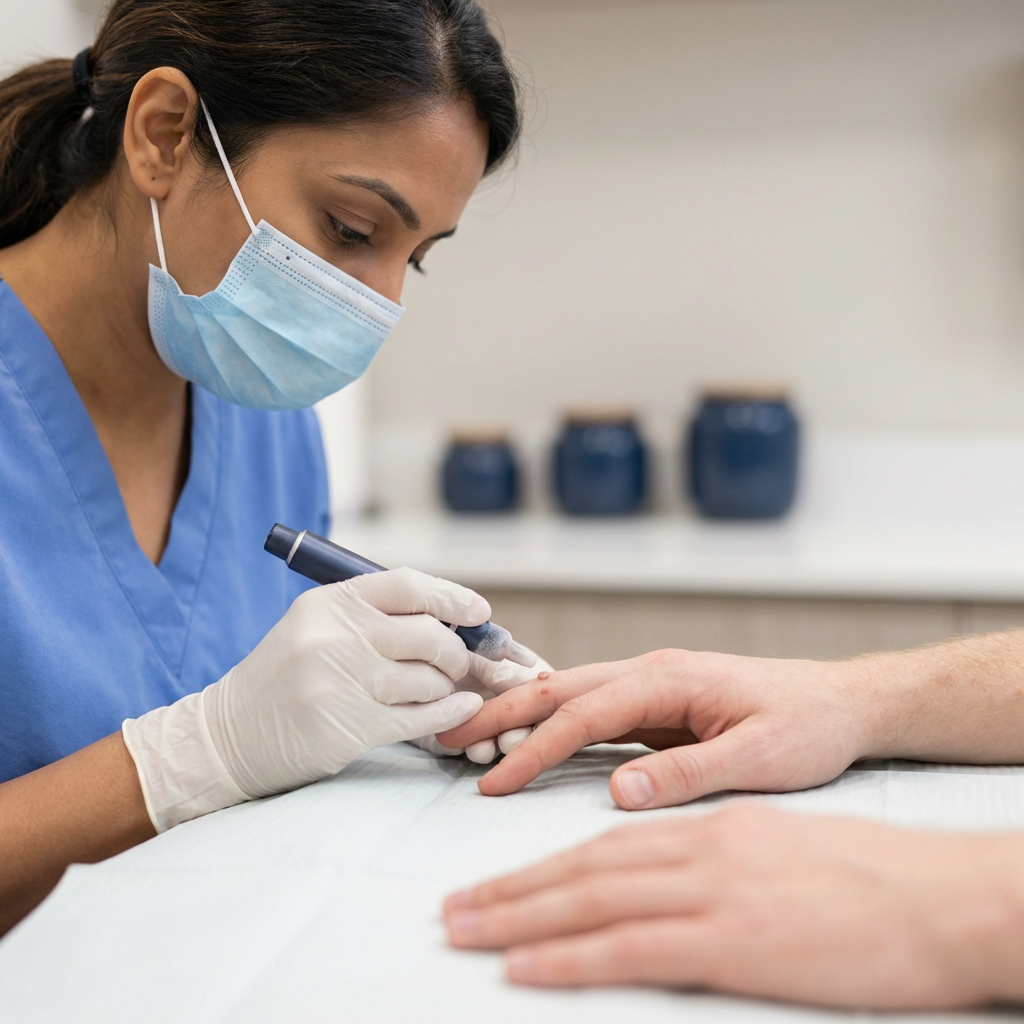
Medical Dermatology

Rosacea &
Sensitive Skin

Persistent facial redness, visible blood vessels, pustules that look like acne but won't respond to acne treatment — rosacea is chronic but very controllable with the right triggers identified and the right topicals prescribed.

4Rosacea subtypes managed
TriggerDiary & avoidance plan
IPLReferral for vessels
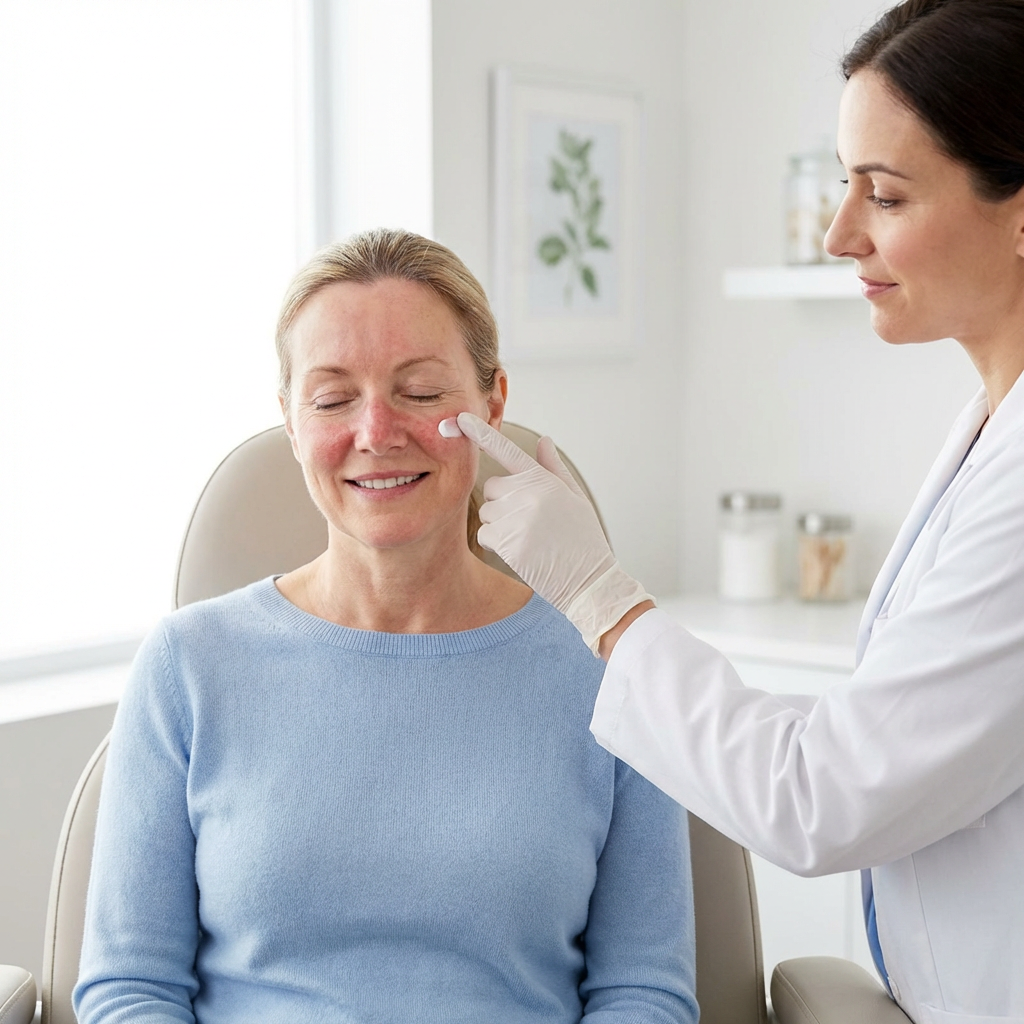
Rosacea skin treatment
₹700Starting consultation
Conditions We Treat

All Rosacea Subtypes
& Sensitive Skin Conditions

Rosacea presents differently in each patient. We subtype accurately and treat each presentation with its specific evidence-based therapy.

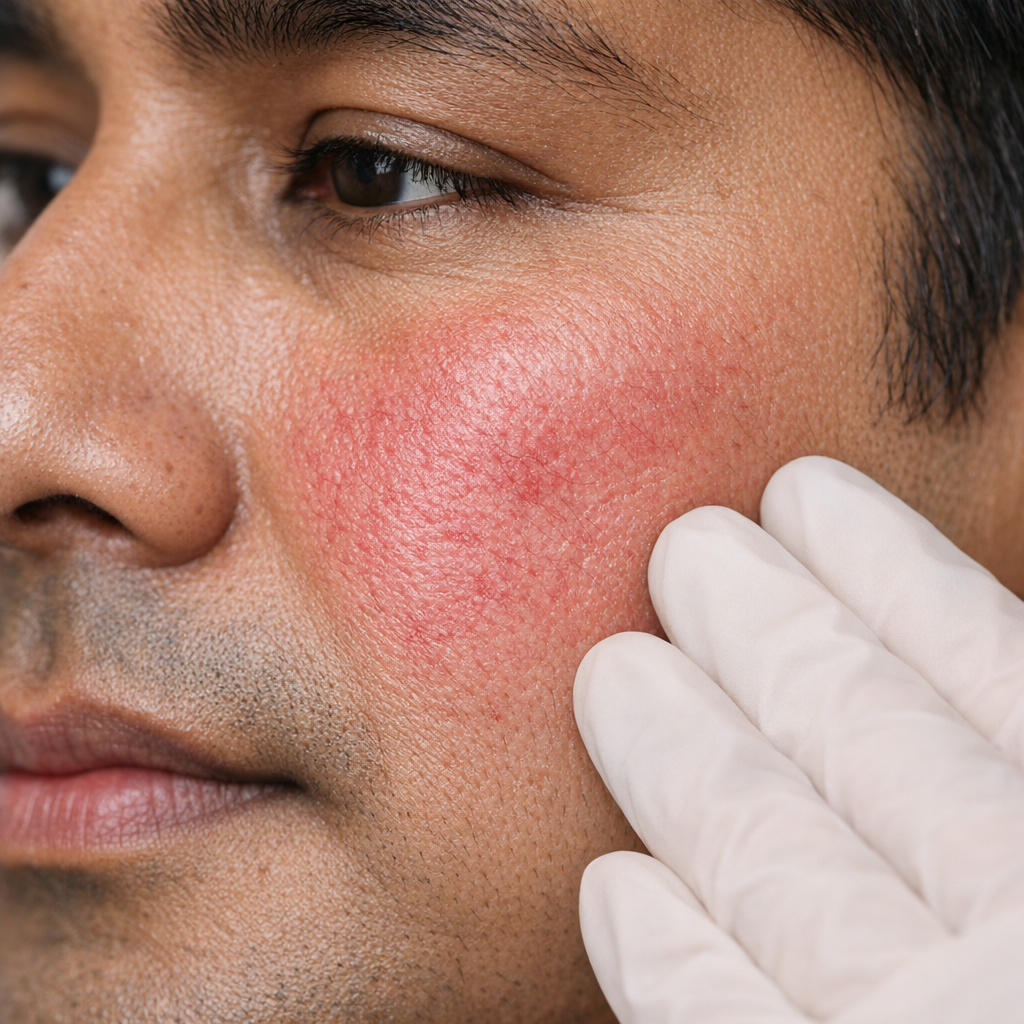
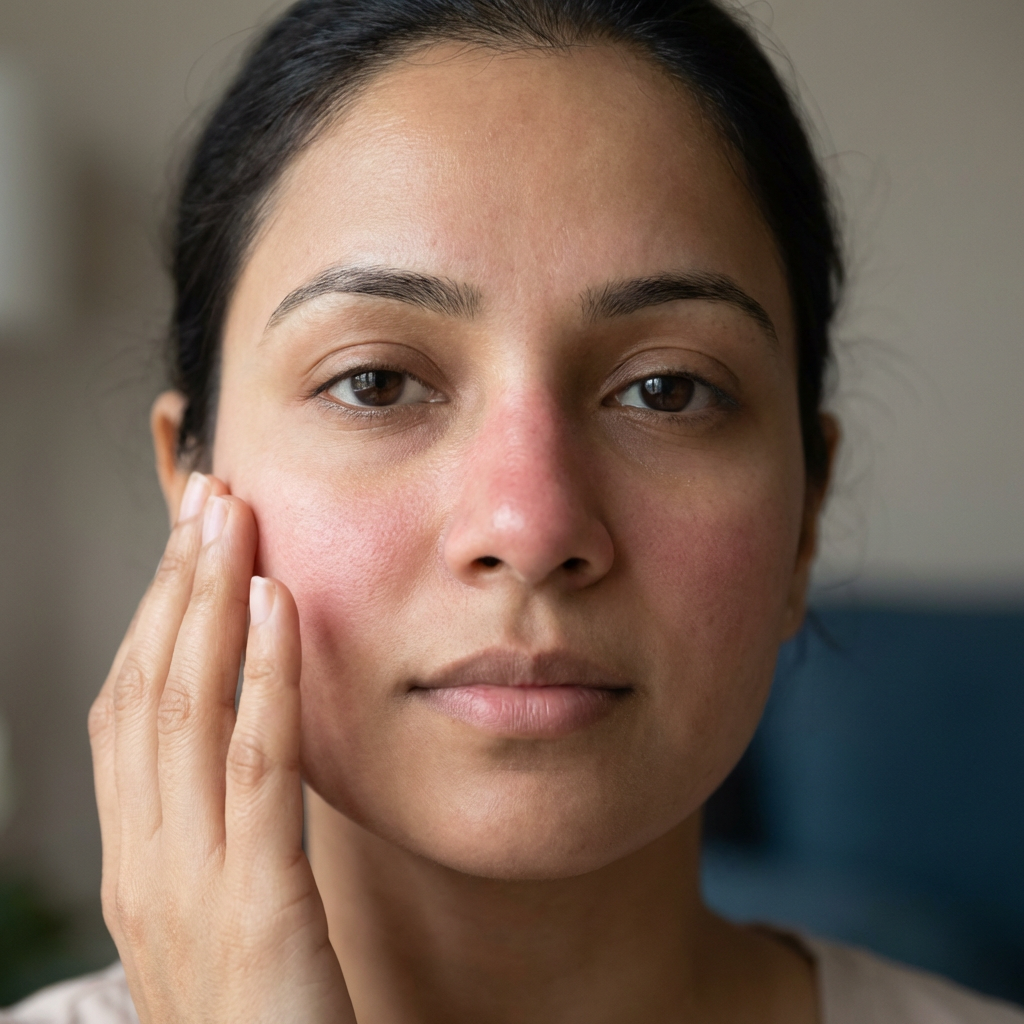
Erythematotelangiectatic rosacea consultation
Topicals + Trigger Avoidance

Erythematotelangiectatic Rosacea (ETR)

Persistent central facial redness, flushing, and visible small blood vessels without papules or pustules. Managed with brimonidine or oxymetazoline gel to reduce redness, sun protection, and trigger diary.

Long-term management₹700+
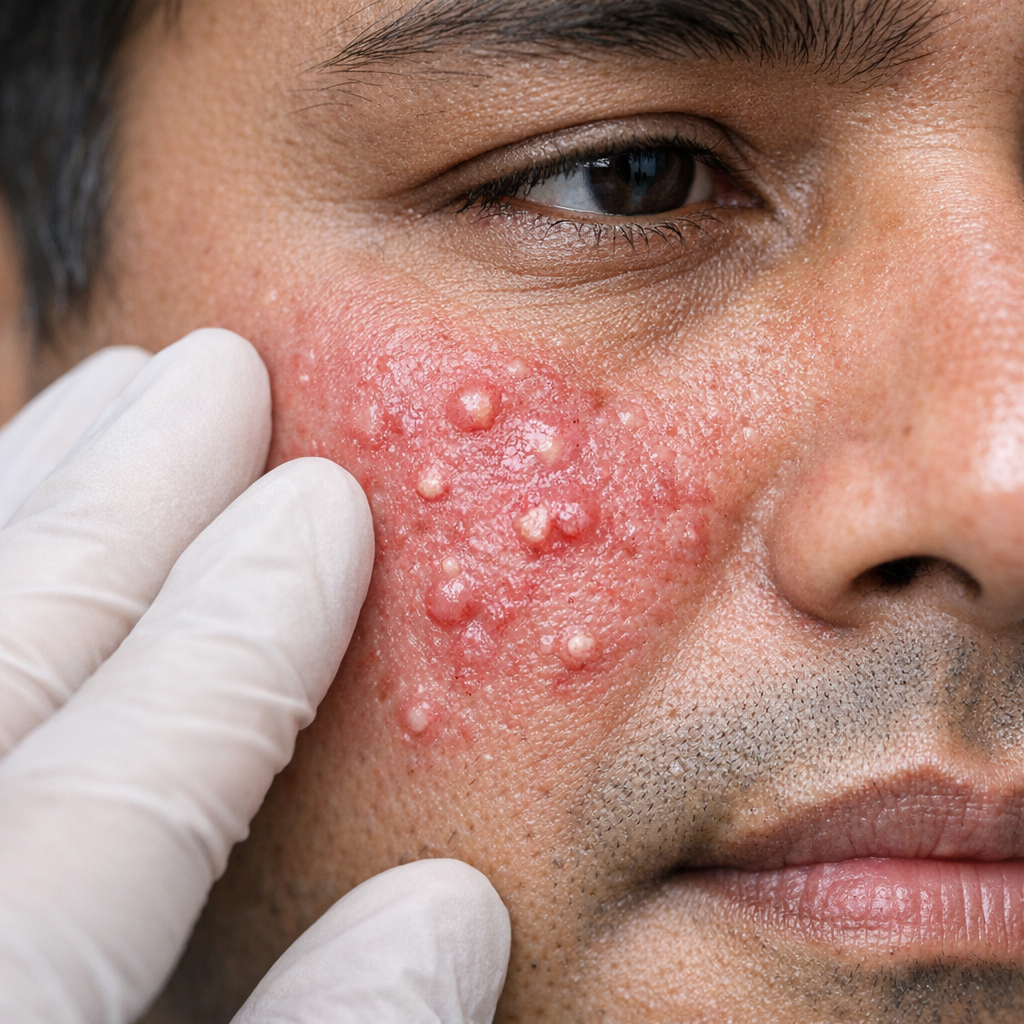
Papulopustular rosacea skin inflammation
Topical Metronidazole / Doxy

Papulopustular Rosacea (PPR)

The "acne rosacea" subtype — inflammatory papules and pustules on a background of redness. Treated with topical metronidazole or azelaic acid; low-dose doxycycline for moderate-severe cases. Never isotretinoin as first-line.

8–12 weeks active₹700+
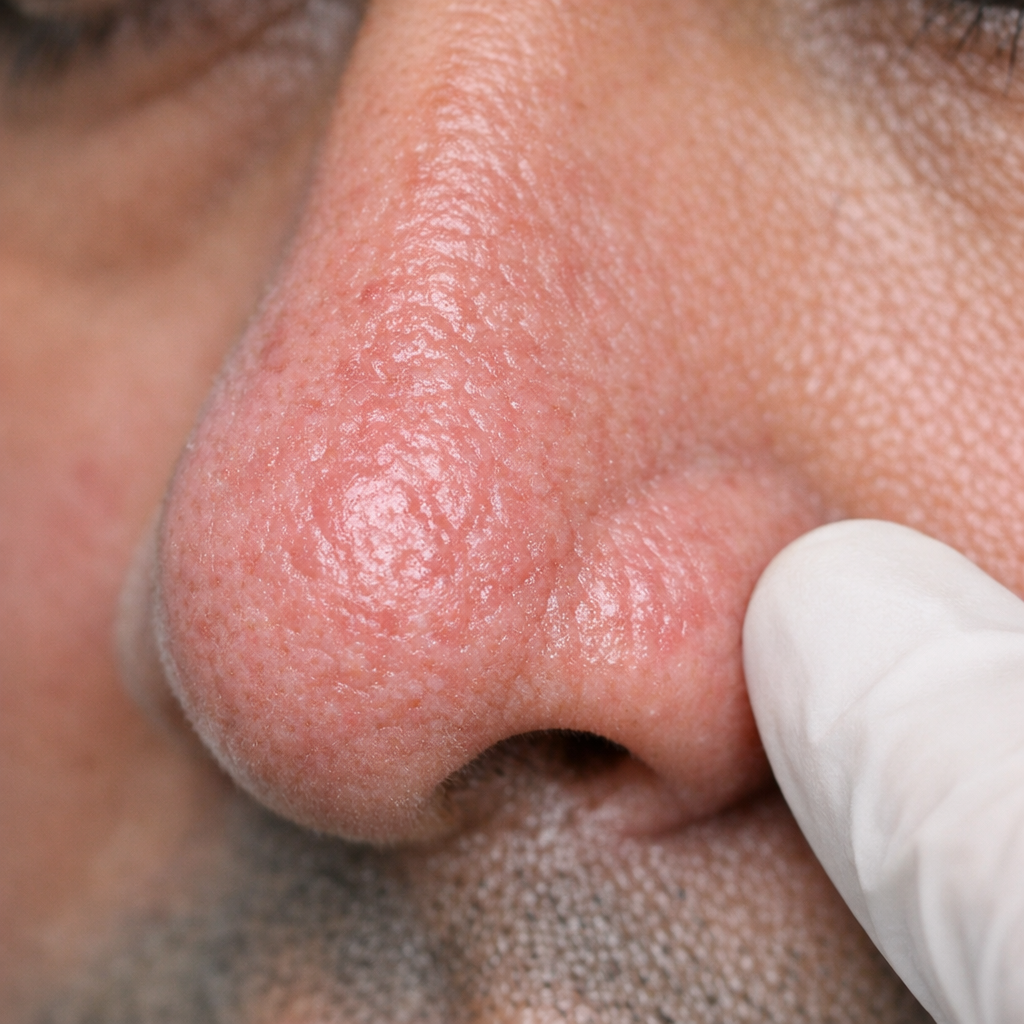
Phymatous rosacea rhinophyma diagnosis
Medical + Surgical Referral

Phymatous Rosacea (Rhinophyma)

Skin thickening and sebaceous gland hypertrophy — most commonly the nose (rhinophyma) but also chin and forehead. Medical management to prevent progression; surgical referral for established rhinophyma.

Long-term plan₹800+
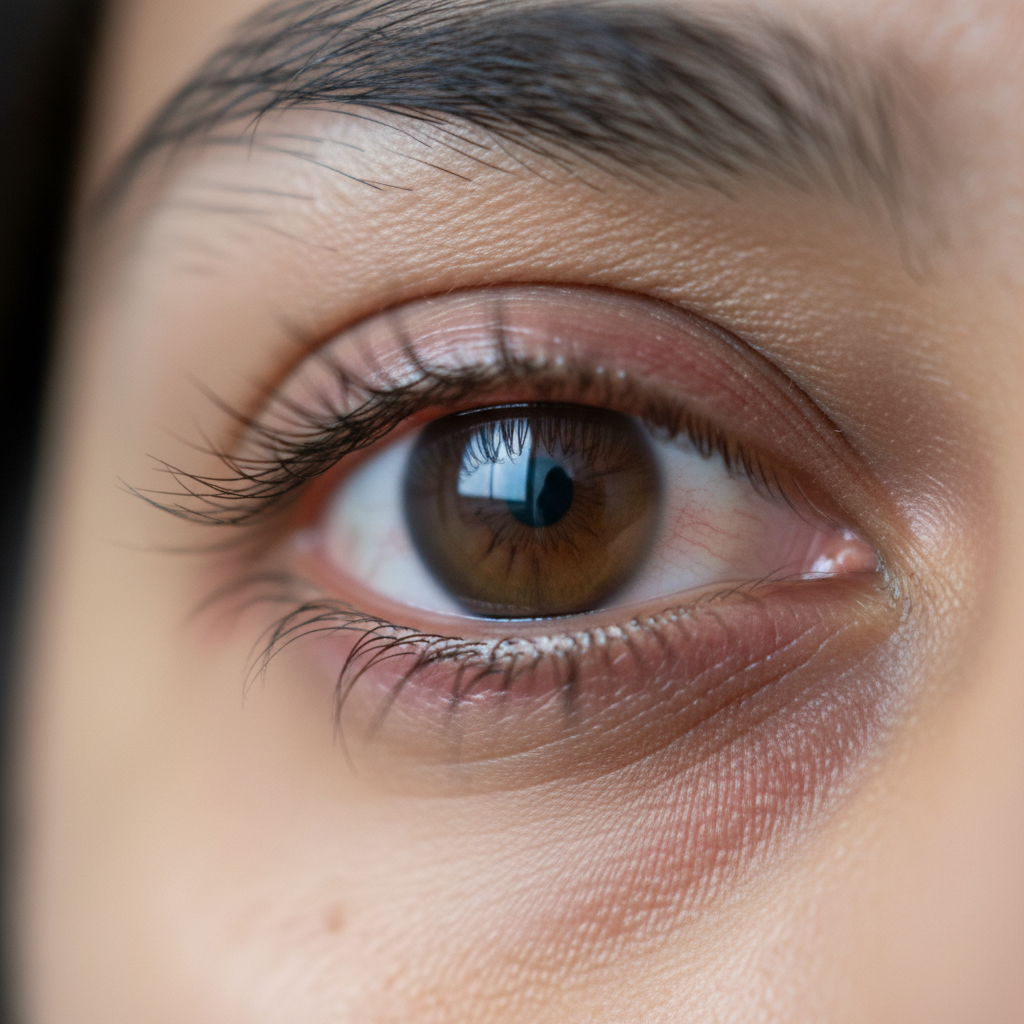
Ocular rosacea
Lid Hygiene + Oral Doxy

Ocular Rosacea

Eye involvement in rosacea — blepharitis, conjunctival injection, and meibomian gland dysfunction causing dry, gritty eyes. We co-manage with ophthalmology: lid hygiene, omega-3 supplements, low-dose doxycycline.

Ongoing management₹800+
Sensitive reactive skin
Barrier Repair + Gentle Regimen

Sensitive & Reactive Skin

Skin that stings, burns, or reddens easily in response to cosmetics, temperature change, or skincare — without overt rosacea features. We rebuild barrier function and design a minimal, evidence-based daily skincare routine.

4–8 weeks₹700+
Demodex rosacea root cause treatment
Ivermectin Cream / Permethrin

Demodex-Associated Rosacea

Elevated Demodex folliculorum mite density contributes to papulopustular rosacea. Topical ivermectin 1% cream (Soolantra) specifically targets Demodex while also reducing inflammation — often superior to metronidazole for this subgroup.

12–16 weeks₹800+
Our Approach

Subtype First,
Then Treat

1

Rosacea Subtype Diagnosis

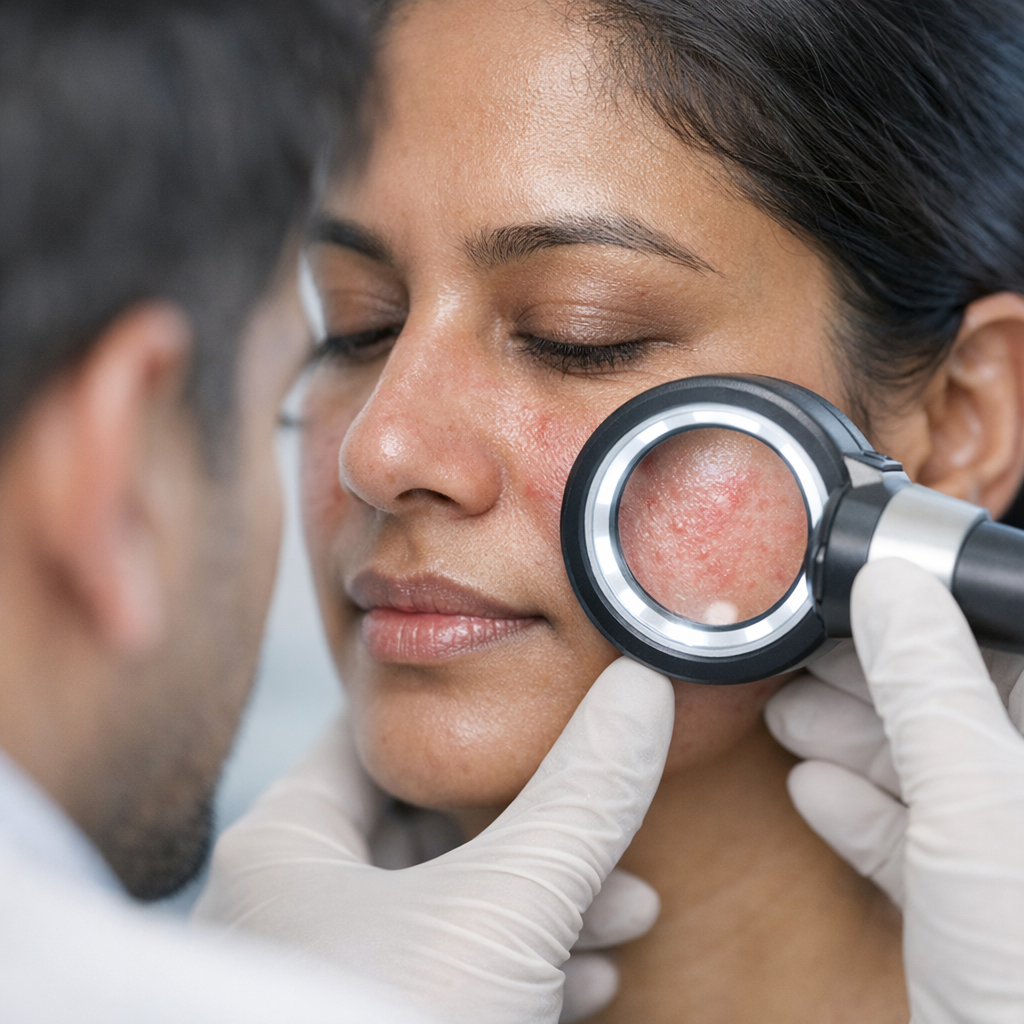
We classify rosacea into ETR, PPR, phymatous, or ocular subtypes using clinical examination — because treatment is fundamentally different for each. Dermoscopy helps identify telangiectasia pattern and Demodex density.

2

Trigger Identification

Standard rosacea triggers: UV, heat, spicy food, alcohol, exercise, stress, certain skincare ingredients. We give every patient a structured trigger diary to identify their personal pattern over 4 weeks.

3

Topical Prescription

Metronidazole 0.75–1% gel, azelaic acid 15–20% gel, or ivermectin 1% cream — chosen by subtype and severity. For ETR, brimonidine 0.33% gel reduces background erythema within 30 minutes of application.

4

Systemic Therapy if Needed

Subantimicrobial dose doxycycline 40 mg modified-release (anti-inflammatory, not antibiotic dose) for moderate-severe PPR. We avoid long-term standard antibiotics to prevent resistance.

5

Skincare Routine Rationalisation

Most rosacea patients are using too many products — many aggravating their condition. We simplify to: gentle cleanser, mineral SPF 50, and the prescribed topical. No acids, retinoids, or physical exfoliants initially.

6

IPL Referral for Vessels

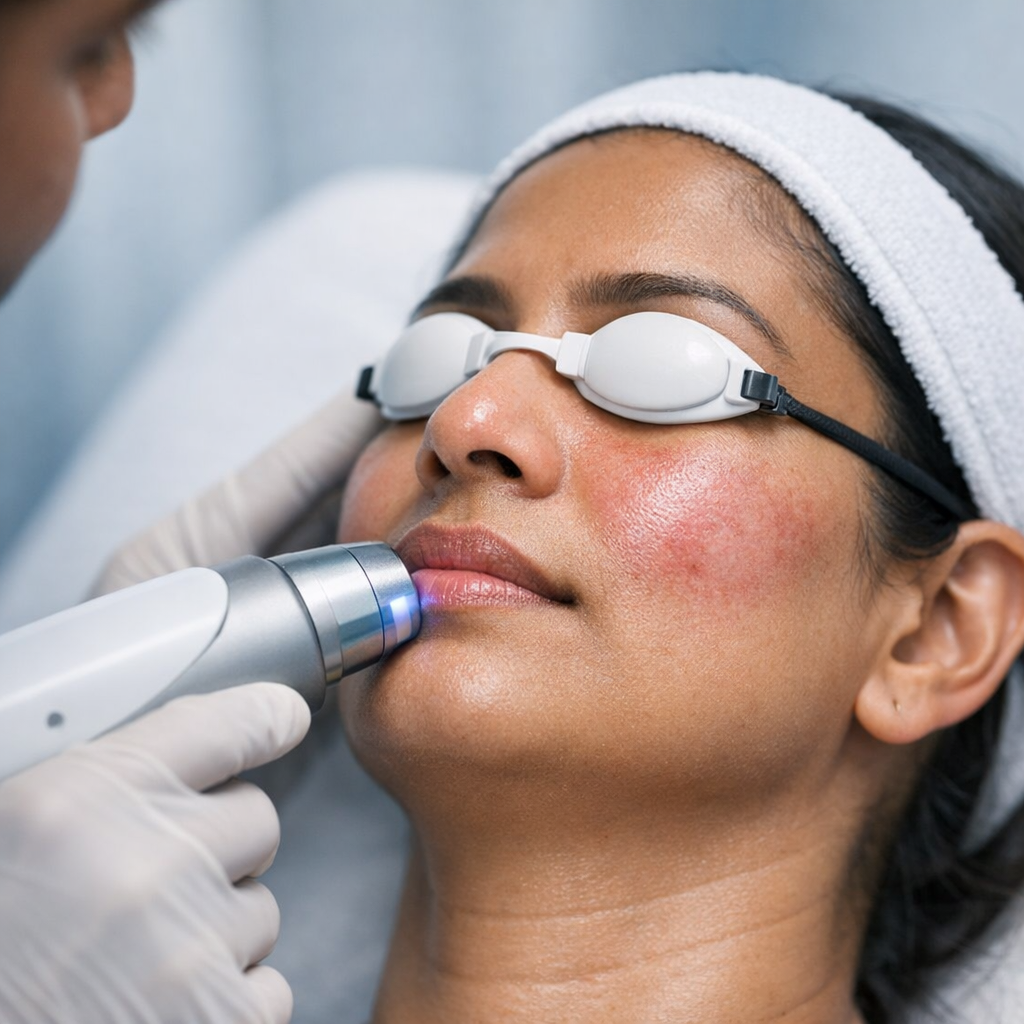
For telangiectasia and persistent diffuse erythema that doesn't respond to topicals, we coordinate referral for IPL (intense pulsed light) treatment which targets dilated vessels directly.

Rosacea treatment process specialist
Why Supreme Elite Clinic

Rosacea Management
Beyond "Just Avoid Triggers"

Many patients are told to avoid triggers and given a cleanser — we go further with accurate subtyping, evidence-based prescribing, and a structured long-term plan.

Dermoscopy-Guided Subtyping

We use dermoscopy to identify telangiectasia pattern, follicular changes, and Demodex — choosing the most effective treatment from the outset rather than trial and error.

Structured Trigger Diary

Every patient receives a 4-week trigger diary to identify their personal pattern — because triggers vary significantly between individuals and guessing wastes months of management time.

Ivermectin for Demodex Rosacea

We prescribe topical ivermectin 1% (superior to metronidazole for Demodex-dense rosacea) — a newer therapy not yet widely available through general practitioners in this region.

Skincare Regimen Simplification

We cut harmful routines down to 3 products maximum in the active phase — preventing the "skincare overwhelm" that is one of the most common rosacea aggravators.

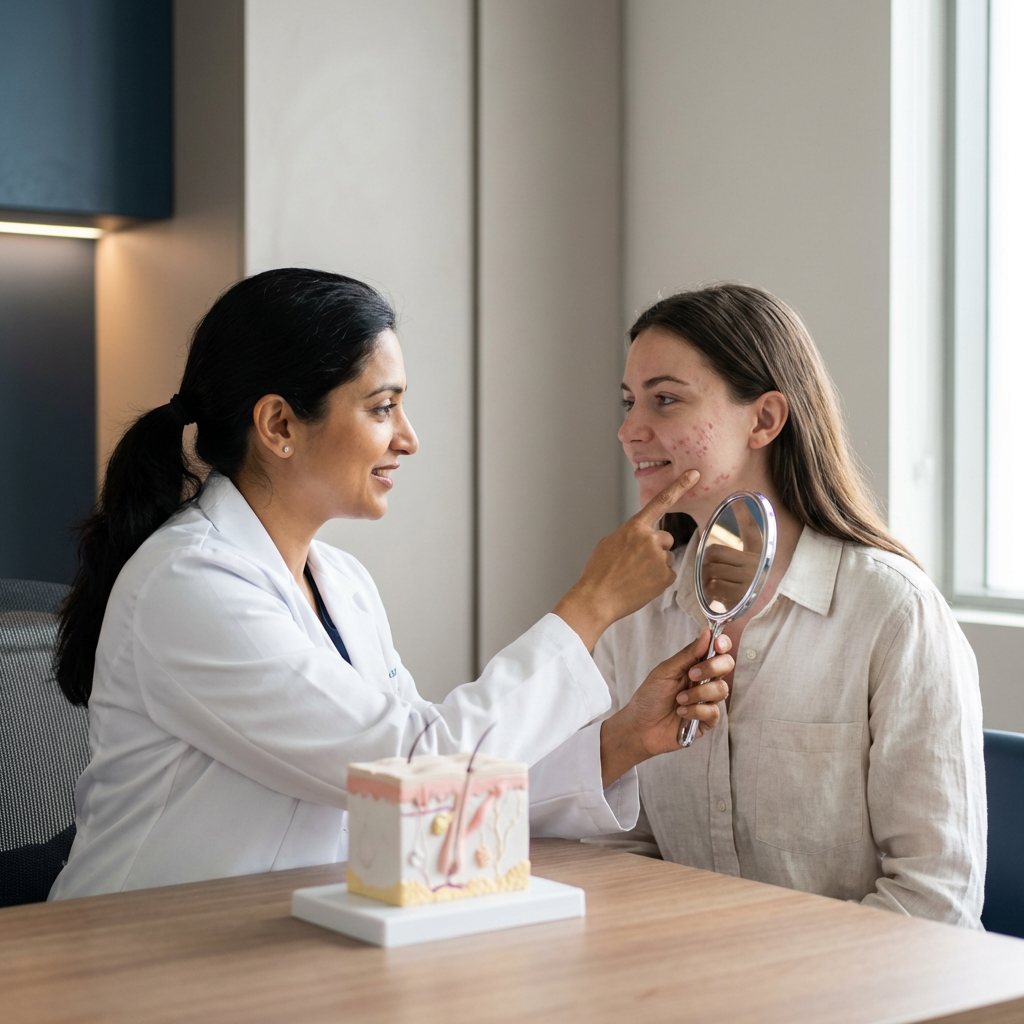
Rosacea specialist consultation
75%Reduction in papules by week 12
4Rosacea subtypes accurately managed
Treatment Comparison

Evidence-Based Rosacea Care
vs Common Alternatives

Criterion Supreme Elite Clinic GP Antibiotic Course Skincare Brand Protocol Steroid Cream (Wrong Rx)
Accurate subtype diagnosis✓ 4 subtypes classifiedPartial — PPR often correct✗ Not clinical✗ Misdiagnosis
Trigger diary & avoidance✓ Structured 4-week diaryVerbal advice only✗ Product-focused✗ None
Topical metronidazole / ivermectin✓ Prescribed correctlySometimes✗ Not prescribers✗ Wrong drug class
Sub-antimicrobial doxycycline✓ Anti-inflammatory dose✗ Full antibiotic dose (resistance risk)✗ Not available✗ None
Risk of steroid rosacea✓ Never prescribe facial steroidsLow — if correctly diagnosed✗ Possible via OTC products✗ High — worsens rosacea
IPL / vascular referral✓ Coordinated when needed✗ Rarely arranged✗ Not available✗ None
Treatment Arsenal

Targeted Therapies
for Every Rosacea Subtype

Topical Ivermectin 1%

Applied once daily, ivermectin targets Demodex mites and reduces inflammatory lesions. Superior to metronidazole in head-to-head trials for papulopustular rosacea and maintains remission longer.

PPR / Demodex

Brimonidine Gel

An alpha-2 agonist that constricts dilated facial blood vessels within 30 minutes, providing up to 12 hours of redness reduction for ETR. Not a cure — used as needed for social or occupational situations.

ETR / Erythema

Sub-Antimicrobial Doxycycline

40 mg modified-release doxycycline is used at an anti-inflammatory dose — below the threshold for antibiotic activity — reducing papules and pustules without contributing to antibiotic resistance or gut flora disruption.

Moderate–Severe PPR

Mineral SPF 50 Protocol

UV is the most universal rosacea trigger. We prescribe mineral (zinc oxide / titanium dioxide) sunscreen — which doesn't sting sensitive skin unlike chemical filters — and green-tinted formulations to neutralise redness immediately.

All Subtypes
Common Questions

Rosacea & Sensitive Skin FAQs

No — rosacea and acne are different conditions requiring different treatments. Rosacea causes redness, flushing, and papules on a background of redness, while acne involves comedones (blackheads and whiteheads) which are absent in rosacea. Treating rosacea with acne treatments (salicylic acid, strong retinoids, benzoyl peroxide) often worsens it significantly.
Rosacea is a chronic condition with no permanent cure, but it is very controllable. Most patients achieve minimal disease with appropriate treatment and trigger avoidance — many experience long periods of remission with no visible symptoms when managed correctly.
No — topical steroids on the face cause "steroid-induced rosacea" (perioral dermatitis / steroid rosacea) which is significantly harder to treat than the original condition. Many patients present having used steroid cream on their face for months, making their rosacea much worse. We never prescribe facial steroids for rosacea.
Active treatment with metronidazole or ivermectin typically continues for 12–16 weeks to achieve lesion clearance. Many patients then use maintenance therapy 3 times per week indefinitely to prevent relapse. The goal is the minimum effective frequency — we review and step down once stable.
In the active phase: gentle non-foaming cleanser (Cetaphil, La Roche-Posay Toleriane), mineral SPF 50, and your prescribed topical. Nothing else. No toners, no exfoliating acids, no retinoids, no fragrance. Once controlled, niacinamide and azelaic acid can be introduced cautiously for additional benefits.

Pricing Guide

Consultation + subtyping₹700+
Topical prescription (metronidazole / ivermectin)₹400+
Sub-antimicrobial doxycycline course₹600+
Brimonidine gel prescription₹500+
Follow-up review₹500+
Book an Appointment

Control Your Rosacea.
Reclaim Your Confidence.

Book a consultation today. Call +91 96774 73344 or book online.

4 Rosacea Subtypes Managed Dermoscopy-Guided Diagnosis Topical Ivermectin Available Kelambakkam OMR Chennai